I borrowed an old pictorial book on Silent movies and found this gem of a poster from 1910. It’s the back in the day equivalent of those adverts warning people to switch off their mobile phones. Ladies in outlandish hats were apparently the biggest menace facing audiences in the early days of cinema.

Flyers for Future Screenings

STATION SUPPER & MOVIE NIGHT PRESENTS
A film by Mike Nichols
Benjamin (Dustin Hoffman) has just graduated from college. What now? Mrs Robinson (Anne Bancroft) thinks she knows what’s best for this aimless young man. A 60’s classic with a haunting soundtrack by Simon & Garfunkel, The Graduate is one of the defining American movies of its generation. 
Thursday May 10th
7pm

STATION  SUPPER & MOVIE NIGHT PRESENTS
   THE RED SHOES (1948)
A Film by Michael Powell

“Time rushes by, love rushes by, life rushes by, but the red shoes dance on.”
Loosely based on a fairytale by Hans Christian Anderson, The Red Shoes is a lavish drama about a ballerina (Moira Shearer) torn between her devotion to dancing and her love for a young composer (Marcus Goring).
7 pm THURSDAY JUNE 7th

The Italian Job – Screening Notes

Never much cared for The Italian Job. Love the opening sequence but its matey banter and its Euro-phobic stance leave me cold. I prefer Michael Caine in the Harry Palmer movies, or his pair of Mike Hodges films, Get Carter (1971) and the underrated Pulp (1973), or James Clavell’s weird anti-religious period movie The Last Valley (1971). Anyway, here’s my programme notes. 
The Italian Job (1969, Peter Collinson)
The Italian Job misdirects the audience with an opening sequence which introduces us to a suave middle-aged man (Italian actor Rossano Brazzi) as he drives a Lamborghini through the Alps as Matt Monro sings the haunting ‘On Days Like These.’ This is not Brazzi’s movie though, nor is it the Lamborghini’s. The Italian Job belongs to a couple of British institutions – Michael Caine and the Mini Cooper. A moderate box office hit on its initial release in 1969, the film has gradually developed a strong following over the years thanks to regular television screenings and the critical reappraisal of star Michael Caine which began when he became a cult figure with the ‘New Lad’ culture of the mid-90’s and Mike Myers credited him with being one of the inspirations for Austin Powers.
A nuanced and charismatic actor Caine has had a more varied career than people realise but he is best known for his mischievous onscreen persona. Caine first found fame as an upper class army officer in Cy Endfield’s classic war film Zulu (1964). However he soon became known for playing cocky working-class types. As the cynical spy Harry Palmer in The Ipcress File (1965, Sidney J. Furie) he trades barbs with his condescending superiors but gets the job done. As smooth-talking lothario Alfie (1966, Lewis Gilbert) he thinks he’s got all the answers and delivers lengthy monologues to the camera about the meaning of life.
The Italian Job is a cheeky caper movie in which British ingenuity triumphs over continental style and sophistication. No wonder fans of the English national football team have adopted its catchy anthem ‘Getta Bloody Move On’ aka ‘The Self Preservation Society’ into their repertoire. Caine is in his element as the roguish Charlie Croker who walks free from prison and immediately starts work on a plan to steal gold bullion from a delivery in Turin using a football match as cover. Noel Coward makes a surprisingly effective heavy, his character representing the Old Guard of the Establishment, disgusted at having to tolerate a lower-class upstart like Charlie until of course he realises how much money he can make from him.
Credit must also go to French driver Rèmy Julienne and his team who perform the film’s inventive driving stunts and would later work on every James Bond film from For Your Eyes Only (1981, John Glen) to 1995’s Goldeneye (Martin Campbell). 

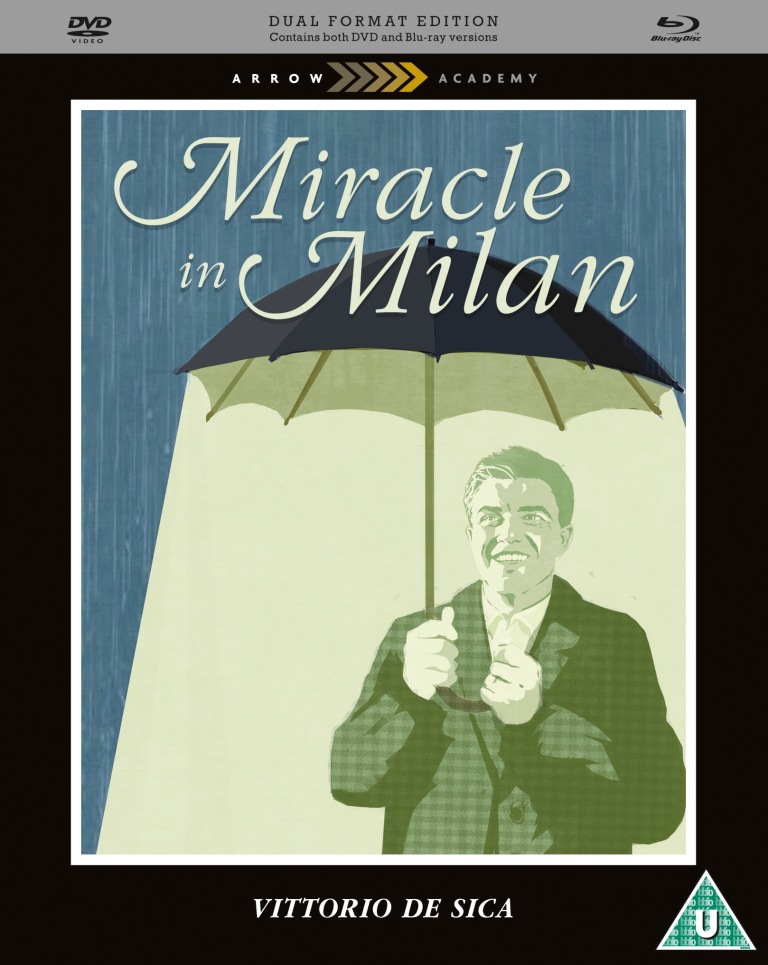
Vittorio De Sica’s Miracle in Milan (1951) has a great DVD release on the Arrow Academy label. Not a big fan of De Sica but this beguiling slice of Magic Realism is much more fun than his best known film Bicycle Thieves (1947).  Bleakest happy ending ever. 

The Artist – Screening Notes

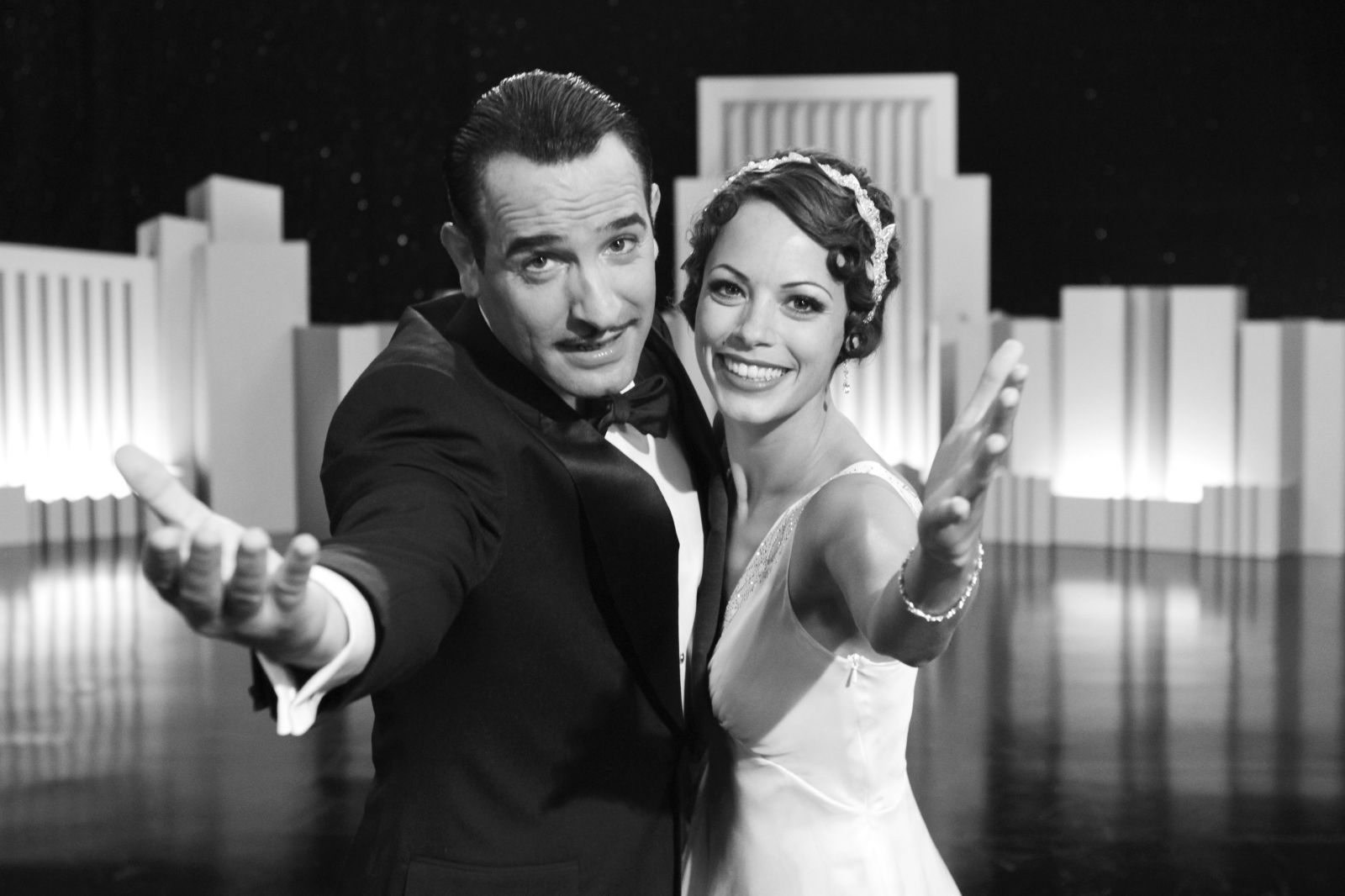
The Artist won five Oscars at this year’s Academy Awards including Best Picture, Best Actor, and Best Director. Not bad for a black and white silent French movie. A sensation at the Cannes Film Festival back in May 2011 the film was quickly snapped up by film producer Harvey Weinstein. An expert at distributing movies and getting them noticed by the Academy Weinstein previously led films as diverse as The Crying Game (1992, Neil Jordan), The English Patient (1997, Anthony Minghella), and The King’s Speech (2011, Tom Hooper) to box office success and the Oscars.
Silent movie star George Valentin (Dujardin) basks in the success of his latest movie. Accompanied everywhere onscreen and off by his beloved canine sidekick Valentin is the biggest star in town, but his refusal to adapt to the arrival of talking pictures puts his career in jeopardy. A young starlet Peppy Miller (Bejo) whom Valentin helped get started in Hollywoodreplaces him in the public’s affections and he is quickly forgotten. That is by everybody except Peppy who keeps an eye on her old mentor but knows he is too proud to accept her help.
Director Michel Hazanavicius and Dujardin previously worked together on a couple of comedies OSS 117: Cairo Nest of Spies (2006) and its sequel OSS 117: Lost in Rio (2009). Expertly sending up the spy movie, most notably the Connery era Bonds they showcased Dujardin’s physical athleticism and his ability to make a conceited idiot likeable. Hazanavicius skilfully recreated the look and feel of the Sixties spy film so successfully both of these movies seemed to belong entirely to the period they were set in. The Artist too feels like a genuine silent era film, right down to its use of intertitles and its reliance on composer Ludovic Bource’s wonderful score to accompany the images.
Valentin bears a passing resemblance to silent screen star Douglas Fairbanks, one of the most charismatic and physically agile performers ever to grace the screen. Footage from Fairbanks great swashbuckler The Mark of Zorro (1921, Fred Niblo) even appears in the film briefly, edited into a sequence with Dujardin dressed as Zorro. The resemblance is purely physical though, Valentin shares Fairbanksdelight in his own athleticism and his considerable charm, but not his intelligence. Fairbankswas smart, experimenting with sound, co-founding United Artists, and the UCLA’s film department.
Though cult filmmaker Guy Maddin has directed full length silent movies, notably a stunning ballet version of Bram Stoker’s novel Dracula (2002) his work is only really of interest to film buffs. The Artist however succeeds as a loving tribute to the silent era and as a mainstream crowd-pleaser. Cute dog too.

‘Miracle in Milan’ (1951, Vittorio De Sica) – Arrow Academy Bluray

Vittorio De Sica is best remembered for his 1947 movie Bicycle Thieves, an overly manipulative and simplistic piece which is one of those films people pretend to like to impress other folk. Screenwriter Cesare Zavattini and De Sica collaborated on a number of films all dealing with similar themes of social injustice. Miracle in Milan is lighter in tone than their usual fare but just as serious.  By adding comedy and Magic Realist elements to the film they create a sly subversive fairytale which is just as resonant now in this era of recession as it was in 1951. 
Toto (Francesco Golisano) is raised in the country firstly by an elderly lady who takes him in as a baby, then after she passes away he spends the rest of his childhood in an orphanage. Arriving in the city for the first time he is struck by the isolationist nature of the people there and becomes drawn towards the downtrodden finding them to be better company. Moving into a shanty town he inspires the residents to better themselves but when this eccentric self-reliant community proves too successful the authorities move in and try to claim the land. While the first part of Miracle in Milan belongs to the neorealist tradition the latter part of the film moves into the realm of the fantastical as statues come to life, policemen start singing opera, and heavenly messengers appear.
While De Sica and Zavattini make fun of the rich the poor are also targets for satire. They willingly embrace consumerism when Toto gains the ability to make wishes come true and ask for all kinds of luxuries they don’t really need. They and Toto also delight in taking revenge against the man who refuses to conform with the group and eventually betrays them by selling them out to the rich. Toto is a cheerful idiot savant, an unwitting revolutionary who breaks societies rules because he sees no sense in them. The upbeat approach taken by De Sica and Zavattini mirror’s Toto’s optimism and is embodied in the jaunty score provided by Alessandro Cicognini which provides a carnival atmosphere. Yet Miracle in Milan is one of the bleakest films ever made, its magical finale suggesting there is only one way out of the poverty trap. 
Special Features
The latest entry in the Arrow Academyrange Miracle in Milan gets the full Arrow treatment. Bluray and Standard Definition DVD’s accompanying booklet featuring writing on the film as well as John Maddison’s 1951 article ‘The Case for De Sica.’ There are short but enlightening interviews with De Sica’s son, and with actress Brunella Bovo. Newsreel footage of the film’s premiere gives you an idea of just how famous De Sica was in his native Italy and contains a brief interview with the dapper director and Zavattini.
The film’s original trailer for Miracle in Milan is essentially a short film presented by lead actor Golisano outlining De Sica’s career up to that moment and then showcasing the film. There is also a whole other film, Il Tetto (1956), previously unavailable on DVD. Again written by Zavattini it focuses on an impoverished newly married couple trying to find a place of their own during the redevelopment of Romeand is well worth a look.  

The Deadly Spawn (1983, Douglas McKeown) – DVD Review

While this low-budget horror movie never quite manages to fulfil its promise it has a certain charm. Made in the same cheap and cheerful fashion as Sam Raimi’s The Evil Dead (1981) by a bunch of amateur filmmakers in New Jersey, The Deadly Spawn features intergalactic carnivorous aliens munching on the local population. A cult favourite on VHS the film is very much of its time. It has the bleakness often found in American horror films from George Romero’s Night of the Living Dead (1968) onwards and the gross out comedy horror of the 80’s in which death is treated as an elaborate joke. The Deadly Spawn has a knowing sense of humour and is clearly made by people who love horror films and science fiction. The most resourceful character in the film is a kid who is obsessed with horror and is able to adapt when his own life turns into a scary movie. The creatures when they appear are suitably disgusting, tadpole-like with layers of teeth. Not nearly as frightening as the décor though. It’s terrifying, a mixture of garish colours and unholy shades of brown which might well inspire intergalactic visitors to think human beings are of little use except for eating or tearing into pieces. The film was a minor sensation today but now looks as hokey as the B-movies of the 1950’s. Fun though. 

Credit to Arrow Video they never stint on the extras. Doesn’t matter if the film is an arthouse classic like Ashes & Diamonds (Andrzej Wajda, 1958) or a daft homemade horror film like The Deadly Spawn Arrow respectfully takes the same care when putting the DVD extras together. In this case the special features are far more interesting than the actual movie. An accompanying booklet contains written work on The Deadly Spawn by film experts Calum Waddell and Tim Sullivan. Producer Ted A. Bohus provides two commentaries, one of which is a conversation with Editor Marc Harwood and basically involves them describing whose house they are filming in at that particular moment. This really was DIY filmmaking. The archive footage provided in a trio of features emphasises this. It is like watching a hairy grown-up version of Super 8 (2011, J.J. Abrams). John Dods IMDb page credits him with providing Matt Dillon dummies on A Kiss Before Dying (1991, James Deardon) and being Grace Jones Corpse Creator on Boomerang (1992. Reginald Hudlin). Since then he’s been off the radar, maybe Grace Jones got him, but there is an amusing documentary filmed in his workshop. There is also an audition reel which includes actors who didn’t get the parts they were reading for which is perhaps cruel, but not as cruel as it is funny. There are also interviews with Bohus on various low-rent TV channels, a comic strip prequel which attempts to give the film a backstory but seems more like an afterthought, and the original trailer for the film’s cinema release. 

Touch of Evil – Screening Notes

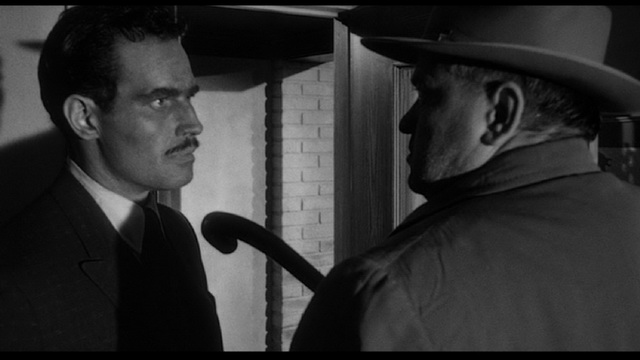
“You’re future is all used up. Why don’t you go home?”

Touch of Evil takes place in a small town on the Mexico/United States border. Mexican cop Mike Vargas (Charlton Heston) is newly married and about to begin his honeymoon with his American wife (Janet Leigh). A hero in his homeland for his battles with drug dealers, Vargas just wants to go on holiday, but the murder of a local businessman brings him into confrontation with Captain Hank Quinlan (Welles). Quinlan’s intuitive methods of investigating crimes often lead him to act in ways that aren’t always lawful. One of these men is heading for a fall.

Touch of Evil was Orson Welles last shot at Hollywood. Hired to play the bad guy, leading man Charlton Heston demanded Welles also direct. Studio execs at Universal weren’t keen. Welles had an undeserved reputation for being difficult, his films considered highbrow, even though he always tried to make them with an audience in mind. Touch of Evil is his most entertaining work, a stylish thriller which transcends its pulp origins as a dime store novel. Everybody brings their A-game. Heston’s casting seems bizarre but few actors have ever been as dignified or as solid. Screen legend Marlene Dietrich steals the show as an enigmatic fortune teller. Director of photography Russell Metty and Welles experiment with unusual camera angles and long elaborate takes including a celebrated opening shot which lasts for three and a half minutes without any cuts. Composer Henry Mancini (Breakfast at Tiffany’s) jazz score suggests bourbon fuelled late nights, sweat, and sin.

Filming went well, but afterwards Welles was removed from the editing process. Touch of Evil played the B-movie circuit, usually as the second feature on a double-bill. Over the years the film’s reputation has grown and Touch of Evil is now recognised as being one of the last in the great cycle of Film Noir movies of the Forties and Fifties. These films were bleak, but exhilarating in the way the defied Hollywood conventions. They dealt with betrayal, and loss, and broken dreams and their cynical worldview struck a chord with post-War audiences.

It is easy to make comparisons between Quinlan and Welles – both are brilliant men but the architects of their own downfall. Welles directed his first movie Citizen Kane (1941) at the tender age of 25. Media mogul William Randolph Hearst took offence believing correctly the film was a thinly veiled biopic of him and set his media pack loose on Welles. The Magnificent Ambersons (1942) was released in a truncated form after the studio RKO got fed up with waiting for Welles to return from filming a documentary in Rio and cut the film without him. Welles made other films on time and under budget, The Lady from Shanghai (1947) for instance, but the bad reputation stuck. After Touch of Evil Welles spent most of his time in Europe, occasionally appearing in big-budget Hollywood films like Casino Royale (1967) to raise funds for his own features.