The Hunter (2011, Daniel Nettheim) – Review

“Must be very nice for you, not to need anyone”

I briefly thought novelist Julia Leigh invented the Thylacine aka Tasmanian Tiger. I’m from the other side of the planet so this oddly beautiful creature is completely new to me. Sadly the last of the species died in captivity in 1936. Though they resembled dogs they were actually marsupials and apparently timid around humans but white settlers hunted them to extinction due to erroneous fears they were a danger to livestock. There have been supposed sightings since but these are hearsay or come with the standard blurry footage which accompanies alleged sightings of the Loch Ness Monster or Bigfoot. The thylacine has become a myth and David Nettheim’s film uses it as the basis for a thriller which finds room for environmental concerns but never lectures the audience or takes the easy way out right down to its devastating finale.
Based on the 1999 novel by Julia Leigh there is a familiarity present in the genre aspects of the film but not in how they are executed. Anybody who saw Leigh’s own directorial debut Sleeping Beauty will know she likes ambiguity and protagonists whose behaviour is difficult to fathom. Willem Dafoe plays a mercenary who operates under the name Martin David. Hired by a pharmaceutical company to investigate a rumoured sighting of a thylacine Martin has been instructed to bring back skin and DNA samples before anybody else finds it. Posing as an academic researching the Tasmanian Devil Martin spends his time setting traps and tracking in the wilderness. The locals are suspicious of outsiders, most of them rely on the logging industry to make a living and their livelihoods threatened by the activities of environmental campaigners.


Though he would prefer to be alone Martin is forced to billet with a family. We know he will eventually let his guard drop and begin to care about them despite himself. The mother (Frances O’ Connor) is catatonic and lies doped up grieving for her husband Jarrah who has been missing for a year. The children, Sass (Morgana Davies) and Bike (Finn Woodlock) look after themselves though a neighbour Jack (Sam Neill) drops in occasionally. David reluctantly becomes a surrogate father whose presence in the house helps bring the family back together. Normally in films when hitmen begin to feel emotions it is the beginning of the end for them but Martin surprises himself by adapting to his new role. The boy in particular comes out of his shell and seems to have some knowledge about Jarrah’s work before he disappeared.
Dafoe’s hugely affecting turn matches his performance as another existential loner in Paul Schrader’s underrated Light Sleeper (1992). There are similarities with Joe Carnahan’s The Grey (2011) which also deals with an ageing protagonist pondering his own mortality while battling against the elements. Like The Hunter that film was also marketed as an action thriller which proved deceptive but no doubt persuaded people to watch it. Both these films are about impermanence and the inevitability of death, about the landscape enduring while people or in this case whole species come and go. There is more than a touch of Peter Weir style mysticism about The Hunter, of something intangible being expressed with a great deal of subtlety. Nettheim and cinematographer Robert Humphreys frame Dafoe against this extraordinary wilderness and it is hard not to think people shouldn’t be in places like this at all. 
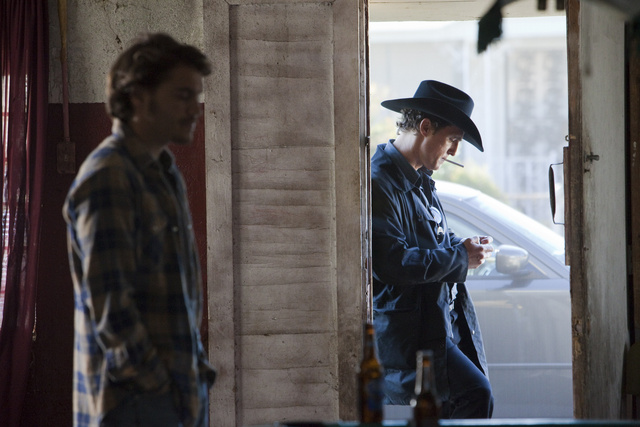
EIFF 2012 Roundup

Being from out of town I only managed a few days at this year’s festival. I wish I had been able to see Nicolas Provost’s The Invader which I heard great things about but here’s the pick of the movies I managed to catch while I was down there.
Killer Joe (William Friedkin)
Prior to his new film the opening the Edinburgh International Film Festival William Friedkin was at the Filmhouse for a special showing of his great crime thriller The French Connection (1971). Forty years later and Killer Joe feels like the work of a hotshot young director but that’s a backhanded compliment. It’s a dark and twisted tale channelling the same skewed Americanayou find in the novels of Barry Gifford, part thriller part fairytale. Based on a play by Tracy Letts, who also provided the material for Friedkin’s earlier Bug (2006), Friedkin opens out the action so even with the dialogue heavy scenes it never seems stagey. Yet Killer Joe is all surface with not much underneath. Witty in its deconstruction of the effects of the economic crisis and an overlying moral decay at the heart of a society where monetary gain is placed above all else, the film’s main flaw is it simply does not give a damn about these people. It works effectively as post-feminist revisionist fairytale in which the female victim tames the big bad wolf but that was done better by Matthew Bright in his Freeway movies.
Grabbers (Jon Wright)
 
 
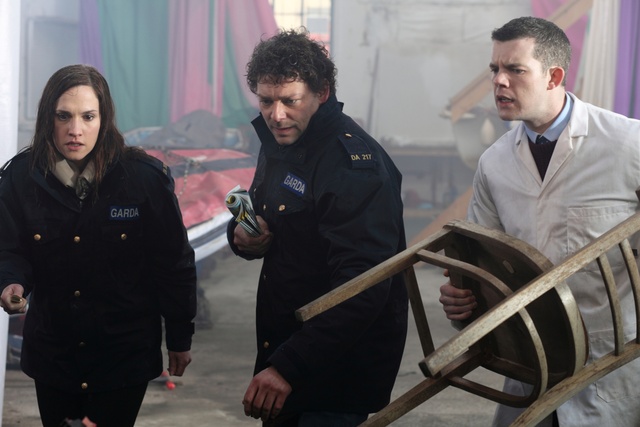
Possibly the best film I’ve seen in which a drunken Irishman kicks an alien to death, Grabbers was a pleasant surprise. Imagine an Irish Local Hero crossed with 80’s horror films like Tremors and Ghoulies and you have an idea of what to expect as a small island is invaded by squid like creatures with a taste for human blood. Richard Coyle (Pusher) is charming as the feckless Garda officer who is perked up by the arrival of an uptight colleague (Ruth Bradley) from the mainland. With a witty screenplay, impressive CGI, and a great supporting cast including Bronagh Gallagher (Pulp Fiction) Grabbers deserves to reach as wide an audience as possible.
Dragon (Peter Chan)
 
 
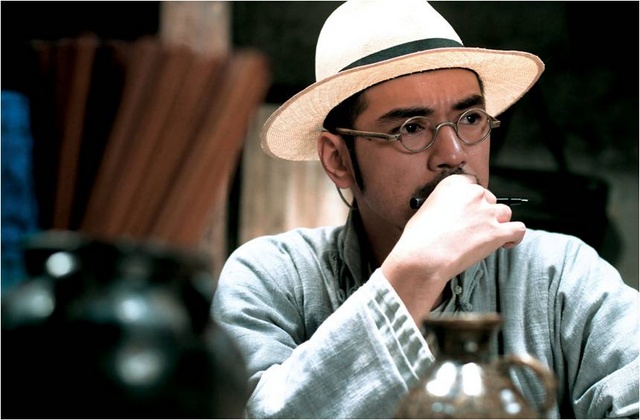
Highly entertaining martial arts film choreographed by star Donnie Yen with a great performance from Takeshi Kaneshiro as a troubled detective piecing together how a country bumpkin Liu Jin-xi (Yen) not only survives a confrontation with two ruthless killers but somehow leaves them both dead. Peter Chan’s film is an intriguing and thoughtful addition to the Wu Xia genre. A Chinese variation on David Cronenberg’s A History of Violence its plot grips as the audience is left wondering whether Jin-xi is who he claims to be or Xu Bia-jiu (Kaneshiro) is imagining things that aren’t there.
Shadow Dancer (James Marsh)
 This understated thriller is a throwback to the kind of films that British and Irish cinema regularly produced about the Troubles in the 80’s and early 90’s. Set in 1993 just before the peace process begins to take hold Shadow Dancer is based on a novel by former journalist Tom Bradby. Director James Marsh, better known for his documentary work, has an eye for detail and the film is certainly gripping. Single mother and IRA volunteer Collette (Andrea Riseborough) finds herself forced to tout for the British security forces by MI5 operative Mac (Clive Owen) but unforeseen events put her life in serious danger as IRA hardman Mulville (David Wilmot) starts asking questions. Shadow Dancer is well acted and interesting but there is nothing here we haven’t seen before in those earlier films which were contemporaneous and had an urgency about them that is missing here.

EIFF 2012 – Pusher (Luis Prieto)

“Frankie my friend, you owe me money.”


Sadly not a Bad Lieutenant: Port of Call New Orleans (2009, Werner Herzog) style reworking with the premise of an earlier film turned into something strange and new, this flashy remake moves the action from Copenhagen to London and mimics the style and plot of Nicolas Winding Refn‘s debut Pusher (1996, ) but fails to capture its emotional intensity. Frank (Richard Coyle) botches a drug deal after getting lifted by the police while carrying gear borrowed from amiable gangster Milo (once again played by Zlatko Burić who appeared in all three of Refn’s Pusher movies). While comparisons are inevitable Luis Prieto’s film remains watchable enough thanks to a charismatic turn from former Coupling star Coyle cast against type and the strength of Refn’s narrative which still grips from the moment Frank finds himself in trouble. 

There is plenty of gangster movie posturing in Refn’s movie but there was a sense these people had inner lives; that they existed outside the clichés of the genre. In one memorable sequence the towering Serbian enforcer Radovan (Slavko Labovic) spoke of his dream of retiring from a life of ripping out kneecaps and opening a restaurant. Most of the characters seemed trapped by their circumstances be it poverty or their involvement in crime. Moments of reflection are skimmed over in the remake. There is a hamfisted attempt at conveying the human cost of Frank’s trade with a harmless old shopkeeper being leaned on a little too heavily but when Prieto cuts to a close-up of a dog sadly observing the aftermath the effect is anything but subtle.


You could understand why Kim Bodnia’s Frank worked with Tonny (Mads Mikkelsen).  These two seemed like friends and Frank was a thug, smarter than Tonny but not by much. Coyle’s Frank is more intelligent and would surely figure Tony (Bronson Webb) for a liability long before he lands him in it.  While Coyle and Burić are effective the rest of the cast act like they are in an episode of The BillAgyness Deyn looks far too healthy for a woman who is supposed to be hooked on drugs and desperate to escape from her destructive lifestyle. Pusher 2012 is an interesting film to watch for long-time admirers of Refn, though a new entry in the series would have been preferable. The film is worth seeing however for Coyle, the impressive neon-tinged visuals by cinematographer Simon Dennis, and the score by Orbital. 

Questions in a World of Blu-ray

image

If you are a Lynch fan I’d hold off buying this box-set for a little while. The films are still great but there isn’t really enough to justify shelling out £48 and replacing any older and better releases in your collection. Only Dune (1984) and Blue Velvet (86) have extras while the rest are either appended with short films or in the case of Wild at Heart (90) and Twin Peaks: Fire Walk with Me (92) ignored completely. Worse still there are glitches on a couple of disks. Twin Peaks: Fire Walk with Me has three incidents where the audio jumps, the most notable when Julee Cruise is singing in the bar. Lost Highway(96) skips a full three minutes during the film’s finale. 

Casa de mi Padre (2011, Matt Piedmont)

“Mi nombre es Armando Alvarez”

Kris Kristofferson introduces Casa de mi Padre with a disclaimer which would sound like an apology for the entire film being in Spanish were it not for the man who played Sam Peckinpah’s Billy the Kid doing the talking. Instead Kristofferson’s gruff amiable delivery is more like a friendly warning, the kind Billy would make before he gunned somebody down. It is fitting because as funny as Case de mi Padre the film is also an entertaining Western put together by people who clearly have a lot of respect for the genre.

Writer Andrew Steele and director Matt Piedmont are both Saturday Night Live alumni and have worked on Ferrell’s Funny or Die website. Casa de mi Padre might seem more suited for a short sketch but you have to admire Ferrell and his posse for going all the way and making a film so defiantly out there that its best hope is finding a cult following on DVD. The Other Guys (2010, Adam McKay) worked for audiences because everybody knows the conventions of the buddy cop movie but Casa de mi Padre is Ferrell’s most esoteric film to date. Technically it may recall other retro homage’s like Machete (2010, Robert Rodriguez) or Black Dynamite (2009, Scott Sanders) with its deliberately scratchy look and dodgy editing, but Casa de mi Padre has a weirdness all of its own.

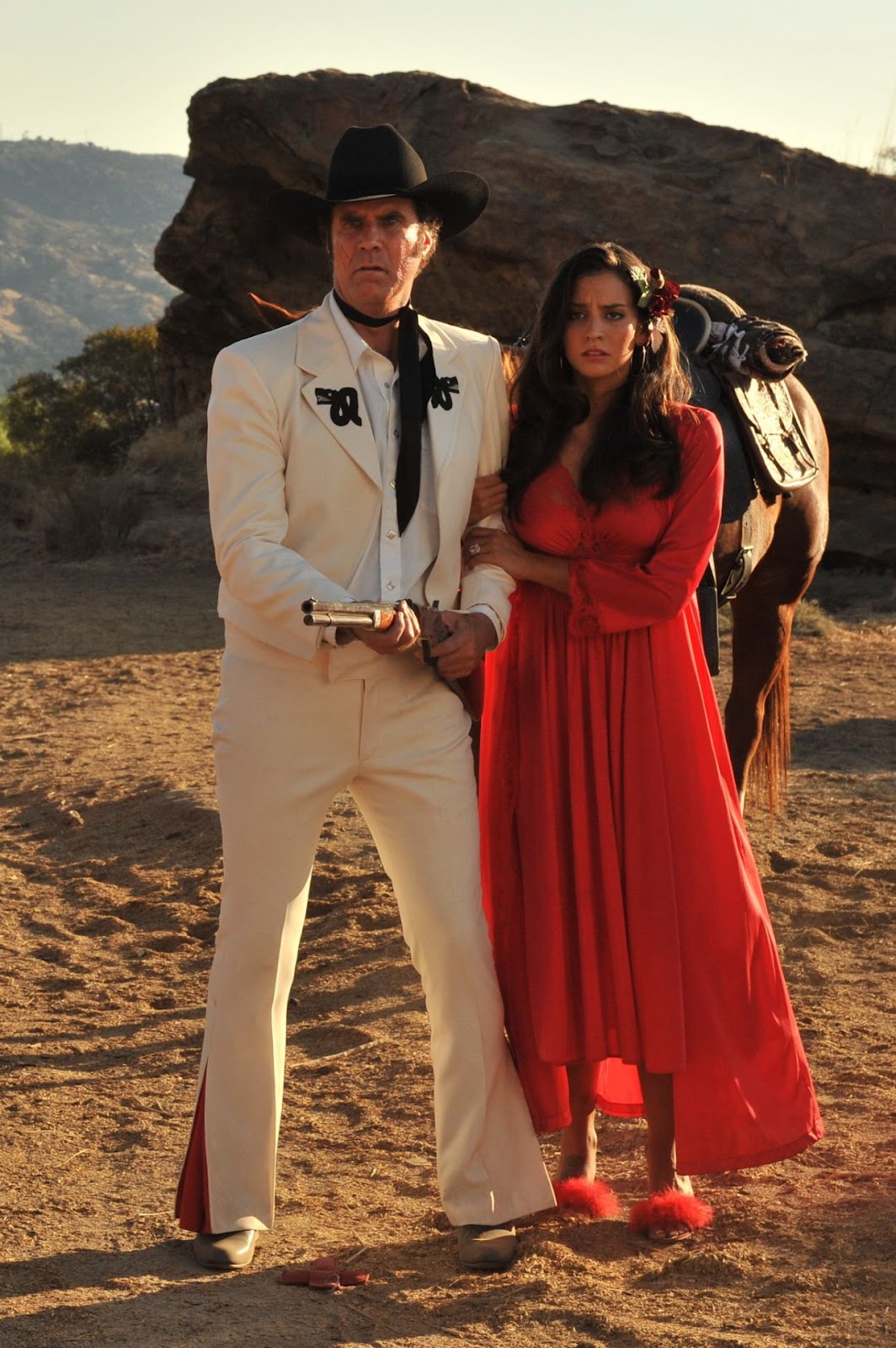
Dim bulb Armando Alvarez (Ferrell) lives and works on his father’s ranch herding cattle and hanging out with his ranchero buddies Esteban (Efren Ramirez) and Manuel (Adrian Martinez). Armando’s idyllic life is thrown into turmoil when his slick younger brother Raul (Diego Luna) returns home from the city with his beautiful girlfriend Sonia (Genesis Rodriguez). Being a male virgin more at home on the range than in the company of women it takes Armando a while to realise Sonia is the girl for him. Unbeknownst to his family favoured son Raul is a drug dealer determined to go up against the white suited leader of the local cartel (Gael Garcia Bernal) for control of the area’s narcotics trade and Armando finds himself caught in the crossfire.

Ferrell’s Spanish is impressive and delivered in deadpan while the subtitles give the impression of being put together by somebody who uses English as their second language. “I will beat you with both these hands.” Genesis Rodriguez is a real find, beautiful but capable of mixing it with the boys. Oddly enough both their performances are absolutely sincere which makes it even funnier. Mexican bromantics Bernal and Luna ham it up nicely with the latter delivering a hilarious speech about why it’s okay to sell drugs to Americans. As with The Other Guys there are social concerns present in the film but they never weigh down the narrative. Best of all is the Morricone influenced soundtrack with a belting Christina Aguilera opener and some inspired musical numbers including a terrific duet between Ferrell and Rodriguez over the final credits. 

The Red Shoes (1948, Michael Powell) – Screening Notes


“Time rushes by, love rushes by, life rushes by, but the red shoes dance on.”

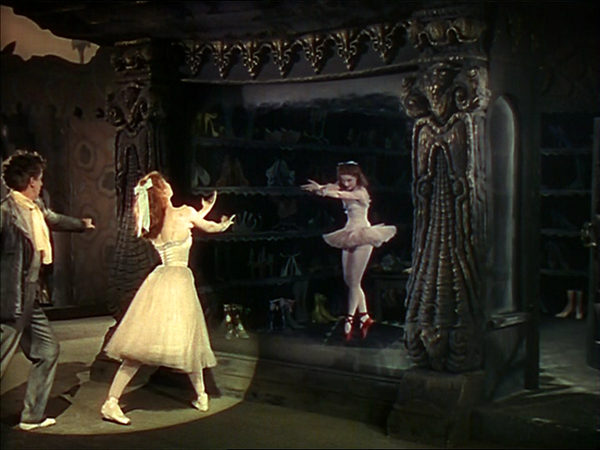
Loosely based on a fairytale by Hans Christian Anderson, The Red Shoes is a lavish drama about a ballerina (Moira Shearer) torn between two men. Impresario Boris Lermontov (Anton Walbrook) demands she makes the most of her talent and gives everything up for her art including the affections of composer Julian Craster (Marcus Goring). Early on Lermontov asks her “why do you want to dance?” and she replies “why do you want to live?” Eventually she must make a choice between what she loves and whom she loves.
The work of writer/director team Emeric Pressburger and Michael Powell has proven influential over the years. You can see their hand in the work of Baz Luhrmann while the recent Black Swan (2010, Darren Aranofsky) owes much to The Red Shoes. Pressburger was a Hungarian émigré who moved to Berlinto work as a journalist before turning to screenwriting. After the Nazi’s rise to power Pressburger left Germanyfor Englandfinding work in the film industry with Alexander Korda’s studio. Michael Powell worked prolifically in the 30’s providing quickly made features to meet the British film industry’s quota for home grown films. However The Edge of the World (37), loosely inspired by the evacuation of St. Kilda showed a developing style and an interest in mysticism.
Korda put Powell and Pressburger together on the war film The Spy in Black (39) and they became friends. Forming their own production called The Archers and working with total autonomy within the Rank Organisation they began to make highly distinctive and idiosyncratic films often in Technicolor, a process which saturates the frame with bright colours and would later become synonymous with the musical. During the 1940’s they created a series of classics, The Life and Death of Colonel Blimp (43), I Know Where I’m Going! (45), A Matter of Life and Death (46), and Black Narcissus (47).
Despite its success The Red Shoes went over budget bringing them into conflict with Rank who cut them loose. They returned to low-budget filmmaking for the underrated The Small Back Room (49), about a troubled bomb disposal expert, and then back to Technicolor for the opera Tales of Hoffman (51) but neither made much impact at the box-office. Their films became increasingly compromised by studio interference and they separated in 1957. Powell effectively destroyed his career with the haunting serial killer film Peeping Tom (1960) which caused outrage in Britainon its release. In the 60’s British cinema tended towards realism and Powell and Pressburger’s movies with their love of the fantastical, high emotions, and bright gaudy colours fell out of fashion.
A critical reappraisal of their work began in the 70’s when Martin Scorsese began to champion Michael Powell and cited The Red Shoes as being his favourite film. 

Coriolanus (2011, Ralph Fiennes) – DVD Review

“Go Get you home you fragments.”

Ralph Fiennes directorial debut sees him returning to a role he played on stage back in 2000. Together with Gladiator (Ridley Scott 2000) screenwriter John Logan, Fiennes has moved the action into a modern Balkans style war zone. Shakespeare’s play is one of his lesser known tragedies but its themes of public disaffection with the political process are certainly relevant to contemporary audiences. 

Coriolanus is a war hero whose refusal to play the political game leads to his downfall. Instead of being pragmatic and flattering the people Coriolanus is brutally honest with them. They hate him for it. You can see why Fiennes wanted to bring this play to the screen in an age where spin and public opinion now play a huge part in politics. The need to be seen to be doing and saying the right things nowadays is often more important than actually doing the right thing.

Fiennes worked with director of photography Barry Ackroyd on The Hurt Locker (Kathryn Bigelow 2008) and has brought him in here to lens similarly gritty action sequences. Coriolanus incorporates actual newsreel footage into its opening scenes and then uses extras to convey riot scenes and a dissenting populace. Unfortunately the Serbian locations recall the cheap and cheerless output of straight-to-DVD action stars like Jean Claude Van-Damme and Steven Seagal.

Fiennes is physically impressive as Coriolanus, looking every inch the warrior. Acting wise he is at his best in his quieter moments, but when he gets animated and carried away with his enunciating he sends spittle flying towards his co-stars. Vanessa Redgrave is formidable as his mother, but again this depends on how theatrical you like your acting. Surprisingly it is Gerard Butler who gives the best performance. Now it is quite possible Gerard Butler has never been in a theatre in his life, but that’s not a problem because here he brings movie star charisma and understatement to his role as Tullus Aufidius, deadly rival to Coriolanus.

Coriolanus will at least provide pupils studying Shakespeare at school a decent skive during English class, but it is a long way from the best Bard adaptations. Fiennes direction is workmanlike at best, though the approach taken to the play is intelligent. When Coriolanus is banished he swears revenge and seeks out Aufidius as an ally. These scenes of bromantic longing onscreen bring the film to life, but the rest is a chore.

Extras

Audio commentary with Ralph Fiennes and a making of documentary. 


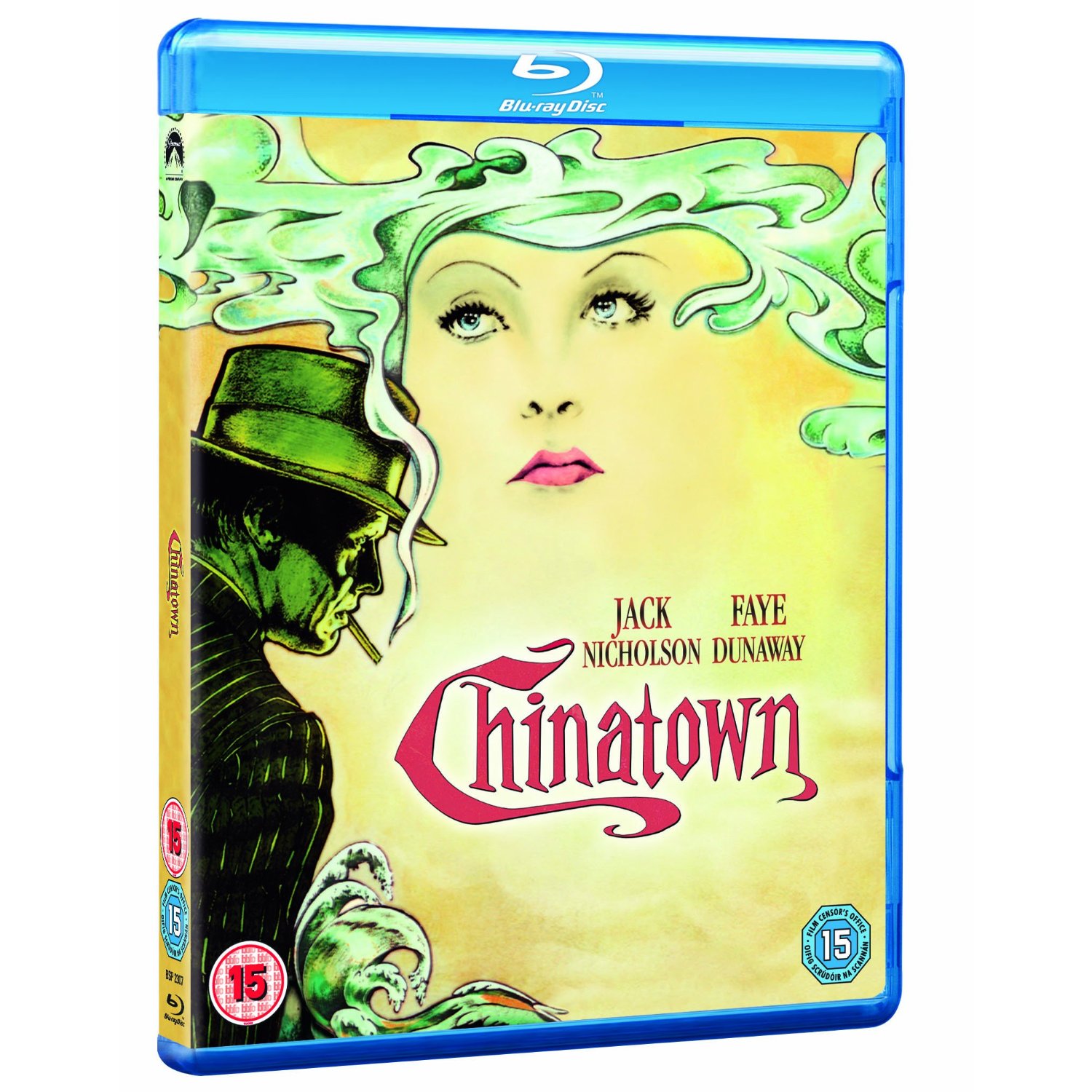
Blu-Ray DVD Roundup – ‘Chinatown,’ ‘Iron Sky,’ ‘A Room with a View’


Chinatown (1974, Roman Polanski)

The product of four brilliant individuals, screenwriter Robert Towne, producer Robert Evans, star Jack Nicholson, and director Roman Polanski, Chinatown bounces the auteur theory on its head. Jake Gittes (Nicholson) is a Private Investigator specialising in divorce cases who is duped into exposing an apparent affair between Hollis Mulwray, chief engineer of the local water company and a young woman. When the real Mrs Mulwray (Faye Dunaway) turns up armed with a lawyer Gittes realises he has been used and starts to do some real detective work. Much of the film is spent observing Gittes as he puts his case together, visits locations, and slowly pieces together the truth. It may borrow the form of the classic detective movie but Chinatown is so much more than a genre pastiche. Instead of a lost object being sought after as in The Maltese Falcon the city itself is up for grabs. Gittes is a tarnished knight in the Marlowe mould but more fallible.
Chinatown is not just one of the great American movies but one of the great movies about America. Towne based his screenplay on real-life double dealings in the city of Los Angeles and a conversation with a cop who worked Chinatown and described minimalist approach to law enforcement in a place where nobody was quite sure what was going on. Polanski brought in by Evans to direct and lured back to Los Angeles for the first time since Sharon Tate was murdered brings an embittered eye to the city. No director has ever been less interested in sentimentality or more aware that terrible things can happen to people than Polanski and he was right to insist the film should end as it does. Sad that while the USrelease has a wealth of extras including a commentary track by Towne and David Fincher the UKdisk is vanilla flavoured. Paramount seems to be saying forget it Jake, its Chinatown. Or possibly just fuck you.


Iron Sky (2011, Timo Vuorensola)
Much more fun than expected Iron Sky mixes a killer premise with a campy satirical tone. In fact it reminded me a lot of the final season of the cult science fiction show LEXX (1997-2001) which hid its intelligence behind its outrageous storylines and weird humour. In 1945 Nazi’s went to the moon and have been there ever since just waiting for the opportunity to return and finish what they started. They have a new Fuhrer (Udo Kier) but their technology is hopefully outdated. Only when they capture a USastronaut/male model (Christopher Kirby) and realise his mobile phone is more powerful than their computer do they realise they have the power to return to Earth. Towering soldier Klaus Adler, played by Gottz Otto (Tomorrow Never Dies), is sent down to prepare for invasion. Tagging along for the ride are Renate (Julia Dietze) who has been indoctrinated to believe Nazism is peace-loving and The Great Dictator (1940, Charles Chaplin) is a short film about how nice Hitler was. It’s funny, takes a welcome aim at US self-interest, and for a low budget movie Iron Sky looks great. There are a few perfunctory extras and a digital download.


A Room with a View (1985, James Ivory)
It is unfashionable these days to admit you like a Merchant/Ivory film but A Room with a View is the team’s best work. Based on E.M. Forster’s novel, Lucy Honeychurch (Helena Bonham-Carter) is the young Englishwoman whose passions are aroused by a holiday in Italy and an encounter with the handsome but odd George Emerson (Julian Sands). There’s a great performance from Daniel Day-Lewis as her pompous but ultimately sympathetic fiancé Cecil, who personally I always had more time for than the impulsive George. He might be a snob but at least he has a sense of humour. There’s a decent set of special features here. BBC Breakfast Time interviews with Simon Callow and a giggly Day-Lewis, an archive report on the film’s success in America also from Breakfast Time, and a report from ‘Film 96’ on the Merchant/Ivory pairing. There is also a rather dry tribute to E.M. Forster aired by the BBC after his death in 1970. It is interesting to watch Forster being talked about before his revelatory posthumous novel ‘Maurice’ was published a year later. 


Bring Me the Head of Alfredo Garcia (1974, Sam Peckinpah) – Classic

“There ain’t nothing sacred about a hole in the ground or the man that’s in it.”

Sam Peckinpah’s bleakest film is one of his most personal. Bring Me the Head of Alfredo Garcia is nasty, brutish and embittered, but also romantic in its own drunken way; part wish fulfilment and part death wish. The late, great Warren Oates is in his element as Bennie, a cynical barroom pianist in a Mexican drinking hole who foolishly accepts a gig to bring the head of a philandering young stud to an angry Mexican crime boss.

Two hitmen walk into Bennie’s bar looking for Alfredo Garcia. They offer Bennie the chance to earn some cash by finding Garcia. Bennie meets their associates, the money me, who sit in a lifeless office sipping brandy and smoking cigars. It is easy to imagine these suits as being Hollywood executives and Peckinpah as Bennie forced to deal with these snakes to get the money he needs.

Bennie is given four days to deliver Alfredo Garcia’s head and it had better match the picture he has been given. Otherwise Bennie will be the man they come after. Robert Webber and Gig Young are genuinely nasty as Sappensly and Quill, the two hitmen with a relationship that seems to be modelled on Mr Wynt and Mr Kidd from the James Bond film Diamonds Are Forever (Guy Hamilton 1971).

Bennie knows Alfredo Garcia is already dead having met his end in a car crash. He searches out Elita (Isela Vegas) who knows where Garcia’s body is buried. Bennie and Elita become an item though he loses her when he crosses the threshold between life and death by digging up the corpse of Alfredo Garcia and sets himself on a confrontation with his paymasters.

Although famed for the violence present in his films, Peckinpah’s Bring Me the Head of Alfredo Garcia is a slow-moving affair. It moves at a drunkards pace, with Warren Oates shambolic protagonist realising too late his dreams of a life on the open road with his girlfriend and his £10,000 are impossible.

In its own perverse way it is a love letter to Mexico, even though the place is presented as being extremely dangerous. In its quieter moments though, Peckinpah makes the country look like heaven. Bring Me the Head of Alfredo Garcia is fatalistic offering little hope for Bennie, nor for its director who by then had tired of Hollywood interfering in his work. Critics hated the film on its release describing it as nihilistic, but really it’s a sentimental work by a man who was big enough to admit he’d had enough.

Leaving Your Other Self Behind – ‘The Double Life of Veronique’ (1991, Krystof Kieslowski)

“I have a strange feeling….”

 The Double Life of Veronique saw Krysztof Kieslowski (1941-1996) moving away from the social concerns of films like A Short Film about Killing (1988), and focusing on the supernatural elements that often touched his work. There was always an otherness to Kieslowski’s films; the suggestion of something beyond our understanding. No End (1984) is the most obvious example, with a ghost watching over his ex-wife during a period of political unrest. Tellingly the living and the dead both seem as sad and lost as each other. The Double Life of Veronique is an enigmatic tale of two identical women, Weronika and Veronique, living uncannily similar lives.

Kieslowski claimed not to be interested in politics, but making films under an authoritarian and censorious regime meant there were always restrictions placed upon him. The Double Life of Veronique is Kieslowski’s first film made without fear of outside interference. At one point Weronika walks in a different direction from a political march in Krakow, oblivious to the protesters. Kieslowski seemed to be taking a similar journey, towards something broader and more universal.

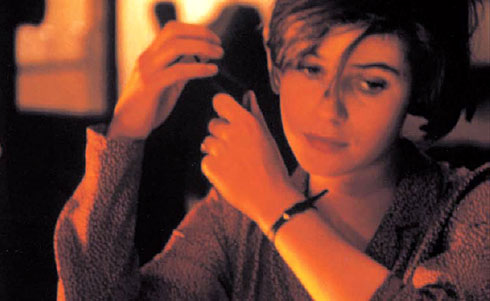
Two physically identical women in two different cities; both are singers, both have weak hearts. There is a moment when they almost meet. Weronika (Irene Jacob) is astonished to see a woman who looks exactly like her amongst a group of French tourists. As her doppelganger boards a bus Weronika runs after her and Veronique (Jacob) inadvertently takes her photograph. Kieslowski and cinematographer Slawomir Idziak make the world seem far more beautiful than it normally is bathing it in a permanent golden haze. Photographs, reflections, twin dolls; doubles haunt the film. Often images are distorted by glass, to add to the feeling of otherness.


Weronika is full of life. First seen singing in a choir, she keeps singing long after her colleagues have stopped and sought shelter from the rain. She experiences a rapture bordering on the religious. Music also links the two women. Weronika dies during a concert when her heart gives out. Veronique is immediately struck by a feeling of grief. The next day she visits her singing teacher and tells him she is giving up. Veronique seems more tentative than Weronika, more hesitant and troubled, yet we only get to know her after she is affected by this inexplicable feeling of suddenly being alone.

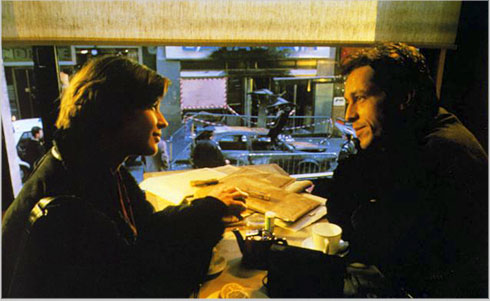
Veronique is drawn towards Alexandre (Philippe Volter), a puppeteer who visits the school she teaches at to perform a marionette show. Alexandre begins to reappear in Veronique’s life as if by coincidence. Veronique retreats from Alexandre when he claims he wants to use her as inspiration for a novel, but they spend a night together in a hotel. Though The Double Life of Veronique presents the doppelganger as being like a lost sibling, there is a brief reminder that the idea of an exact double is often used as a source of terror. Alexandre looks through the photo-reels from Krakow and shows Veronique the picture of a woman he assumes to be her. Yet Veronique knows she took the photo, and she never owned clothes like the one the girl (Weronika) is wearing.


Alexandre creates a story for his marionette show about identical girls; one of whom burns her hand badly by touching a stove, but the other pulls away at the last moment as if influenced by the pain visited upon her double. Veronique backs away from Alexandre and leaves him to his puppets. Kieslowski too shies away from revealing any more as if like Veronique he feels the implications are too much to bear. Kieslowski announced his retirement shortly after the release of Three Colours: Red (1994), despite the film’s commercial and critical success. Like Veronique he returned home. Like Weronika his heart failed him.

Kieslowski commented on the difficulties of conveying “the realm of superstitions, fortune-telling, presentiments, intuition, dreams.” (1) For Kieslowski these make up the inner-life of a human being and no filmmaker since his death has been able to deal with these themes as effectively. German director Tom Twyker tried with the stylish but empty Blind Chance (1981) knock-off Lola Rennt (1998), and the ghastly euro-pudding Heaven (2002), based on an unfinished screenplay by Kieslowski and his regular collaborator Krysztof Piesiewicz. There is no other self out there, another Kieslowski, a doppelganger blessed with the same ability to ask metaphysical questions with a sublime grace.

1.       p 194 Kieslowski on Kieslowski. Faber & Faber 1995