Favourite TV Show Episode Blogathon 2025 – 21 Jump Street – Mike’s P.O.V.

This post is part of the annual Favourite TV Show Blogathon hosted by Terence Towles Canote on his blog A Shroud of Thoughts.

21 Jump Street (1987-91) is probably better known these days for the two Phil Lord/Christopher Miller comedies sending up the show’s premise about baby-faced cops going undercover to solve crimes in high schools. Back in the 80s’ it turned Johnny Depp into a teen idol and helped launch his movie career when John Waters cast him as the male lead in his movie Cry Baby (1990) after buying a bunch of magazines to see who teenage girls were into. Created by writer Patrick Hasburgh (Hardcastle & McCormick) and legendary producer Stephen J. Cannell (Wisguy, The Rockford Files, The A-Team) 21 Jump Street was an entertaining mixture of cop show and high school drama although it could be heavy-handed when dealing with social issues and there was a tendency towards preachiness in some episodes. Mike’s P.O.V. was based on a story by John Truby and written by James Wong and Glen Morgan who would later go on to work on The X-Files and then later co-write Final Destination (2000) and the Jet Lee movie The One (2001). 

Episodes usually open with a pre-titles sequence showing the criminal activity the Jump Street unit will be investigating. Then the episode will switch to Jump Street where the team will begin building a case and assigning undercover roles. Mike’s P.O.V. does something very different by making the suspect the main protagonist of the episode. We see everything from his perspective. Officers Hanson (Depp) and Penhall (Peter DeLuise) are working the case, but we never see them being briefed. To Mike (Donovan Leitch Jr.) they’re another student and a football coach and we only see them through his eyes. The other regular cast members Ioki (Dustin Nguyen) and Hoffs (Holly Robinson Peete) only appear in the credits. Jump Street boss Capt. Fuller (Steven Williams) has a wordless cameo during the final moments arresting the teacher who hired Mike to kill his wife. 
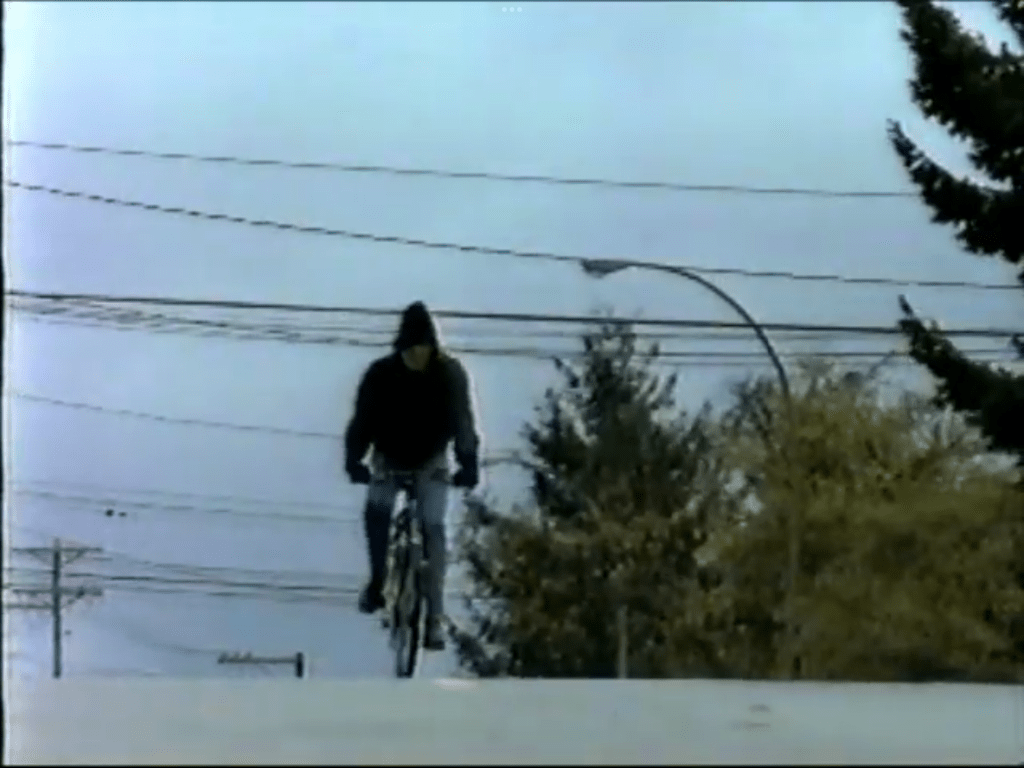
We first see Mike lying on his bed staring at the ceiling. Then eating his Teenage Mutant Ninja Turtles cereal at the breakfast table while half-watching one of those post Jane Fonda Workout knock-off aerobics TV shows they used to make in the 80s’. Then he goes outside and gets on his pushbike. He’s wearing a black jacket, black beanie hat, and a rucksack on his back. He looks like a kid going to school. He also kind of looks like a hitman. It turns out he’s both. The beanie hat is actually a balaclava. Mike approaches a parked car and fires two shots into the driver’s side killing the female driver as she waits for her husband Mr Tompkins (Paul Linke). Then he goes to school. Calmy answering “here” when the class teacher calls out his name. 

Mike’s an odd kid. He’s by no means an outsider but he struggles to fit in with his classmates. It turns out Mr Tomkins is a teacher at his school and his absence is noted when his class riots and spills into Mike’s classroom. He’s sweet on Helen (Robyn Lively) but has no idea how to take it any further. At home he listens to heavy metal music and trashes his room. His mother’s a drunk who pays little attention to him. Dad’s not around. 80s’ heavy metal music and parental neglect. There’s an overriding conservatism in 21 Jump Street that mark these out as signifiers of a kid who’s going to go off the rails. Especially the heavy metal music which at the time got caught up in the tail-end of the Satanic Panic and was often linked to Satanism by the conservative media. 

At school he’s on the fringes of his social group. He contributes nothing to a debate in class comparing the Iran Contra scandal to Watergate preferring to keep quiet while the other kids express a cynical admiration for Reagan managing to get away with it. He clumsily asks Helen on a date to the funeral. She has to lead him through the proceedings because he’s never been to church (another conservative red flag). Later when he tries to buy tickets for a rock concert, he has to ask the guy at the venue which band he thinks girls would like. Whitesnake, 10,000 Maniacs, or The Bodines. I mean pick one dude. They’re all great bands. 

Mike begins to try and buy favour with his classmates by using the money from the hit to impress them. He takes a fancy to the new coach’s (Penhall undercover) truck and tries to buy it from him. Instead, he spends $1500 on a corvette asking the man selling it “It’s cool right. When people see you driving it, they think it’s a cool car right?” Mum wonders where he’s getting the money because he got fired from his last job. Mike tells her he’s now working at the ice-rink, and she returns to the bottom of a beer bottle. When he spends $200 to use the rink for an after-hours hockey match for his class-mates he falls out with the owner who demands more cash. As they leave the owner tells the group, “He don’t work here.” 

Depp rarely speaks in this episode channelling the kind of offbeat weirdness that would define his screen roles in the decade to follow. Mike took an immediate dislike to Hanson when he helped Helen pick up her books in the corridor after another kid bumped into her. He asks Bill (Vince Vaughn) not to invite Hanson to the hockey match. When he turns up Mike pole-axes him on the ice. At the funeral he tells Penhall “I don’t like him. He tries too hard to make friends.” But his dislike turns to suspicion when he finds Hanson inspecting his bike. Later he follows Hanson to the police station where he sees him greeting an officer. 

“I have the feeling someone knows” he tells Tompkins demanding more money because he heard somewhere the going rate for a hitman is $10,000. Tomkins threatens to hire another hitman for less money to take care of him. So when Mike sees Tomkins talking to Hanson he begins to worry. He’s spiralling now. No longer talking to his classmates and telling Penhall to leave him alone. Resigned to having to kill Hanson. “Can’t go back now.”  He gives the Whitesnake tickets to Helen’s friend who’s delighted she won’t have to go to the concert with him. And he lures Hanson to school at night intending to kill him in Tompkins classroom, but Penhall is there to back up his Jump Street colleague. “Why’d you do it Mike?” and his answer is he wanted his classmates to like him. 

Mike’s P.O.V. tries to do something formally different with the structure of the show. It’s interesting and a little ahead of its time in trying to analyse the mindset of a potential shooter. I’m not quite sure the psychology hangs together, and the absurdity of the 21 Jump Street’s premise always undercuts any attempts at seriousness. I’ve got a lot of time for producer Stephen J. Cannell. You might remember him as the guy who signed off at the end of the credits by taking the page from his typewriter and throwing it up in the air. The Rockford Files and Wiseguy are two of the most influential TV shows ever made and his name is on a long list of hit shows (Hunter The Greatest American Hero, Renegade). I’m still making my way through 21 Jump Street (I think the spin-off Booker might be the better show) but it’s entertaining enough though whether it continues to be so after Depp and the original cast leave at the end of season 4 remains to be seen. 

7th Annual Favourite TV Show Blogathon – Dark Shadows – Episode 702 (1969, dir. Henry Kaplan)

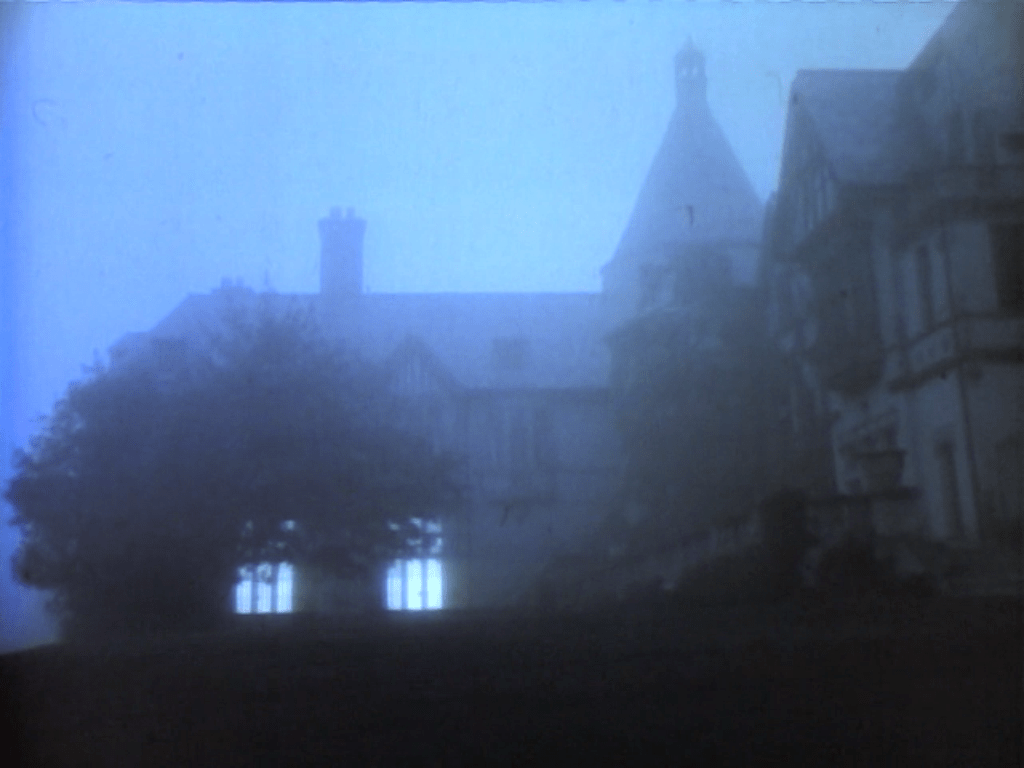
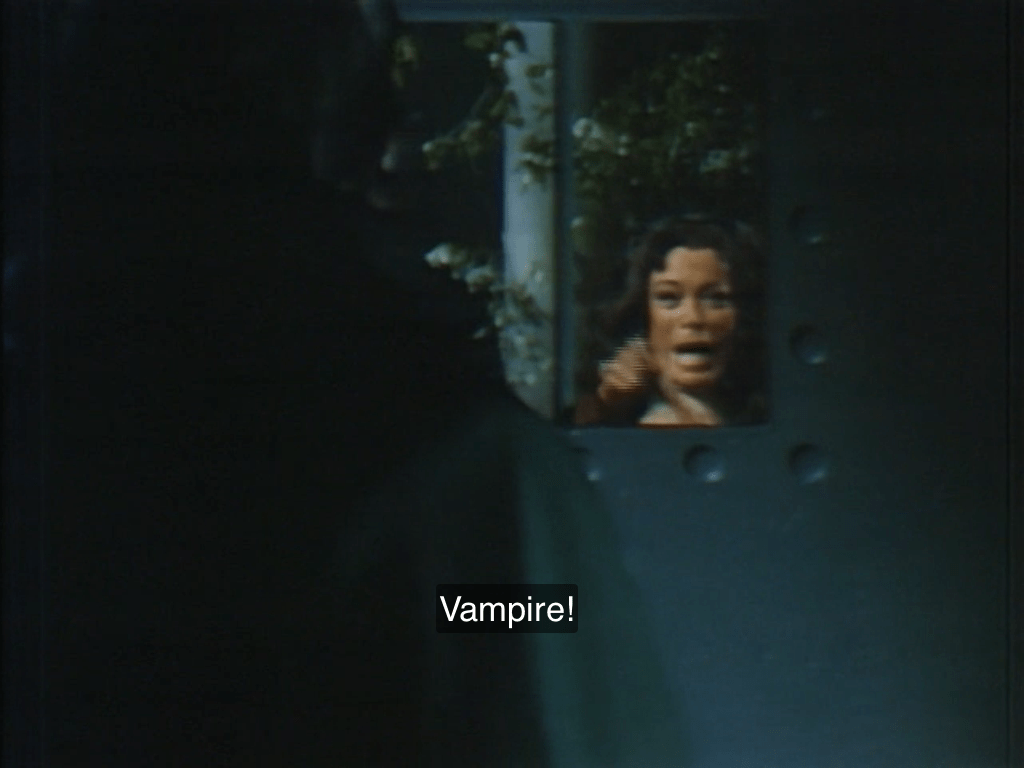
I’m 759 episodes into Dark Shadows so there’s only another 470 episodes, two movies, a 90s’ reboot done by the original show’s creator Dan Curtis, and a failed 2003 pilot to go. It’s been quite the journey. What started as a black-and-white small-town soap opera has morphed into colourful tales of Gothic horror. There was always a hint of otherness present in the show right from the beginning, but it was there in the background in the hallways of the big house called Collinwood and the feeling that the family that lived there were hiding some terrible secret.

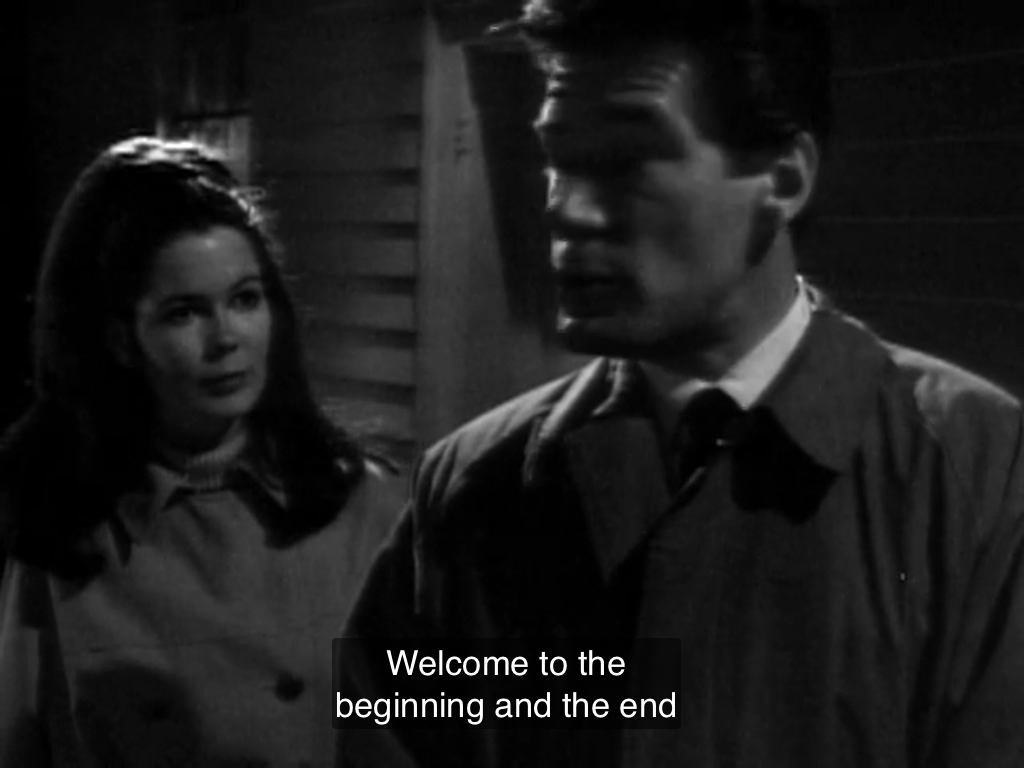
The main storylines which dominated the early days of Dark Shadows were relatively simple and revolved around two strangers who met on the same train to Collinsport. Victoria Winters (Alexandra Isles) has recently been hired as a governess to look after young David Collins (David Henesy), but there are hints somebody might have an ulterior motive for bringing her to town. Victoria was brought up in a children’s home and has no memory of her real family. Burke Devlin (Mitchell Ryan) is returning home having left in disgrace some years ago after serving time for manslaughter after causing a fatal car accident. Now he’s made his fortune and returned to take revenge on the man he blames for his imprisonment, Roger Collins (Louis Edmonds).

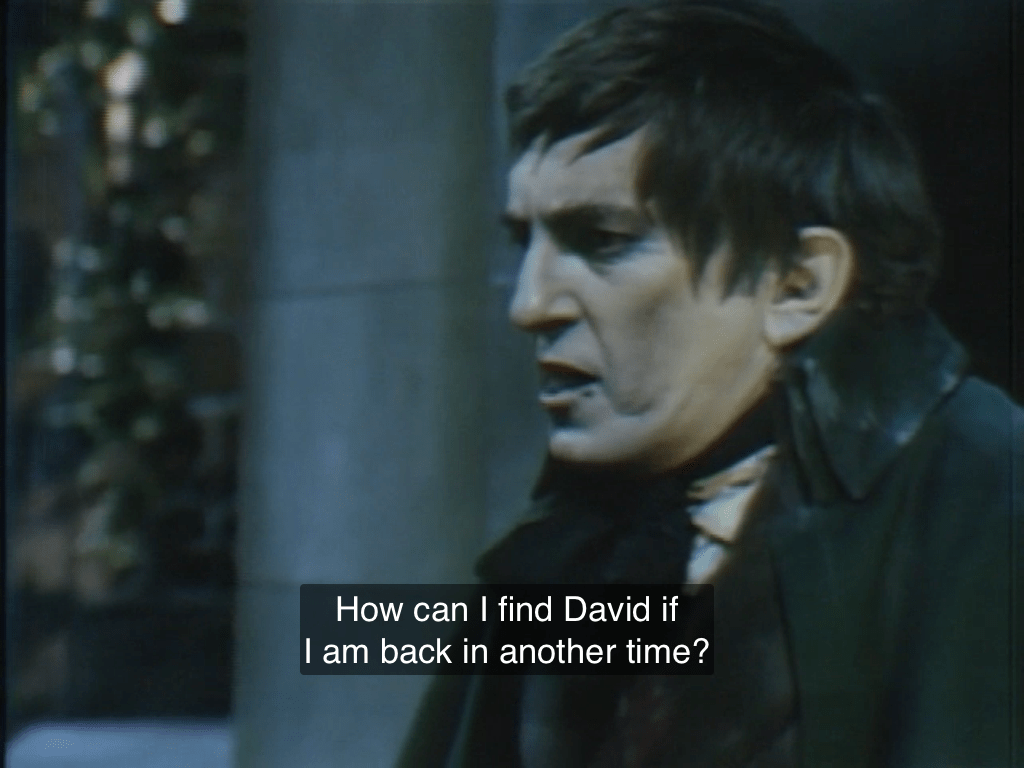
By the time we get to 702 both characters are long gone having both been recast then eventually written out completely. Their initial storylines were never finished and it seems unlikely they will be resolved in the remaining episodes. Dark Shadows main protagonist now is the vampire Barnabas Collins (Jonathan Frid), whose first appearance was slowly built up to with references to a creepy painting of him as a young man in 1797 which hangs in a hallway in Collinwood, Then when he’s inadvertently freed from his coffin by petty thief Willy Loomis (John Karlen) he returns to his former home claiming to be a cousin from the London branch of the Collins family tree.

Why choose episode 702 over all of the others I’ve watched? There’s been a lot of good storylines in Dark Shadows and some really unsettling moments, notably the whole of the Laura the Pheonix story arc in which the mother of young David Collins (David Henesy) returns after many years to reclaim her child, but she’s not what she seems, “That’s not my mother.” But 702 is the episode when I realised how much of an influence Dark Shadows has had on Twin Peaks. The strange occurrences in a small town and soap opera elements of the early episodes had already alerted me to this, but later on we get actors playing several different roles, buddhist mythology, demonic possession, haunted paintings, a ring that carries meaning, and the protagonist travelling back in time to try and avert a tragedy. I don’t know if David Lynch or Mark Frost ever saw Dark Shadows but it must have been on in the background when they were kids.

In the episodes leading up to 702 David Collins and his friend Amy (Denise Nickerson) have been playing in the old abandoned west wing of Collinswood and disturbed the ghost of Quentin Collins (David Selby). In one of the show’s most terrifying moments they answer an antique telephone that rings despite not being plugged in. The children become possessed by the spirits of Quentin and former servant girl Beth (Terry Crawford), and David becomes seriously ill. Barnabas discovers I Ching wands Quentin used for black magic and attempts to use them to contact his spirit but instead sends himself back into his body in 1897, meaning he’s trapped inside a coffin, and Quentin and Beth are alive. The episode ends with a scene mirroring his first appearance on the show, a grave robber looking for spoils but finding only the hand of a vampire clasping his throat.

This time the intruder is Sandor, played by Thayer David who so far has been the busiest actor on the show playing four different parts. Dark Shadows had a half hour run-time and typically they would deal with around two or three storylines in the short time available. Here we have Barnabas finding himself in 1797, Quentin forming an alliance with Magda (Grayson Hall), and the fragmented nature of the Collins family as it’s matriarch lies close to death.

Scene 1 – Barnabas Awakes

Sandor has broken into the Collins family mausoleum looking for jewels he believes could be hidden there. Seeing the chained up coffin he assumes something must be hidden away in there, something nobody wants to be found, and he’s right. A hundred years ago Barnabas was entombed by his father Joshua Collins (Louis Edmonds in his 2nd role) who was horrified at his son’s transformation into a vampire. Having awoken Barnabas the terrified Sandor draws his sword only to realise there’s no point trying to fight a dead man who’s just climbed out of a coffin.

Scene 2 – The Inheritance

Magda visits Collinwood to see the dying Edith Collins (Isabella Hoopes) for what she assumes will be the last time. Quentin surprises her and offers an alliance. Magda’s a tarot cards grifter and Quentin assumes she’s been fixing her readings to swindle Edith. He offers her 1/10th of his inheritance should she able to use her influence his grandmother into forgiving him for his past indiscretions.

Scene 3 – A New Familiar

Having bitten Sandor Barnabas has now brought him under his control. He’s perplexed when Sandor tells him he lives at the Old House, which in 1969 is his home. Then it dawns on him. He wanted to communicate with Quentin and I Ching magic sent him to a place where he can. He resolves to find out all he can about Beth and Quentin while he’s back in the past. Sandor wonders why Barnabas keeps talking about time. “There are many times. You only have to find them.”

Scene 4 – After Edith

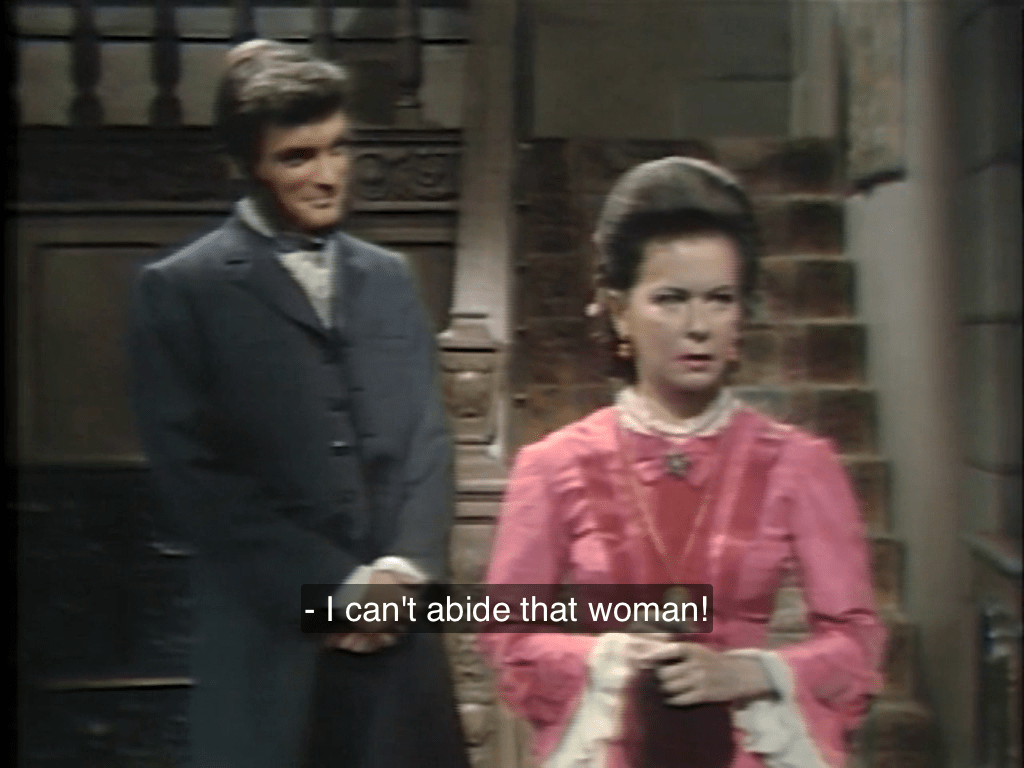
The longest scene follows on from scene 2 with Quentin quizzing Magda about her offscreen meeting with Edith and if she mentioned anything about a terrible family secret. “I have no prejudice against your kind.” For a reprobate who practices black magic and is planning to defraud his family, Quentin does at least have not being a bigot in his favour. Their talk is interrupted by Judith (Joan Bennett, in her third role), Quentin’s sister, who’s not best pleased to see her errant younger brother return to the fold, nor Magda visiting her grandmother. After practically pushing the gypsy woman out of the door Judith offers her brother money to leave town but Quentin wants something else, to see his young nephew Jamison Collins (David Henesy again).

Scene 5 – The Future Past

A brief scene taking Barnabas back home to the Old House. Barnabas is hit with a weird sense of nostalgia having grown up here in the late 1700s’ and lived here again as a vampire in 1969.

Scene 6 – Meet Jamison Collins

Quentin has a gift for his nephew, an expensive-looking model ship. There is a powerful bond between Quentin and Jamison and Judith disapproves thinking he will lead the boy to ruin. Judith wants Quentin gone, but the boy is adamant he must stay. Quentin’s possession of David in 1969 seems related to his affection for his nephew. Amy claimed in an earlier episode Quentin intended to turn David into Jamison.

Season 7 – An Unwelcome Guest

In the final scene Magda returns to the Old House to find her husband Sandor with Barnabas. She recognises him from the portrait in the hallway at Collinwood, but Barnabas deflects her questions. He’s a bit OCD about the house though, complaining about the mess and wondering where the painting of Josette (Kathryn Leigh Scott) has gone. A knock at the door and Quentin turns up wanting to finish the conversation Judith interrupted earlier. Barnabas gets a look at Quentin for the first time as he hides behind a door watching as Sandor and Magda try and get rid of this unwanted visitor. After Quentin leaves Magda quizzes him about Barnabas. They both believe in the supernatural and seem to have encountered such creatures before. “He has the mark of death on him..” and then she notices the bite marks on her husbands neck. Episode 702 ends in true soap-opera style with a cliffhanger.

I will have to continue my journey through Dark Shadows to see how these storylines will develop over the course of the show. At the moment I’m still in the 1897 time period so I have no idea how these storylines will be resolved, or if they will. Maybe Barnabas never returns to 1969, maybe I’m a few episodes away from it happening. Or maybe he ends up somewhere else or becomes someone else. At this stage anything seems to be possible.

This post is an entry in the 7th Annual Favourite TV Show episode blogathon run by Terence Towles Canote at his site A Shroud of Thoughts.