Hitchcock (2012, Sacha Gervasi)

“That, my dear, is why they call me the Master of Suspense.” 

Based on a book by the film writer and Hitchcock expert Stephen Rebello Hitchcock deals with the production of Psycho and the director’s battles with the studios to get the film made. To be honest I was dreading Hitchcock fearing another My Week with Marilyn (2011, Simon Curtis) debacle with famous actors giving awkward impersonations of film stars from days gone past and there is an element of that here. Neither Anthony Hopkins or Scarlett Johansson remotely resemble Hitchcock or Janet Leigh respectively. Hopkins gets the voice and mannerisms right but you never feel for a moment you are watching anything other than a performance. James D’Arcy however is a great fit for Anthony Perkins if a decade to old for the delicate tormented star but it is a lovely performance though sadly he’s only in a handful of scenes.
Another problem is the lack of drama present in this story. Hitchcock’s approach to making Psycho may have been unusual but it is not extraordinary. The attempts to portray Hitchcock as a busted flush and a tired old man don’t ring true. There was conflict yes with the studio but not overly so and nobody died during production. Hitchcock’s marketing of the film was ingenious but doesn’t really come across here. Yet despite these flaws Hitchcock has a playfulness which carries it even though I suspect you would learn more about the Master of Suspense’s approach to directing Psycho  by watching Gus Van Sant’s much maligned but fascinating shot-by-shot remake.
Hitchcock opens with notoriously insane Ed Gein killing his own brother. Robert Bloch’s novel ‘Psycho’ is a salacious adaptation of Gein’s life. A mummy’s boy who became increasingly disturbed after her death, Gein began to exhume corpses from his local graveyard to use their body parts for household objects. Eventually Gein murdered at least two more people. Gein (Michael Wincott) reappears throughout Hitchcock as a manifestation of Hitch’s id and it is a pity director Sacha Gervasi doesn’t take more risks rather than the conventional biopic approach the rest of the film follows. John J. McLaughlin’s screenplay is more interested in the relationship between Hitchcock and his wife Alma (Helen Mirren) and her importance as a producer which is fine but the scenes of them sniping at each other over breakfast turn the middle part of the film into a domestic chore.
While there is a gallows humour Hitch would have approved of McLaughlin and  Gervasi never delve deep into his psyche or offer much insight into the creative process. The obsession with Hitchcock’s leading ladies is dealt with briefly but not with the same relish as the recent HBO TV movie The Girl which was undone by the ludicrous casting of Toby Jones and the faux classiness that has infected that channel’s recent output (Game of Thrones apart). Hitchcock is better value but if you’re really interested I’d recommend reading Rebello’s Alfred Hitchcock and the Making of Psycho instead. 

The Mill and the Cross – (Lech Majewski, 2011)

Biopics can be as tiresome and formulaic a genre as any other. At their worst they never manage to engage with the creativity of their subject. Director Lech Majewski is an artist as well as a filmmaker and approaches the cinematic image like a painter. There have been great films about painters that forego conventional narratives before but Majeswki has done something unusual with this remarkable computer generated recreation of Pieter Bruegel’s ‘The Way to Calvary’ (1564).  Paul Cox’s beautiful documentary Vincent: The Life and Death of Vincent Van Gogh (1987) has John Hurt reading letters by the painter to his brother Theo accompanied by images of his work. In Victor Erice’s The Quince Tree Sun (1992) the director filmed artist Antonio Lopez as he attempted to complete a painting of a tree in his garden while reminiscing about his past. Raul Ruiz’s Hypothesis of a Stolen Painting (1977) might come closest to The Mill and the Cross with an art curator speculating on the meaning of a painting yet the work of art in question is fictional. Majewski takes this further by actually placing the artist inside his creation as he puts it together.
Bruegel (Rutger Hauer) is first seen moving through the landscape arranging costumes on the figures in his painting as if he was a film director organising his set. King Philip II of Spainhad taken control of Flanders and had decreed heretics should be put to death. Bruegel is helpless in the face of this brutality so he functions as an observer and his painting is a form of protest at the treatment his people are receiving at the hands of Spanish soldiers. Michael York plays a rich benefactor and essentially performs expository duties for the audience explaining the political situation in an understated dignified way which is surprisingly moving. People are cruelly dispatched in The Mill and the Cross but their end is surveyed in a manner which seems almost dispassionate by Majewski. Yet he is simply observing like Bruegel. There is nothing to be done for these people who are beaten and hoisted into the air for the crows to finish off, or buried alive. There is an absurdity to these scenes which is at once comic and deeply sad emphasising the pointlessness of these executions and their horror.
At the centre of the painting is Christ carrying the cross to his crucifixion. Charlotte Rampling plays Mary, Mother of Christ whose lament “there must have been a reason he was born” is I think the saddest line in a film I’ve heard this year. This theme of loss permeates the film, not just through death but how very far the Catholic Church in the 16th century fell away from the teachings of Christ and instead recreated the kind of religious persecution he faced. There is no real narrative, the dialogue is minimal and non-realistic. The purpose of the film is entirely about making the audience understand the meaning of the painting. The Mill and the Cross closes with a scene showing ‘The Way to Calvary’ hanging in the sterile environment of a museum amongst all the other paintings like a John Doe lying in a morgue. Credit to Majewski bringing the figures in Bruegel’s painting back to life in such an illuminating manner.
As of yet there are no plans for a UK release in cinemas or on DVD but there’s a decent region free US release available for import. 

Django Unchained (2012, Quentin Tarantino)

“The D is silent.”

I’d rather listen to Quentin Tarantino talk about cinema than watch one of his movies. Like Alex Cox , also a devotee of the ‘Spaghetti Western,’ Tarantino is a great critic but his films feel like cover versions of whichever genre he happens to be working in at the time. Here he is discussing Chungking Express (1994, Wong Kar-Wai), a movie he helped bring to the attention of US audiences back in the day.

However stylised they may be there is an emptiness to Tarantino’s movies. They mean nothing. They say nothing. Tarantino never makes you think or makes you care. Django Unchained is no different even though it does deal with slavery, but in such a simplistic way it is no more condemnatory than Kill Bill is of Yakuza crime syndicates. Slavery is just a plot device to allow Tarantino to indulge his love of Blaxploitation movies and for the first hour Django Unchained is entertaining enough as loquacious dentist turned bounty hunter Dr Schultz (Christophe Waltz) frees Django (Jamie Foxx) from chains and enlists him in a hunt for three fugitive brothers. Once they are done with this and set out on a search for Django’s missing wife Broomhilda (Kerry Washington) the film becomes an interminable battle of wits with camp Southern gentleman Calvin Candie (Leonardo DiCaprio) and his loyal manservant Stephen (Samuel L. Jackson, just…fucking hell).
‘Spaghetti Westerns’ provided an outsiders view of an American genre with a subversive disregard for conventions and a strong sense of social injustice. Damian Diamani’s A Bullet for the General (66) epitomises this contrast between a love for American culture and left-wing idealism. In Diamani’s movie a Mexican bandit played by the great Gian Maria Volonté, a Communist in real life, chooses revolution over his money-making partnership with a charismatic US government agent. Corbucci’s wintry masterpiece The Great Silence (68) has its gunslinger hero (Jean-Louis Trintignant) prove ineffective against the state-sponsored bounty hunters working to protect the rights of landowners. While Leone turned his gunslingers into mythic figures his political views were cynical. Any form of authority was to be mistrusted and even the closest of friends could turn on each other as in this key sequence from A Fistful of Dynamite in which an IRA volunteer (James Coburn) realises he has been betrayed.
For all the controversy over race Tarantino’s approach to the material is surprisingly safe. Basically he’s made The Help with six-shooters. A film which deals with racism but locates it firmly in the past and makes those who participated in it seem ridiculous. With all the economic, religious, and political chaos going on at present surely Tarantino could have found some way of fitting those concerns into Django Unchained. The fairly standardised woman in peril plot just makes Tarantino’s film seem so very small in scale despite its epic length. 

Seven Psychopaths (2012, Martin McDonagh)

Courtesy of CBS films

“Bet you wish you had your gun now.”


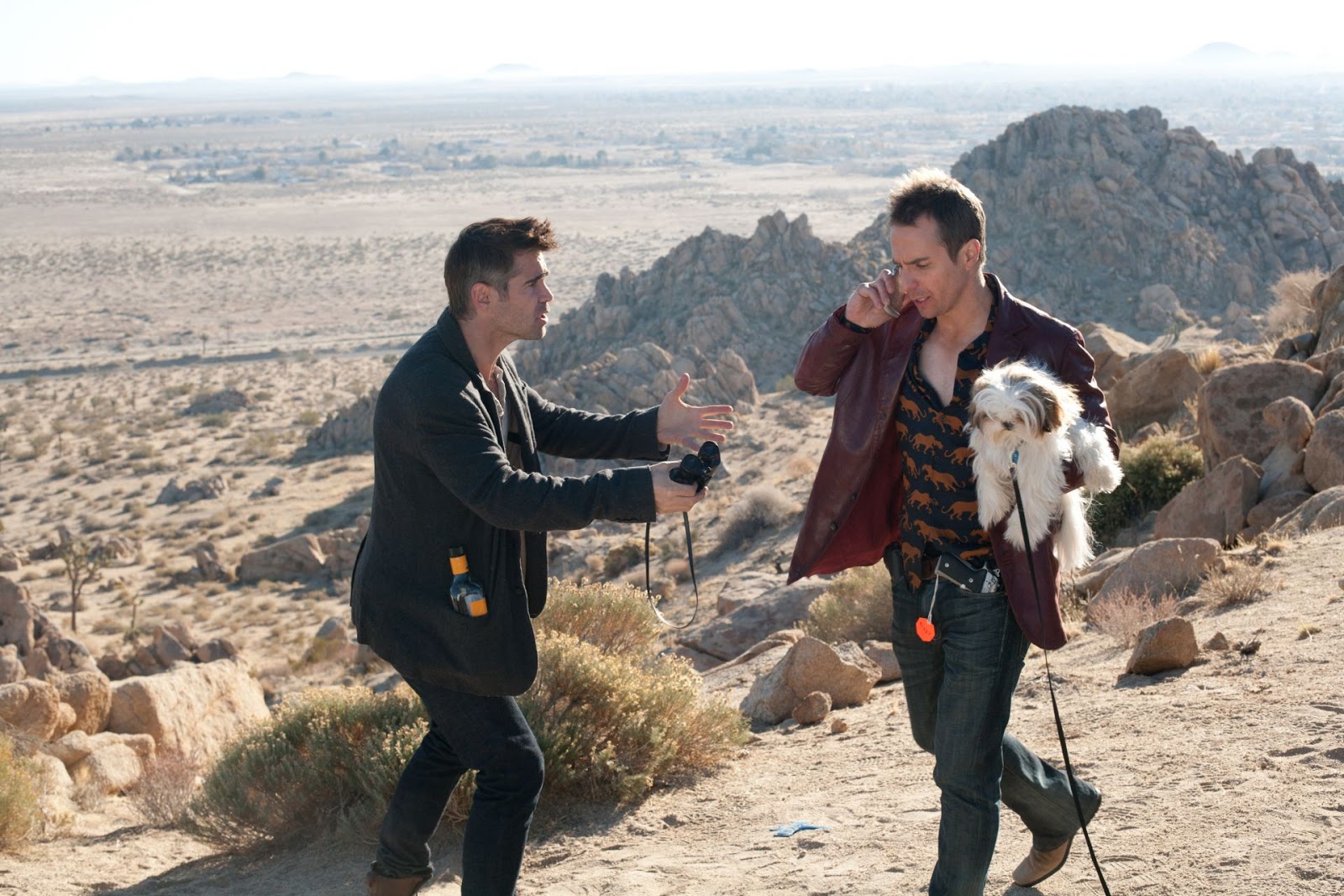
On the surface Seven Psychopaths appears to be a knockabout comedy featuring a bunch of guys pointing guns at each other and talking bollocks. McDonagh’s screenplay is essentially an exercise in navel-gazing and overall the film is a mess. Yet Seven Psychopaths works because Martin McDonagh has something to say about loss. Any comparisons to Quentin Tarantino are dismissed in an opening sequence showing two overly talkative hitmen (Boardwalk Empire stars Michael Pitt and Michael Stuhlbarg) too busy conversing to notice one of McDonagh’s anarchic psychos casually walking up behind them with a gun in each hand.
Marty (Colin Farrell) is a blocked screenwriter whose technique of using alcohol for inspiration isn’t working. He has a title – Seven Psychopaths and a vague idea about a Vietnamese man taking vengeance on Americans for the My Lai massacre in 1968. Best friend Billy (Sam Rockwell) wants to help and puts an ad in the trades looking for killers to share their stories with Marty leading them to an unusual encounter with Zachariah (Tom Waits), an eccentric who carries around a white rabbit and claims to have been part of a couple who hunted down and killed other serial killers. Billy also has a sideline in dog-napping with his partner Hans (Christopher Walken) but when they kidnap the beloved pet of gangster Charlie Costello (Woody Harrelson) all hell breaks loose.
The characters are as self-aware as those in Wes Scream (1996) with an abundance of knowledge about how movies work, but the narrative also deals with the art of storytelling, not just in screenplays but in urban legends, or fairy tales. The film has plenty of depth but its much vaunted humour is only intermittently funny with most of the laughs coming from Waits who longs for a reunion with his former lover and partner in crime.  The white rabbit renders him with a touch of the Mad Hatter. Zachariah may well be a harmless lunatic telling tall tales or a lunatic who really does kill people. Walken is great too delivering the kind of graceful, haunted menace we haven’t seen from him since Abel Ferrara’s masterpiece The Funeral (1996).
The movie is driven by two opposing viewpoints – Marty’s pacifism and Billy’s insistence that genre rules must be obeyed. So while Marty wants to chill out in the desert and talk about things Billy wants the showdown you would expect an action film to deliver. Ideally Marty would prefer to not write about violence at all and his developing interest in Buddhist philosophy undercuts the action, particularly in relation to the acceptance of death. Recurrent throughout the film is the theme of passive resistance, of refusing to accept threats often to the bewilderment of the aggressor. “But I have a gun…!” responds Zeljko Ivanek’s mobster when Hans refuses to surrender.
Though it shares with Charlie Kaufman and Spike Jonze’s Adaptation (2002) a self-reflexive approach to narrative the film it recalls most is Mike Hodges underrated Pulp (1972), a thriller also about a writer which deconstructs male machismo and leaves its faux hard-boiled protagonist wiser and sadder at its end. McDonagh has been playing about with genre tropes since his early days in the theatre and in his short film Six Shooter (2005) and feature debut In Bruges (2008) but maybe it’s time he embraced the message of his latest movie and put those guns away.


Rust and Bone (2012, Jacques Audiard)

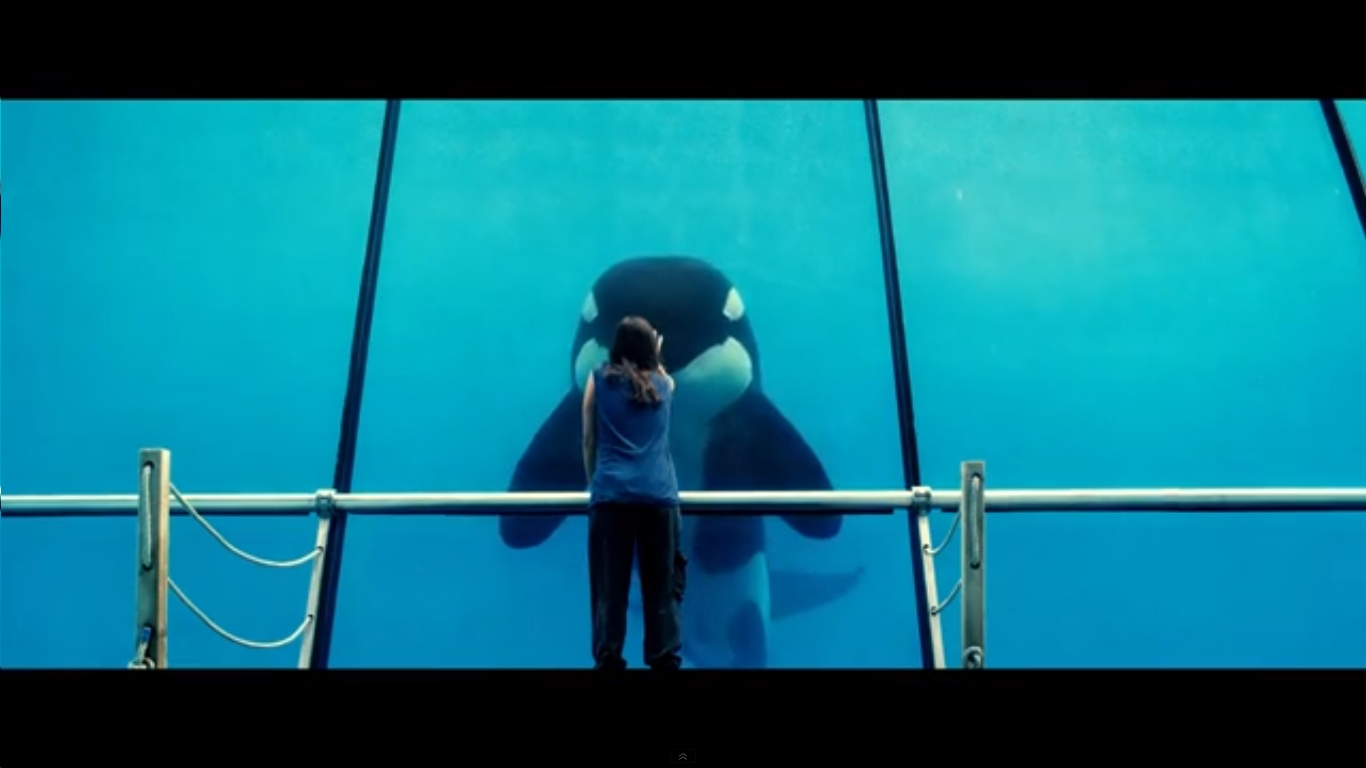
Rust and Bone seems designed to polarise opinions. A melodramatic poetic realist romance about the odd courtship between a mixed martial arts fighter and a former killer whale trainer with no legs, the film is meshed together from two short stories by the Canadian writer Craig Davidson and they don’t quite fit together but it works nonetheless. Rust and Bone is an atypical movie from Jacques Audiard, usually a director of crime thrillers such as The Beat That My Heart Skipped (2005) and the recent highly acclaimed A Prophet (2009). This is more like a fairytale, with its relatively simplistic storyline layered with depth but it retains Audiard’s compassion for outsiders.
Ali (Matthias Schoenaerts) is a single dad from Belgium who comes to the coast to live with his sister. While working the door at a nightclub he stops Stephanie (Marion Cotillard) from being beaten by a customer and drives her home. Neither thinks much of the other until they get back to her apartment. Ali is impressed when he sees the photos of Stephanie training Orcas. Likewise Ali’s contempt for her overbearing boyfriend when he tries to order him about pleases Stephanie. It is doubtful they would meet again were it not for her accident. No longer (or so she thinks) able to do the things she loves she phones Ali presumably because he once showed her kindness. 
There is a fairly obvious comparison between the Orcas and Ali. Ali is a childlike brute in need of a firm hand. Though Schoenaerts suggests there is a lot going on under this guy’s skin Ali is incapable of expressing himself except through violence. Though his disregard for other people’s feelings is often destructive it helps his relationship with Stephanie. He has no inhibitions, it does not even register that asking this woman who recently lost her legs if she wants to go for a swim might be a tad insensitive. Yet this brusque approach is entirely what Stephanie needs to draw her out of her isolation and the two form a strong bond with her even acting as the interim manager for his street brawls.
Cotillard has spent the last few years playing girlfriend roles in Hollywood films, albeit for prestige directors like Michael Mann and Christopher Nolan. These films tested Cotillard about as much as playing the eye candy in the Luc Besson produced Taxi movies, but here you can see why Audiard had no interest in making this film without her. In her best work (La Vie en Rose, Little White Lies) Cotillard is ferocious and she makes Stephanie’s journey back to some semblance of her former self entirely believable whether rediscovering the joys of being in water or glassing a man in a nightclub when he is foolish enough to patronise her. 
Stéphane Fontaine’s cinematography contrast the brightness of the world outside with the darkness of the interiors. The music is perfectly chosen from Katy Perry’s ‘Fireworks’ to Bruce Springsteen’s ‘State Trooper’ during a stylised street brawl. There are moments here of sublime beauty not least when Cotillard summons a whale up against the glass and makes it perform on a return visit to the marine-land.
Though Audiard is unashamedly manipulative the film’s ending seems incongruous and tacked on. No sport is more melodramatic than boxing so quite why Audiard shies away from showing any in the film’s latter stages seems a shame. Perhaps he felt this would detract from Ali’s transformation into a fully rounded human being or make Rust and Bone feel like too much of a genre film but essentially what he has made is a dreamier version of Rocky, poor dumb brute improves himself by learning how to have a proper relationship with a woman. 

Been errant of late so here is a round up of what I’ve been watching on Blu-ray over the last month or so.

Fallen Angels (1995, Wong Kar-Wai)

Originally planned as the third segment of Chungking Express (1994) this feels more episodic and thrown together than the earlier film but it gets better with every viewing. A lonely hitman (Leon Lai) half-heartedly carries out contract killings while considering leaving the game, his fixer (Michelle Reis) has feelings for him, while a sweet but crazy mute (Takeshi Kaneshiro) breaks into businesses at night and takes them over. Fallen Angels works as a summation of themes developed through Kar-Wai’s career at that point finding room even for the heroic bloodshed of his debut As Tears Go By (1987) in amongst the now familiar neon-lit yearning and romantic despair. The Blu-ray includes an entertaining interview with director of photography Chris Doyle which ends with the Heineken fuelled cinematographer lying face down on the bar.  
This Must Be the Place (2011, Paolo Sorrentino)


Sorrentino’s English language debut is a genuine oddity. Sean Penn stars as a burnt out Robert Smith-type rock star who leads a reclusive life in Ireland until news of his father’s imminent death sends him on a quest to  find a Nazi war criminal. Taking it’s name from a Talking Heads song and featuring a beautifully filmed performance by the band This Must Be the Place plays like a Wim Wenders road movie with a sense of humour. Decent features as well with two versions of the film, the UK theatrical release and the original cut shown at Cannes. 
Barbarella (1968, Roger Vadim)


Never paid much attention to Vadim until I saw his haunting vampire movie Blood and Roses (1960) last year which made me reassess his work and my view of him as being nothing more than a French caricature who liked to shag his leading ladies. Barbarella is beautifully designed by Mario Garbuglia and has a distinctly pop art 60’s sensibility which is always welcome. Jane Fonda is the perfect mixture of naivety and sex kitten in the leading role and Milo O’ Shea is reliably dodgy. Sadly this Blu-ray is vanilla flavoured.
Outpost II: Black Sun (2012, Steve Barker)


Watchable sequel to Scottish production company Black Camel’s entertaining Nazi/zombie flick Outpost (2009). This time around a Nazi-hunter (Catherine Steadman) finds herself at the Outpost and stumbling into an advancing battalion of Undead SS soldiers. Richard Coyle (Grabbers) co-stars as a expert in Nazi antiquities whose interest in her may be more than professional. While the first film trapped a group of tough mercenaries in the claustrophobic atmosphere of an abandoned bunker ‘Black Sun’ opens out the action which makes the limited budget more obvious but credit to director Barker and his team for making the best of it. There’s a standard making of documentary on the Blu-ray and that’s about it. Apparently there’s a third Outpost movie due out next year though.

Walkabout (1971, Nic Roeg)

Interesting watching this after seeing Roeg and his screenwriter Allan Scott a few years ago at a Director’s Cut event at the University of Aberdeen talking about working on Walkabout. The original screenplay was fourteen pages long and the studio made them pad it out to ease the concerns of the investors. Storywise the film is simple enough, a teenage girl (Jenny Agutter) and her younger brother are lost in the Outback after their father commits suicide. A kindly Aborigine (David Gulpilil) boy guides them and eventually falls in love with the girl though she rejects him. Yet Roeg uses imagery, editing, and subjective viewpoints to craft a story about the end of innocence, the emptiness of modern life, and perhaps of existence too. Universal have done great work on their centenary Blu-ray releases this year but sadly Walkabout didn’t feature on their list.


The Night Porter (1974, Liliana Cavani)

“I have a reason for working at night…”

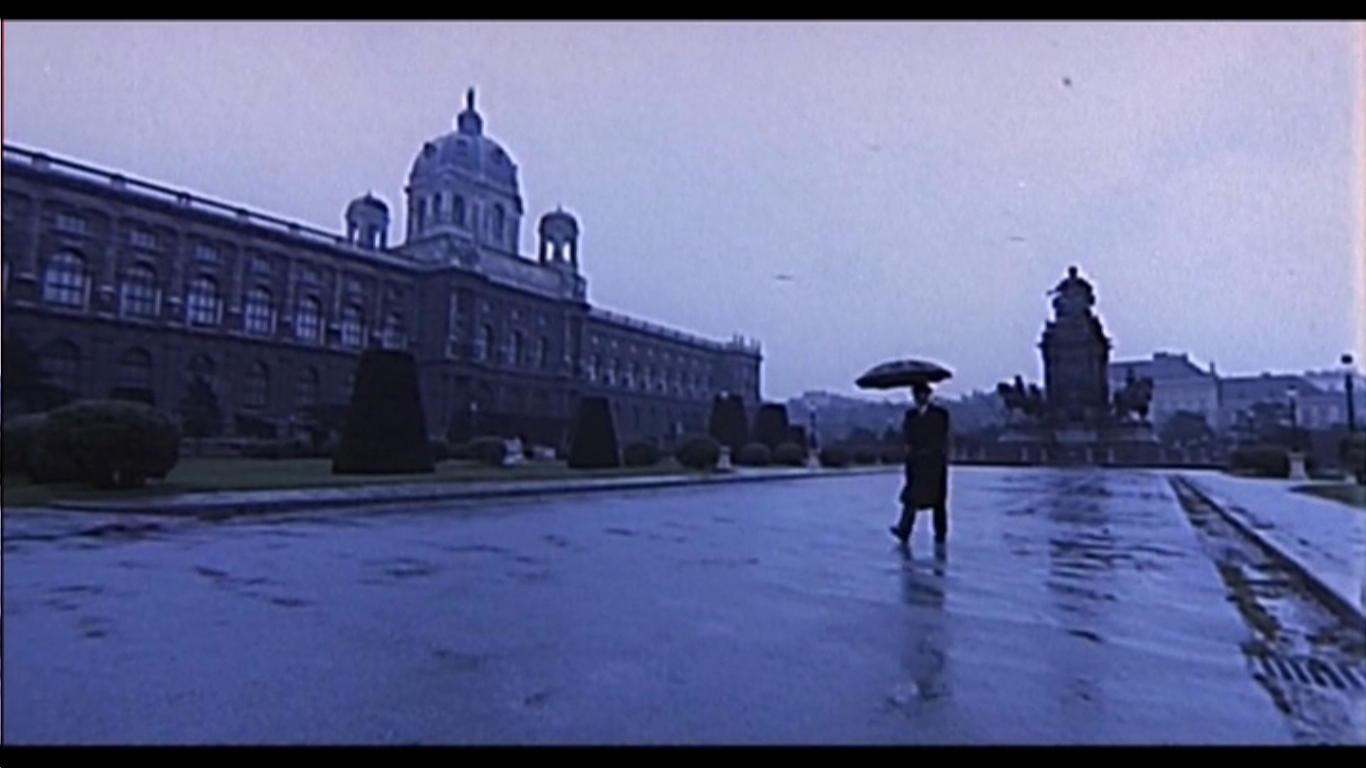
  Regarded by some as being merely an artier version of that most dubious of sub-genres, the Nazi sexploitation flick, The Night Porter still makes people uneasy. Yet it was made at a time when filmmakers were beginning to reflect on events leading up to the rise of the Nazi’s to power and it has more in common with The Damned (1969), Luchino Visconti’s operatic study of a prosperous German family falling apart as the Nazi’s begin their rise to political power than trash like Ilsa: She Wolf of the SS (Don Edmonds, 1975). Dirk Bogarde and Charlotte Rampling both worked together on the Visconti film and with Bogarde also appearing in Rainer Werner Fassbinder’s lovely ruin Despair (1978) The Night Porter forms part of an unofficial trilogy about the Third Reich. While The Damned and Despair are set before the war The Night Porter takes place in 1957 in a grim sunless Vienna where the past clearly still has a hold on people. 
  Former SS officer Max (Bogarde) works as the night porter in a hotel. Though he keeps a low profile lest his activities during the war are discovered Max likes it that way. Max wants solitude, to live like a “church mouse” as says at one point. Like Rick in Casablanca (Michael Curtiz, 1942) Max is cynical, isolationist, but also a fixer for the inhabitants of his establishment. Max has subtly recreated his role in the camps as a man who can be relied on for discretion and getting things done. Max pimps a younger member of staff to an ageing opera singer, helps a former colleague who was a professional dancer before the war to perform ballet in private, and generally has the run of the place. Then his perfectly ordered existence is shattered when Lucia (Rampling) walks in. Now married to a successful composer she seems to have moved on with her life but Lucia recognises Max immediately. Though initially fearful, she begins to reminisce about her time in the camps where Max went from being her abuser to her self-appointed protector and her memories seem to excite her. 

  So is it Stockholm Syndrome recurring or genuine romantic feeling? Max and Lucia need each other but don’t seem to understand why. Cavani knows people can behave in ways that are destructive and can long for oblivion. During a performance of Mozart’s The Magic Flute conducted by Lucia’s husband where Cavani cuts between the past and the present. Max is sitting a few rows behind her and both seem to be thinking in tandem. Lucia no longer wishes to leave Vienna but instead submits to Max though now she is older she is his equal, as capable of inflicting pain as taking it. Lucia’s presence their puts them both in danger from a group of ex-Nazi’s led by Hans (Gabrielle Ferzetti) who believes guilt is an aberration of the psyche and conducts mock trials so any evidence or witnesses of their past can be found and erased.

   The Night Porter then sounds like a romance and to a certain extent it is, albeit a bleak and destructive one which works as a study in guilt and corruption. The main charges levelled against The Night Porter are that it is exploitative. It kind of is but only in the way that any film which utilises history to tell a fictional story is exploiting human tragedy. The Night Porter is expressionistic in its use of lighting and has a lucid dream-like quality. Cavani is able to convey in cinematic terms ideas associated with German Romanticism; a movement which aimed for transcendence but ended up influencing the twisted idealism of National Socialism and its destructive attempts at purifying Europe. The Night Porter is about this ruin and Cavani offers a union which epitomises Goethe’s belief romanticism is a form of sickness.

The casting is perfect. Since Victim (1961, Basil Deardon) Bogarde’s default setting was playing men who struggle within themselves and he is powerful and moving here humanising a man we should really be repelled by. Rampling too is a haunting presence, strikingly beautiful, but oddly asexual, she looks like a doll that has come to life and would rather become a toy again. Rampling’s famous dance scene for the concentration guards is more akin to a surreal parody of a 20’s Berlin cabaret performance than the provocative tease the film’s poster seems to promise.

There is a recurring theme in Cavani’s work of outsiders clashing with authority, of going their own way regardless of what harm they bring to themselves. Cavani’s early films focused on historical figures who defied the social conventions of their time in Francis of Assisi (1960) and Galileo (1968). I Cannibali (1970) turned the Greek tragedy ‘Antigone’ into a contemporary allegory about a police state. She has a better grasp of Patricia Highsmith’s amoral worldview than Anthony Minghella with her 2002 adaptation of Ripley’s Game. Her best films are ambiguous, haunting, and offer no easy answers. In The Night Porter even the Nazis, history’s ultimate freaks, cannot contemplate why Max and Lucia should want to be together.  

The Hunter (2011, Daniel Nettheim) – Review

“Must be very nice for you, not to need anyone”

I briefly thought novelist Julia Leigh invented the Thylacine aka Tasmanian Tiger. I’m from the other side of the planet so this oddly beautiful creature is completely new to me. Sadly the last of the species died in captivity in 1936. Though they resembled dogs they were actually marsupials and apparently timid around humans but white settlers hunted them to extinction due to erroneous fears they were a danger to livestock. There have been supposed sightings since but these are hearsay or come with the standard blurry footage which accompanies alleged sightings of the Loch Ness Monster or Bigfoot. The thylacine has become a myth and David Nettheim’s film uses it as the basis for a thriller which finds room for environmental concerns but never lectures the audience or takes the easy way out right down to its devastating finale.
Based on the 1999 novel by Julia Leigh there is a familiarity present in the genre aspects of the film but not in how they are executed. Anybody who saw Leigh’s own directorial debut Sleeping Beauty will know she likes ambiguity and protagonists whose behaviour is difficult to fathom. Willem Dafoe plays a mercenary who operates under the name Martin David. Hired by a pharmaceutical company to investigate a rumoured sighting of a thylacine Martin has been instructed to bring back skin and DNA samples before anybody else finds it. Posing as an academic researching the Tasmanian Devil Martin spends his time setting traps and tracking in the wilderness. The locals are suspicious of outsiders, most of them rely on the logging industry to make a living and their livelihoods threatened by the activities of environmental campaigners.


Though he would prefer to be alone Martin is forced to billet with a family. We know he will eventually let his guard drop and begin to care about them despite himself. The mother (Frances O’ Connor) is catatonic and lies doped up grieving for her husband Jarrah who has been missing for a year. The children, Sass (Morgana Davies) and Bike (Finn Woodlock) look after themselves though a neighbour Jack (Sam Neill) drops in occasionally. David reluctantly becomes a surrogate father whose presence in the house helps bring the family back together. Normally in films when hitmen begin to feel emotions it is the beginning of the end for them but Martin surprises himself by adapting to his new role. The boy in particular comes out of his shell and seems to have some knowledge about Jarrah’s work before he disappeared.
Dafoe’s hugely affecting turn matches his performance as another existential loner in Paul Schrader’s underrated Light Sleeper (1992). There are similarities with Joe Carnahan’s The Grey (2011) which also deals with an ageing protagonist pondering his own mortality while battling against the elements. Like The Hunter that film was also marketed as an action thriller which proved deceptive but no doubt persuaded people to watch it. Both these films are about impermanence and the inevitability of death, about the landscape enduring while people or in this case whole species come and go. There is more than a touch of Peter Weir style mysticism about The Hunter, of something intangible being expressed with a great deal of subtlety. Nettheim and cinematographer Robert Humphreys frame Dafoe against this extraordinary wilderness and it is hard not to think people shouldn’t be in places like this at all. 

Questions in a World of Blu-ray

image

If you are a Lynch fan I’d hold off buying this box-set for a little while. The films are still great but there isn’t really enough to justify shelling out £48 and replacing any older and better releases in your collection. Only Dune (1984) and Blue Velvet (86) have extras while the rest are either appended with short films or in the case of Wild at Heart (90) and Twin Peaks: Fire Walk with Me (92) ignored completely. Worse still there are glitches on a couple of disks. Twin Peaks: Fire Walk with Me has three incidents where the audio jumps, the most notable when Julee Cruise is singing in the bar. Lost Highway(96) skips a full three minutes during the film’s finale. 

Casa de mi Padre (2011, Matt Piedmont)

“Mi nombre es Armando Alvarez”

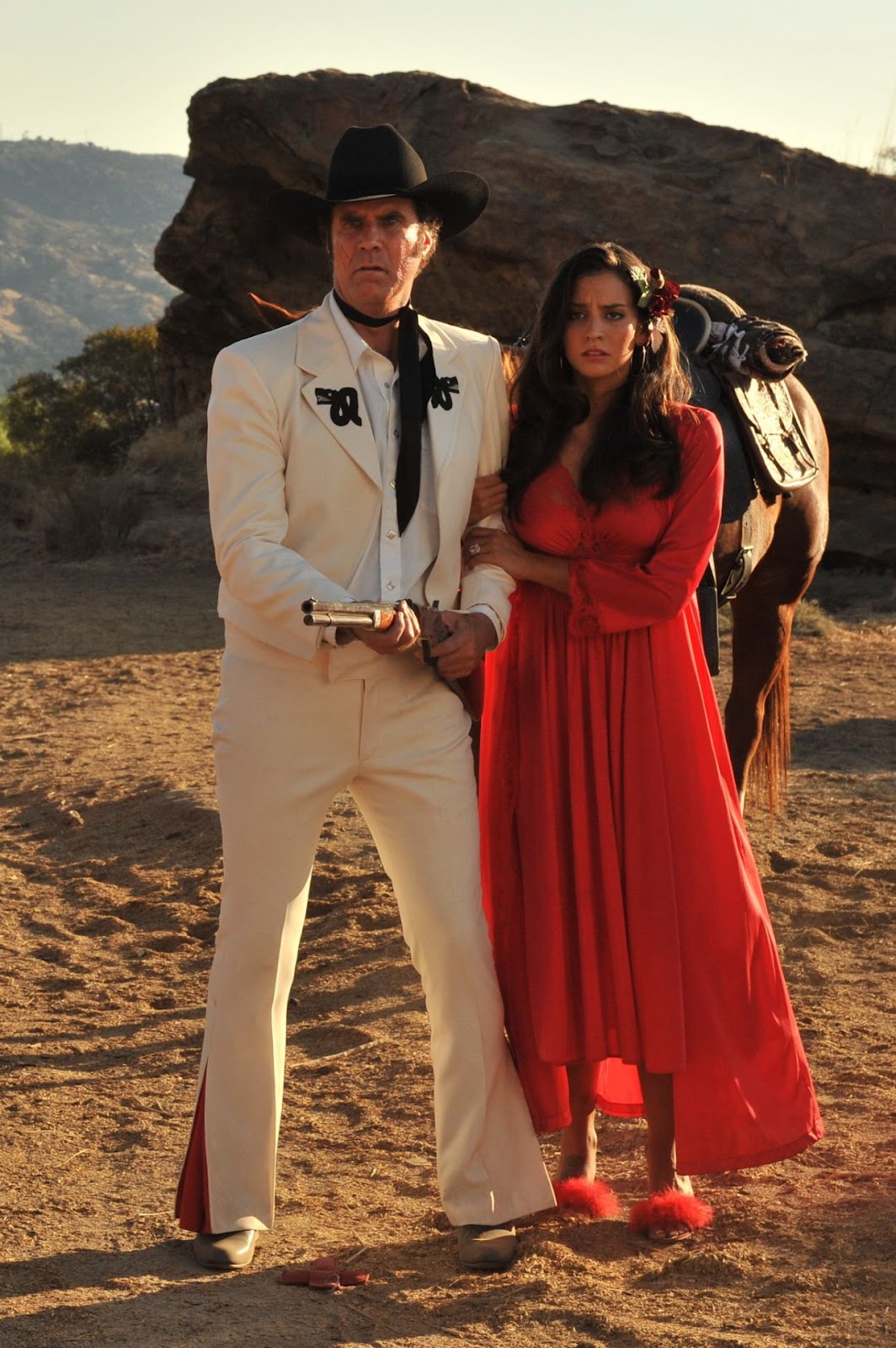
Kris Kristofferson introduces Casa de mi Padre with a disclaimer which would sound like an apology for the entire film being in Spanish were it not for the man who played Sam Peckinpah’s Billy the Kid doing the talking. Instead Kristofferson’s gruff amiable delivery is more like a friendly warning, the kind Billy would make before he gunned somebody down. It is fitting because as funny as Case de mi Padre the film is also an entertaining Western put together by people who clearly have a lot of respect for the genre.

Writer Andrew Steele and director Matt Piedmont are both Saturday Night Live alumni and have worked on Ferrell’s Funny or Die website. Casa de mi Padre might seem more suited for a short sketch but you have to admire Ferrell and his posse for going all the way and making a film so defiantly out there that its best hope is finding a cult following on DVD. The Other Guys (2010, Adam McKay) worked for audiences because everybody knows the conventions of the buddy cop movie but Casa de mi Padre is Ferrell’s most esoteric film to date. Technically it may recall other retro homage’s like Machete (2010, Robert Rodriguez) or Black Dynamite (2009, Scott Sanders) with its deliberately scratchy look and dodgy editing, but Casa de mi Padre has a weirdness all of its own.

Dim bulb Armando Alvarez (Ferrell) lives and works on his father’s ranch herding cattle and hanging out with his ranchero buddies Esteban (Efren Ramirez) and Manuel (Adrian Martinez). Armando’s idyllic life is thrown into turmoil when his slick younger brother Raul (Diego Luna) returns home from the city with his beautiful girlfriend Sonia (Genesis Rodriguez). Being a male virgin more at home on the range than in the company of women it takes Armando a while to realise Sonia is the girl for him. Unbeknownst to his family favoured son Raul is a drug dealer determined to go up against the white suited leader of the local cartel (Gael Garcia Bernal) for control of the area’s narcotics trade and Armando finds himself caught in the crossfire.

Ferrell’s Spanish is impressive and delivered in deadpan while the subtitles give the impression of being put together by somebody who uses English as their second language. “I will beat you with both these hands.” Genesis Rodriguez is a real find, beautiful but capable of mixing it with the boys. Oddly enough both their performances are absolutely sincere which makes it even funnier. Mexican bromantics Bernal and Luna ham it up nicely with the latter delivering a hilarious speech about why it’s okay to sell drugs to Americans. As with The Other Guys there are social concerns present in the film but they never weigh down the narrative. Best of all is the Morricone influenced soundtrack with a belting Christina Aguilera opener and some inspired musical numbers including a terrific duet between Ferrell and Rodriguez over the final credits.