Brief Encounter (1945, David Lean) – Station Screening Programme Notes

Kind of appropriate to be showing Brief Encounter in a cafe restaurant next to an abandoned railway line. Amazing film and I’ll take Lean’s early Noel Coward and Charles Dickens adaptations over his later epics any time. Here’s my notes for The Station screening of Brief Encounter. 
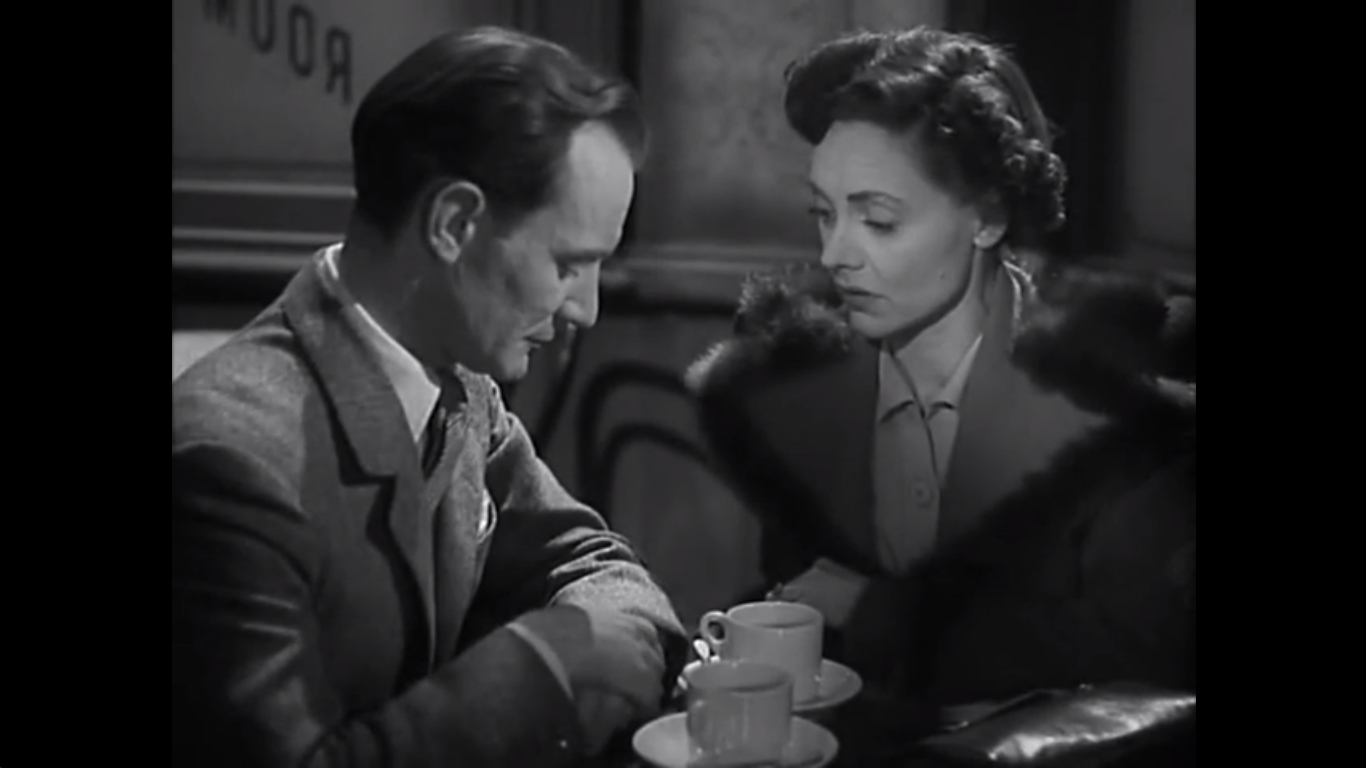
“But the minutes went by…”
Brief Encounter is the fourth and final collaboration between Noel Coward and director David Lean having previously worked together on the war films In Which We Serve (1942) and This Happy Breed (1945) as well as the comedy Blithe Spirit (1945). An adaptation of a one-act play by Coward called ‘Still Life,’ the film takes place in and around a railway station as two people consider having an affair. While Brief Encounter is thematically similar to Casablanca (1942, Michael Curtiz) the latter is the kind of Hollywood escapism Alec (Trevor Howard) and Laura (Celia Johnson) would go and see on the Thursday afternoons they spend together. Laura is certain such grand passion couldn’t happen to somebody who shops in Boots the chemists. Alec and Laura are blindsided by their emotions as their casual acquaintance develops into something much deeper. It is all too easy now to make fun now of the perfectly clipped accents in Brief Encounterand its old-fashioned sense of decency, but the film has lost none of its power.
Sound is important in Brief Encounter. The haunting musical score is Rachmaninoff’s Piano Concerto No 2 and it counterpoints Alec and Laura’s restraint in public with the emotional turmoil they feel. The noises heard at the station; the trains arriving and departing, the announcements, the whistles, all recurring in the background are a reminder of the possibilities of escape. David Lean often uses odd camera angles and films the lovers in shadow, a technique more common in thrillers than in romances yet it adds to the feeling they are somehow transgressing. Bear in mind Coward was a closeted homosexual so forbidden love, clandestine meetings, and being very careful not to attract attention would almost certainly have been part of his romantic life.
There is an argument Brief Encounter represents a gentile and timid form of British cinema though this seems largely reductive. It is rare to find a British film from this period which is so emotionally open or poetic. It also has a complex narrative structure which begins at the end and then shows us through Laura’s memories and her accompanying voice-over events filtered through her own sensibilities before we again see the beginning/end with the added pathos of knowing what we are seeing this time around. Lean would later turn towards large-scale epic productions like Lawrence of Arabia (1962) and Dr Zhivago (1965) but this small intimate movie about lives thrown out of kilter by romantic longing is his most extraordinary work. 

Pillow Talk (1959, Michael Gordon) – Screening Notes


“It’s so nice to meet a man you feel you can trust..”
Synopsis

Ladies man Brad (Rock Hudson) and career woman Jan (Doris Day) fall out over his excessive use of their shared phone line. Brad’s best buddy Jonathon (Tony Randall) confides in him about his infatuation with the attractive interior decorator who redesigned his office and mentions how she is having trouble with a neighbour. Figuring out Jan is the lady in question Brad pretends to be a country boy from Texas and sets out to seduce her.

              •••••

The Doris Day/Rock Hudson partnership is one of cinema’s most iconic pairings. Day was already famous for musicals like Calamity Jane (53, David Butler), but the success of Pillow Talk turned her into Hollywood’s biggest female star. Hudsonhad worked his way through the studio system  but as a leading man he seemed bland and wooden in genre films. However he made a huge impression as a dramatic actor proving himself to be more than a 6’4 hunk in a series of films for director Douglas Sirk (Magnificent Obsession, All That Heaven Allows, Written on the Wind, The Tarnished Angels). Dismissed somewhat patronisingly on their release as being merely ‘women’s pictures’ they are now recognised as classics and Hudson’s performances show a remarkable depth of feeling. New to comedy and wracked with doubts about his ability to be funny Hudson was lost until Pillow Talk director Gordon told him to play it as seriously as if he were acting in a tragedy. It probably helped having gifted comic actors like Tony Randall and Thelma Ritter around him though.
Producer Ross Hunter was an influential figure in the making of Pillow Talk. The findings of the recently published Kinsey reports (1948, 53) signalled the changing mores of American society. Hunter was fed up adhering to the Hay’s Code, a censorious set of rules which had been in place since 1930 and aimed to protect public morality. Pillow Talk may seem tame by modern standards but screenwriters Stanley Shapiro and Maurice Richlin push the envelope with suggestive dialogue. Michael Gordon also uses a split screen technique (see picture left) so Jan and Brad appear to be in the same bathtub or bed which in 1959 would still contravene the Hay’s Code.
Pillow Talk was so popular Day/Hudson/Randall reteamed again for two other films – Lover Come Back (61, Delbert Mann) and Send Me No Flowers (64, Norman Jewison). What seemed progressive in 1959 dated in the 60’s as younger audiences turned away from the popular entertainment their parents liked. By the early 70’s all three leads were working primarily in television. Tony Randall had a huge hit with the long-running TV version of The Odd Couple. Hudsonstarred in McMillan and Wife and made his last onscreen appearance in 1985 as a regular on Dynasty, essentially a trashy but fun distillation of the kind of melodramas he made back in the 50’s. Sadly Hudson is best known these days for being the most high profile victim of the AIDS virus. Doris Day starred in her own comedy show until 1973 but retired from public life afterwards. In 2011 she made a comeback of sorts by releasing a new album entitled ‘My Heart.’ 

Skyfall Station Screening Notes

Can’t say I cared much for Skyfall but clearly I seem to be in the minority. Anyway here’s the programme notes for the latest screening at The Station. 


Skyfall (2012, Sam Mendes)

“Sometimes the old ways are the best.”

Having successfully rebooted the Bond franchise with Casino Royale (2006, dir. Martin Campbell) producers Barbara Broccoli and Michael G. Wilson found making a worthy follow-up problematic. A strike enforced by the Writers Guild of America meant Quantum of Solace started filming without a finished screenplay. The resulting movie naturally enough seems rushed but despite the low-key approach and its perceived failure Quantum of Solace remains one of the more interesting Bond films. Not many big-budget action movies are concerned thematically with the effects of grieving.

Still it wasn’t what audiences wanted after the confident approach of Casino Royale. Worse was to come for Eon Productions when their partners MGM filed for bankruptcy. There were worrying echoes of the prolonged absence from the screens after 1989’s Licence to Kill (John Glen) when a series of legal wrangles shut down the franchise for six years and led to the cancellation of a proposed third Timothy Dalton film titled ‘The Property of a Lady.’ For a few months it seemed like Daniel Craig might share the same fate as his predecessor until Sony stepped in and signed a deal to co-finance and distribute all future Bond films.


Eon have brought together an impressive group of A-List talent. Director Sam Mendes won an Oscar for American Beauty (1999) and previously worked with Daniel Craig on the gangster movie Road to Perdition (2004). Cinematographer Roger Deakins (The Assassination of Jesse James) is widely regarded as being one of the greatest in his field. Spanish actor Javier Bardem is an impressive bad guy sporting a haircut that’s every bit as weird as his barnet in No Country for Old Men (2008, Joel & Ethan Coen). The plot is relatively straightforward. Bond must battle to save his surrogate Queen M (Judi Dench) from a vengeful former agent while Intelligence Chief Mallory (Ralph Fiennes) tries to enforce her retirement.

Skyfall feels like a new beginning once again reinstating classic elements from the Bond franchise including Q (Ben Wishaw) and the Walther PPK, but also reinventing the past. Danny Boyle opened the Olympics in style with a short film showing James Bond escorting a certain VIP to the opening ceremony. Mendes continues this celebratory theme for the franchise’s 50th anniversary year and affirms James Bond’s place as a British cultural icon even going as far to emphasise his Anglo-Scottish roots. Time will tell if Skyfall deserves a place alongside the great Bond films but for now it is the right film at the right moment.  

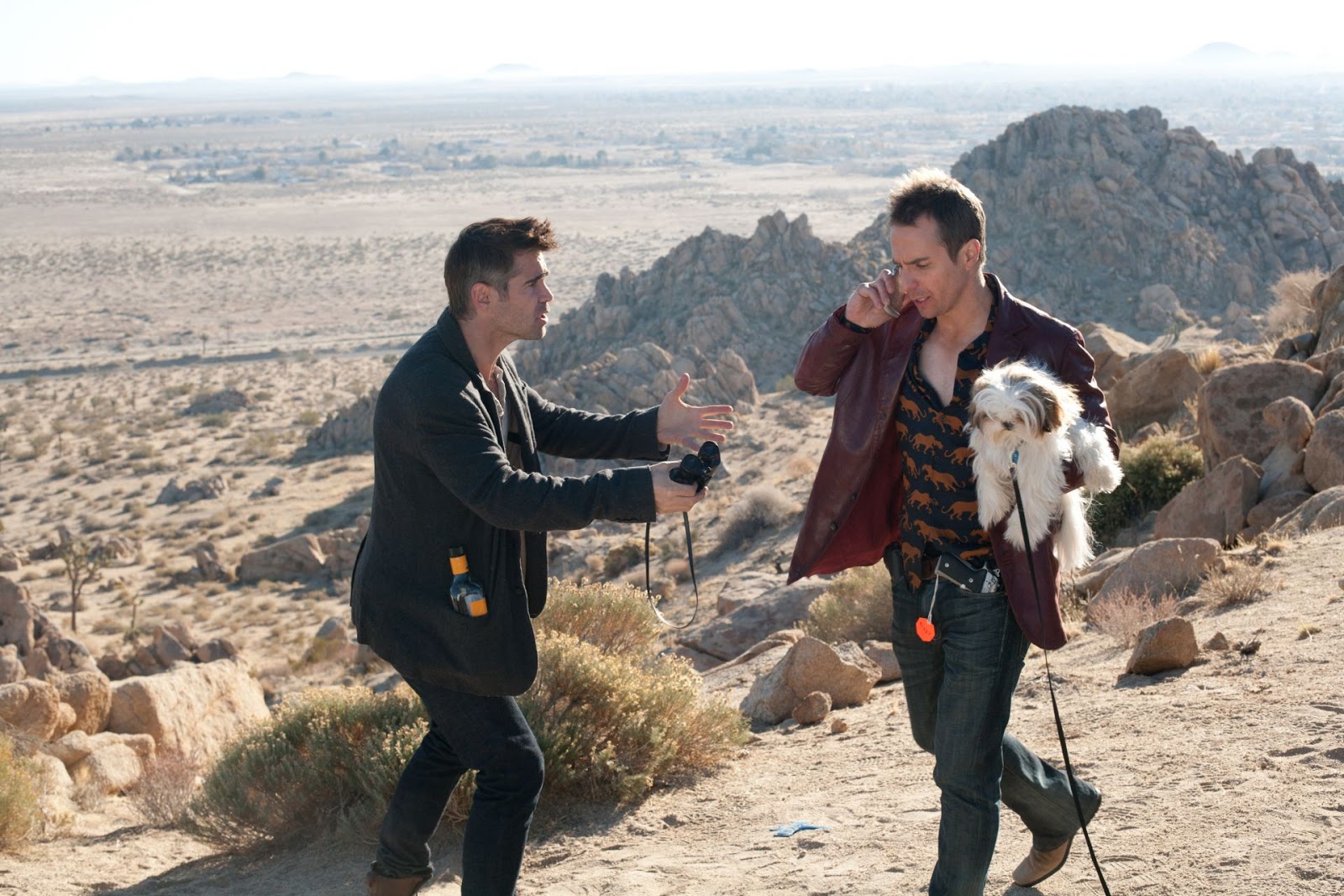
Seven Psychopaths (2012, Martin McDonagh)

Courtesy of CBS films

“Bet you wish you had your gun now.”


On the surface Seven Psychopaths appears to be a knockabout comedy featuring a bunch of guys pointing guns at each other and talking bollocks. McDonagh’s screenplay is essentially an exercise in navel-gazing and overall the film is a mess. Yet Seven Psychopaths works because Martin McDonagh has something to say about loss. Any comparisons to Quentin Tarantino are dismissed in an opening sequence showing two overly talkative hitmen (Boardwalk Empire stars Michael Pitt and Michael Stuhlbarg) too busy conversing to notice one of McDonagh’s anarchic psychos casually walking up behind them with a gun in each hand.
Marty (Colin Farrell) is a blocked screenwriter whose technique of using alcohol for inspiration isn’t working. He has a title – Seven Psychopaths and a vague idea about a Vietnamese man taking vengeance on Americans for the My Lai massacre in 1968. Best friend Billy (Sam Rockwell) wants to help and puts an ad in the trades looking for killers to share their stories with Marty leading them to an unusual encounter with Zachariah (Tom Waits), an eccentric who carries around a white rabbit and claims to have been part of a couple who hunted down and killed other serial killers. Billy also has a sideline in dog-napping with his partner Hans (Christopher Walken) but when they kidnap the beloved pet of gangster Charlie Costello (Woody Harrelson) all hell breaks loose.
The characters are as self-aware as those in Wes Scream (1996) with an abundance of knowledge about how movies work, but the narrative also deals with the art of storytelling, not just in screenplays but in urban legends, or fairy tales. The film has plenty of depth but its much vaunted humour is only intermittently funny with most of the laughs coming from Waits who longs for a reunion with his former lover and partner in crime.  The white rabbit renders him with a touch of the Mad Hatter. Zachariah may well be a harmless lunatic telling tall tales or a lunatic who really does kill people. Walken is great too delivering the kind of graceful, haunted menace we haven’t seen from him since Abel Ferrara’s masterpiece The Funeral (1996).
The movie is driven by two opposing viewpoints – Marty’s pacifism and Billy’s insistence that genre rules must be obeyed. So while Marty wants to chill out in the desert and talk about things Billy wants the showdown you would expect an action film to deliver. Ideally Marty would prefer to not write about violence at all and his developing interest in Buddhist philosophy undercuts the action, particularly in relation to the acceptance of death. Recurrent throughout the film is the theme of passive resistance, of refusing to accept threats often to the bewilderment of the aggressor. “But I have a gun…!” responds Zeljko Ivanek’s mobster when Hans refuses to surrender.
Though it shares with Charlie Kaufman and Spike Jonze’s Adaptation (2002) a self-reflexive approach to narrative the film it recalls most is Mike Hodges underrated Pulp (1972), a thriller also about a writer which deconstructs male machismo and leaves its faux hard-boiled protagonist wiser and sadder at its end. McDonagh has been playing about with genre tropes since his early days in the theatre and in his short film Six Shooter (2005) and feature debut In Bruges (2008) but maybe it’s time he embraced the message of his latest movie and put those guns away.


Anna Karenina (2012, Joe Wright) – Station Screening Notes

“All the beauty of life is made up of light and shadow.”

                                         Leo Tolstoy,  Anna Karenina 

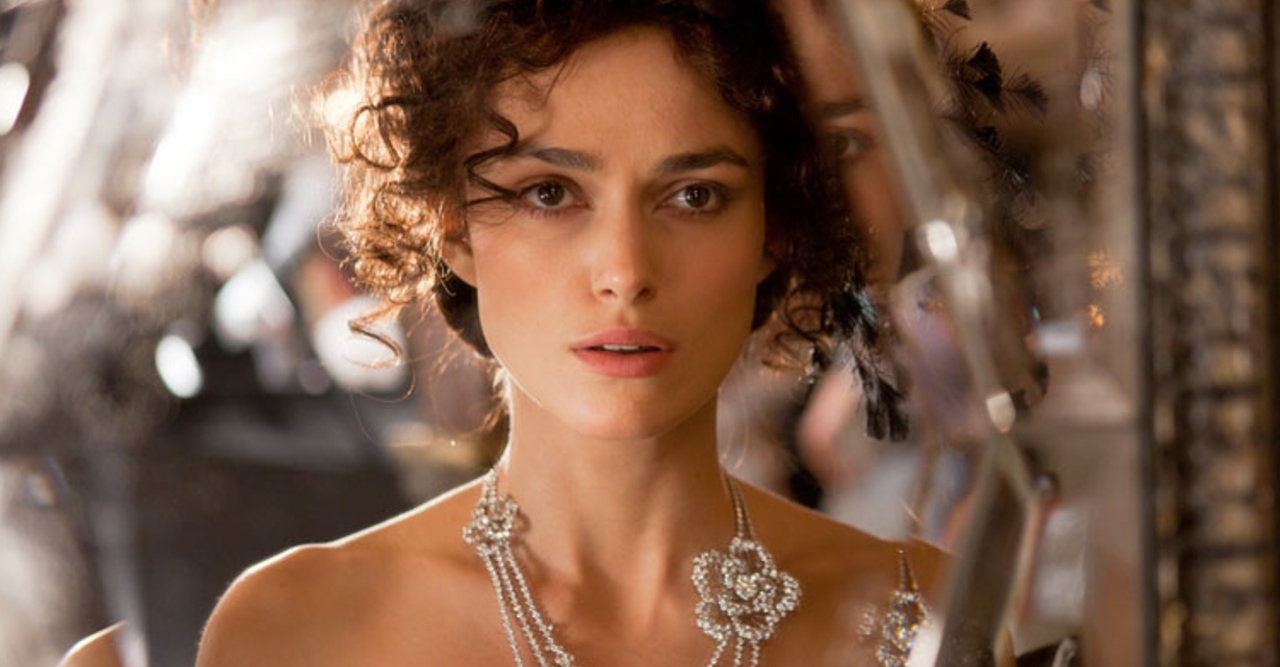
Anna Karenina (Keira Knightley) scandalises Russian society by embarking on a tempestuous affair with handsome young cavalry officer Count Vronsky (Aaron Taylor-Johnson) thus putting her husband Karenin’s (Jude Law) political ambitions in jeopardy. Director Joe Wright and screenwriter Tom Stoppard’s formally daring approach to Tolstoy’s novel sets the action within an elaborately constructed theatre. By refusing to place events in real locations Wright adds a phantasmagorical touch as if these characters exist out-with their own time replaying events from the past. It is a bold conceit but one that never diverts from the power of Tolstoy’s story or the very fine performances from Knightley and in particular Jude Law. 
Director Profile – Joe Wright

British director Joe Wright started his career directing dramas for the BBC, most notably Charles II: The Power and the Passion (2003). This led to him being chosen to direct Pride and Prejudice (2005) for Working Title Films with Keira Knightley and Matthew Macfadyen (both of whom appear in Anna Karenina). Another literary adaptation followed with Ian McEwan’s Atonement (2007) again with Knightley. The Soloist (2009) based on the true story of a musician who develops schizophrenia and ends up homeless didn’t receive the acclaim of Wright’s earlier films but it is an affecting work with great performance from Jamie Foxx and Robert Downey Jr. Hanna (2009) is an odd mixture of action movie and fairytale starring Eric Bana and Saoirse Ronan as father and daughter assassins. 
Tolstoy on Film

Tolstoy has been well served by film. Greta Garbo made an impression in a 1935 version of Anna Karenina (dir. Clarence Brown). Russian actor-director Sergei Bonderchuk’s 1967 take on War and Peace is eight hours long but still quicker than reading the book. Robert Bresson’s final film L’ Argent (1983) is a masterly reworking of the Tolstoy short story ‘The Forged Coupon.’ Italian brothers Paolo and Vittorio Taviani made a typically spare and elegant adaptation of Tolstoy’s ‘Father Serguis.’ With Ivansxtc (2001) Bernard Rose relocates ‘The Life and Death of Ivan Ilyich’ to contemporary Los Angeles as a Hollywood agent faces up to his own mortality.
Anna Karenina
Screenplay by Tom Stoppard (based on the novel by Leo Tolstoy)
Directed by Joe Wright
Running time 2 hours 10 mins

Rust and Bone (2012, Jacques Audiard)

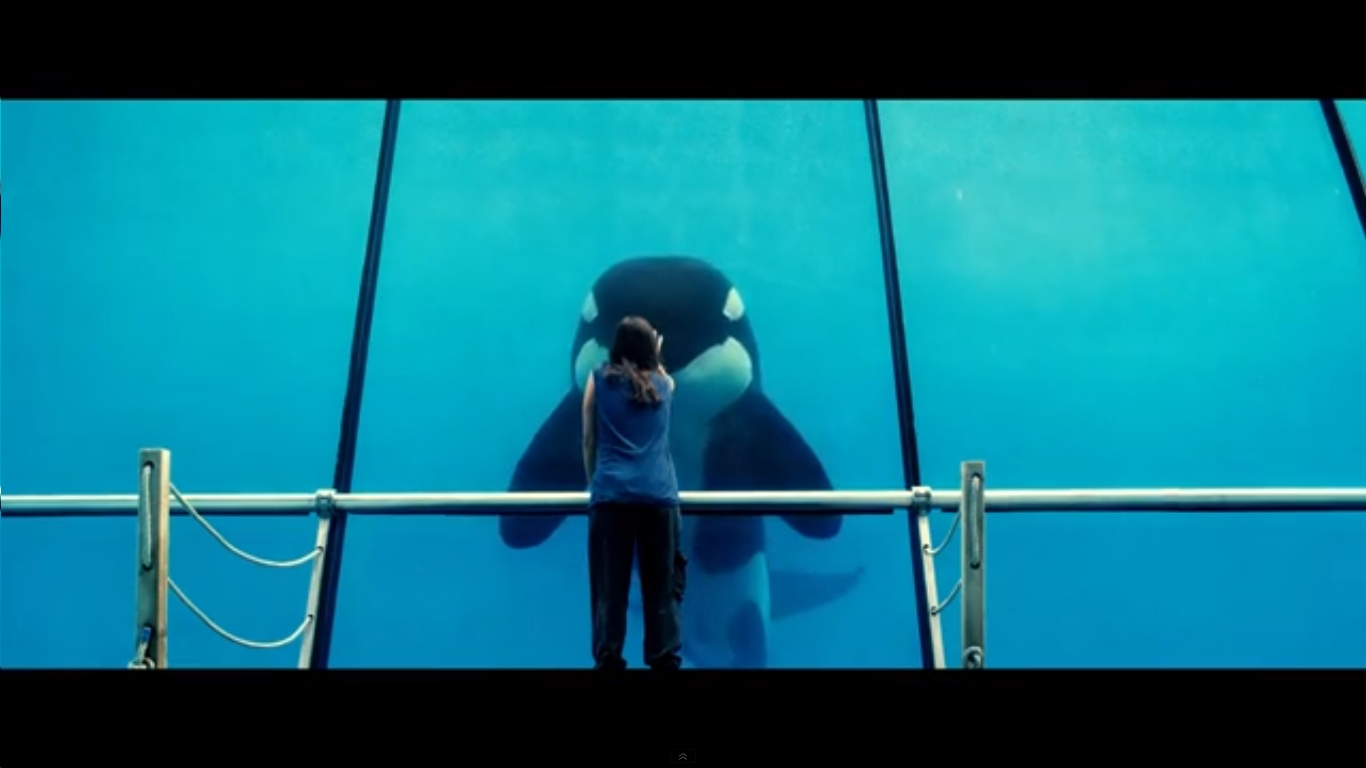
Rust and Bone seems designed to polarise opinions. A melodramatic poetic realist romance about the odd courtship between a mixed martial arts fighter and a former killer whale trainer with no legs, the film is meshed together from two short stories by the Canadian writer Craig Davidson and they don’t quite fit together but it works nonetheless. Rust and Bone is an atypical movie from Jacques Audiard, usually a director of crime thrillers such as The Beat That My Heart Skipped (2005) and the recent highly acclaimed A Prophet (2009). This is more like a fairytale, with its relatively simplistic storyline layered with depth but it retains Audiard’s compassion for outsiders.
Ali (Matthias Schoenaerts) is a single dad from Belgium who comes to the coast to live with his sister. While working the door at a nightclub he stops Stephanie (Marion Cotillard) from being beaten by a customer and drives her home. Neither thinks much of the other until they get back to her apartment. Ali is impressed when he sees the photos of Stephanie training Orcas. Likewise Ali’s contempt for her overbearing boyfriend when he tries to order him about pleases Stephanie. It is doubtful they would meet again were it not for her accident. No longer (or so she thinks) able to do the things she loves she phones Ali presumably because he once showed her kindness. 
There is a fairly obvious comparison between the Orcas and Ali. Ali is a childlike brute in need of a firm hand. Though Schoenaerts suggests there is a lot going on under this guy’s skin Ali is incapable of expressing himself except through violence. Though his disregard for other people’s feelings is often destructive it helps his relationship with Stephanie. He has no inhibitions, it does not even register that asking this woman who recently lost her legs if she wants to go for a swim might be a tad insensitive. Yet this brusque approach is entirely what Stephanie needs to draw her out of her isolation and the two form a strong bond with her even acting as the interim manager for his street brawls.
Cotillard has spent the last few years playing girlfriend roles in Hollywood films, albeit for prestige directors like Michael Mann and Christopher Nolan. These films tested Cotillard about as much as playing the eye candy in the Luc Besson produced Taxi movies, but here you can see why Audiard had no interest in making this film without her. In her best work (La Vie en Rose, Little White Lies) Cotillard is ferocious and she makes Stephanie’s journey back to some semblance of her former self entirely believable whether rediscovering the joys of being in water or glassing a man in a nightclub when he is foolish enough to patronise her. 
Stéphane Fontaine’s cinematography contrast the brightness of the world outside with the darkness of the interiors. The music is perfectly chosen from Katy Perry’s ‘Fireworks’ to Bruce Springsteen’s ‘State Trooper’ during a stylised street brawl. There are moments here of sublime beauty not least when Cotillard summons a whale up against the glass and makes it perform on a return visit to the marine-land.
Though Audiard is unashamedly manipulative the film’s ending seems incongruous and tacked on. No sport is more melodramatic than boxing so quite why Audiard shies away from showing any in the film’s latter stages seems a shame. Perhaps he felt this would detract from Ali’s transformation into a fully rounded human being or make Rust and Bone feel like too much of a genre film but essentially what he has made is a dreamier version of Rocky, poor dumb brute improves himself by learning how to have a proper relationship with a woman. 

North by Northwest – Station Screening

North by Northwest (1959, Alfred Hitchcock)
Introduced by Allan Hunter


“Goodbye Mr Thornhill, wherever you are.”
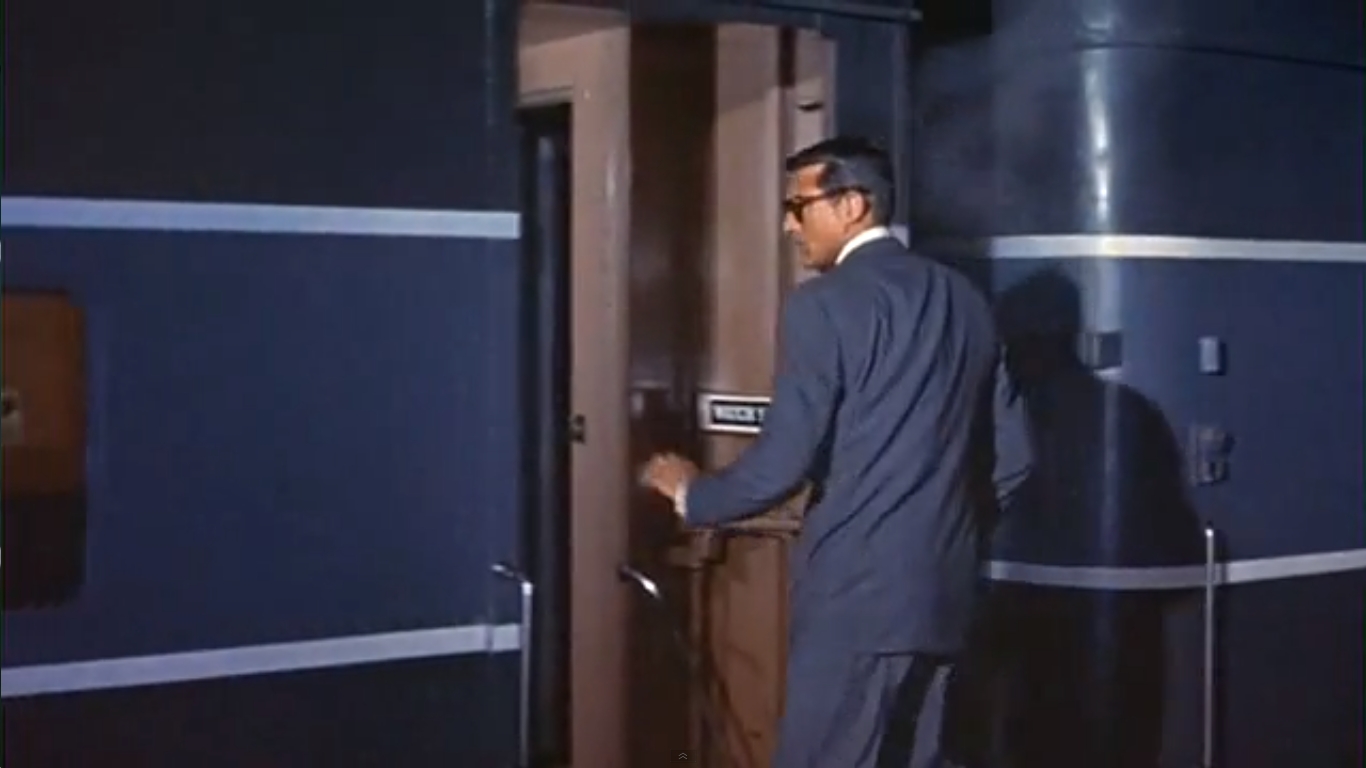
  A man wrongly accused of committing a serious crime and struggling to prove his innocence is a recurring figure in the films of Alfred Hitchcock. Suave advertising executive Roger O. Thornhill (Cary Grant) raises his hand at the wrong moment in a restaurant and is mistaken for a spy named George Kaplan. Thornhill is then pursued across the country by foreign spies and the police who believe him to be a murderer. Worse still, his mother wants him home for dinner. Thornhill hooks up with a stranger on a train, the achingly lovely Eve (Eva Marie Saint) and the two try to prove his innocence but can she be trusted? Everybody involved in the production brings their A-game. Ernest Lehman’s witty screenplay plays around with notions of identity and truth as well as being daringly suggestive for the times. Bernard Hermann’s score mixes suspense with romanticism. Hitchcock’s stunning use of set-pieces and spectacular locations lays down the template for the modern action movie blockbuster. For a film in which deception features so strongly there is nothing fake about Grant’s effortless charm or his onscreen chemistry with Marie Saint. North by Northwest is an action thriller with plenty of depth.
Allan Hunter
Film journalist for the Daily Express and Screen Daily, Allan Hunter is also the co-director of the Glasgow Film Festival, an event growing in stature every year. In 2010 Mr Hunter oversaw a retrospective of Cary Grant’s career at the GFF. An admirer of Grant’s work, Mr Hunter will introduce tonight’s screening and afterwards talk about the film.
Cast
Cary Grant – Roger O. Thornhill
Eva Marie Saint – Eve Kendall
James Mason – Philip Vanda
Jessie Reynolds – Clara Thornhill
Leo G. Carroll – The Professor
Martin Landau – Leonard
Screenplay by Ernest Lehman
Directed by Alfred Hitchcock
Running time 2 hrs 16 mins

The Angel’s Share (2012, Ken Loach) – Station Screening Notes

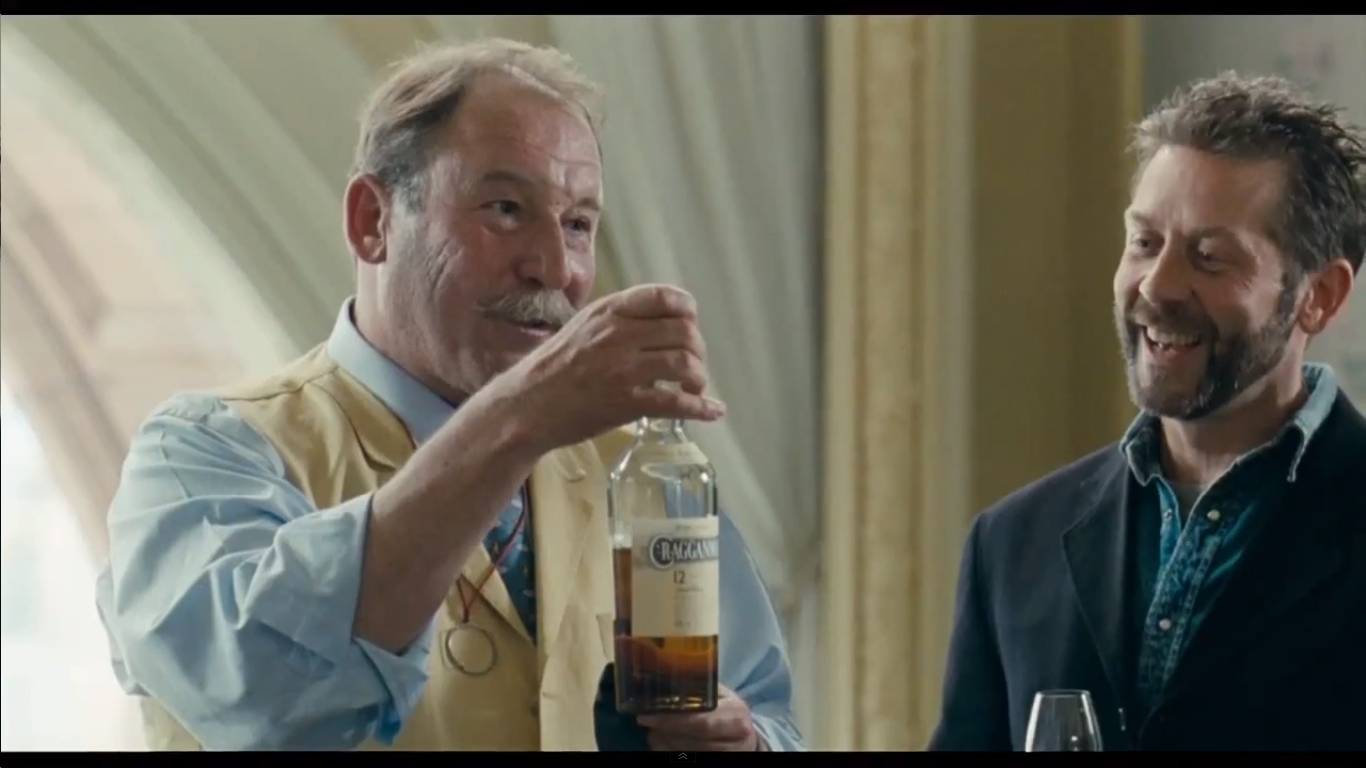
Only wrote a brief introduction for this screening as a guest speaker was due to make an appearance. If you’d told me when The Station started screening movies that one night there would have been a full house laughing uproariously at a Ken Loach movie I would have thought you were mental. 
malt whisky epitomises the inherent dichotomy of the Scottish psyche – at once passionate and rational, romantic and ironic, mystical and sceptical, heroic and craven, full of laughter and despair.’

Charles Maclean, Malt Whisky (1998)


 Scottish cinema can generally be divided into two categories – gritty urban dramas (Trainspotting, Neds) or charming escapism (Local Hero). Ken Loach’s The Angel’s Share manages to cover both territories with this tale of a young tearaway who finds redemption through a developing interest in Malt whisky. Robbie (Paul Brannigan) is a bright lad but never far away from trouble. Unable to extricate himself from a long-time feud with a local gang and hated by his pregnant girlfriend’s family he is running out of chances until kindly community services leader Harry (John Henshaw) takes him under his wing and introduces him to the pleasures of malt whisky. Loach and Glaswegian writer Paul Laverty have collaborated on fourteen other films several of which have been set in Scotlandincluding Carla’s Song (1994), My Name is Joe (98), and Ae Fond Kiss (2004). Always sympathetic to the plight of the underprivileged their work together particularly when dealing with Scots working class life has a great deal of humour present. The Angel’s Share is one of Loach’s warmest films, avoiding his tendency for didacticism but still managing to pass social commentary while being extremely entertaining. 

Been errant of late so here is a round up of what I’ve been watching on Blu-ray over the last month or so.

Fallen Angels (1995, Wong Kar-Wai)

Originally planned as the third segment of Chungking Express (1994) this feels more episodic and thrown together than the earlier film but it gets better with every viewing. A lonely hitman (Leon Lai) half-heartedly carries out contract killings while considering leaving the game, his fixer (Michelle Reis) has feelings for him, while a sweet but crazy mute (Takeshi Kaneshiro) breaks into businesses at night and takes them over. Fallen Angels works as a summation of themes developed through Kar-Wai’s career at that point finding room even for the heroic bloodshed of his debut As Tears Go By (1987) in amongst the now familiar neon-lit yearning and romantic despair. The Blu-ray includes an entertaining interview with director of photography Chris Doyle which ends with the Heineken fuelled cinematographer lying face down on the bar.  
This Must Be the Place (2011, Paolo Sorrentino)


Sorrentino’s English language debut is a genuine oddity. Sean Penn stars as a burnt out Robert Smith-type rock star who leads a reclusive life in Ireland until news of his father’s imminent death sends him on a quest to  find a Nazi war criminal. Taking it’s name from a Talking Heads song and featuring a beautifully filmed performance by the band This Must Be the Place plays like a Wim Wenders road movie with a sense of humour. Decent features as well with two versions of the film, the UK theatrical release and the original cut shown at Cannes. 
Barbarella (1968, Roger Vadim)


Never paid much attention to Vadim until I saw his haunting vampire movie Blood and Roses (1960) last year which made me reassess his work and my view of him as being nothing more than a French caricature who liked to shag his leading ladies. Barbarella is beautifully designed by Mario Garbuglia and has a distinctly pop art 60’s sensibility which is always welcome. Jane Fonda is the perfect mixture of naivety and sex kitten in the leading role and Milo O’ Shea is reliably dodgy. Sadly this Blu-ray is vanilla flavoured.
Outpost II: Black Sun (2012, Steve Barker)


Watchable sequel to Scottish production company Black Camel’s entertaining Nazi/zombie flick Outpost (2009). This time around a Nazi-hunter (Catherine Steadman) finds herself at the Outpost and stumbling into an advancing battalion of Undead SS soldiers. Richard Coyle (Grabbers) co-stars as a expert in Nazi antiquities whose interest in her may be more than professional. While the first film trapped a group of tough mercenaries in the claustrophobic atmosphere of an abandoned bunker ‘Black Sun’ opens out the action which makes the limited budget more obvious but credit to director Barker and his team for making the best of it. There’s a standard making of documentary on the Blu-ray and that’s about it. Apparently there’s a third Outpost movie due out next year though.

Walkabout (1971, Nic Roeg)

Interesting watching this after seeing Roeg and his screenwriter Allan Scott a few years ago at a Director’s Cut event at the University of Aberdeen talking about working on Walkabout. The original screenplay was fourteen pages long and the studio made them pad it out to ease the concerns of the investors. Storywise the film is simple enough, a teenage girl (Jenny Agutter) and her younger brother are lost in the Outback after their father commits suicide. A kindly Aborigine (David Gulpilil) boy guides them and eventually falls in love with the girl though she rejects him. Yet Roeg uses imagery, editing, and subjective viewpoints to craft a story about the end of innocence, the emptiness of modern life, and perhaps of existence too. Universal have done great work on their centenary Blu-ray releases this year but sadly Walkabout didn’t feature on their list.


The Night Porter (1974, Liliana Cavani)

“I have a reason for working at night…”

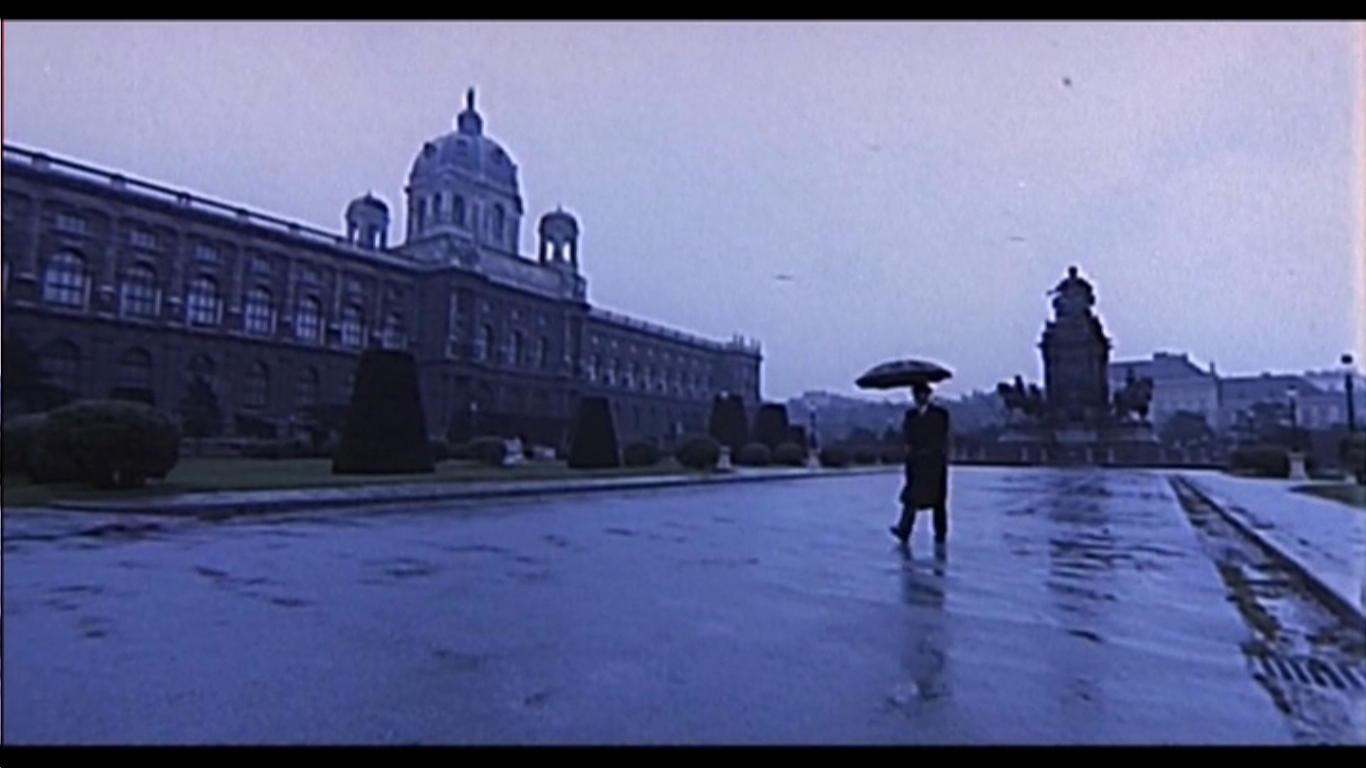
  Regarded by some as being merely an artier version of that most dubious of sub-genres, the Nazi sexploitation flick, The Night Porter still makes people uneasy. Yet it was made at a time when filmmakers were beginning to reflect on events leading up to the rise of the Nazi’s to power and it has more in common with The Damned (1969), Luchino Visconti’s operatic study of a prosperous German family falling apart as the Nazi’s begin their rise to political power than trash like Ilsa: She Wolf of the SS (Don Edmonds, 1975). Dirk Bogarde and Charlotte Rampling both worked together on the Visconti film and with Bogarde also appearing in Rainer Werner Fassbinder’s lovely ruin Despair (1978) The Night Porter forms part of an unofficial trilogy about the Third Reich. While The Damned and Despair are set before the war The Night Porter takes place in 1957 in a grim sunless Vienna where the past clearly still has a hold on people. 
  Former SS officer Max (Bogarde) works as the night porter in a hotel. Though he keeps a low profile lest his activities during the war are discovered Max likes it that way. Max wants solitude, to live like a “church mouse” as says at one point. Like Rick in Casablanca (Michael Curtiz, 1942) Max is cynical, isolationist, but also a fixer for the inhabitants of his establishment. Max has subtly recreated his role in the camps as a man who can be relied on for discretion and getting things done. Max pimps a younger member of staff to an ageing opera singer, helps a former colleague who was a professional dancer before the war to perform ballet in private, and generally has the run of the place. Then his perfectly ordered existence is shattered when Lucia (Rampling) walks in. Now married to a successful composer she seems to have moved on with her life but Lucia recognises Max immediately. Though initially fearful, she begins to reminisce about her time in the camps where Max went from being her abuser to her self-appointed protector and her memories seem to excite her. 

  So is it Stockholm Syndrome recurring or genuine romantic feeling? Max and Lucia need each other but don’t seem to understand why. Cavani knows people can behave in ways that are destructive and can long for oblivion. During a performance of Mozart’s The Magic Flute conducted by Lucia’s husband where Cavani cuts between the past and the present. Max is sitting a few rows behind her and both seem to be thinking in tandem. Lucia no longer wishes to leave Vienna but instead submits to Max though now she is older she is his equal, as capable of inflicting pain as taking it. Lucia’s presence their puts them both in danger from a group of ex-Nazi’s led by Hans (Gabrielle Ferzetti) who believes guilt is an aberration of the psyche and conducts mock trials so any evidence or witnesses of their past can be found and erased.

   The Night Porter then sounds like a romance and to a certain extent it is, albeit a bleak and destructive one which works as a study in guilt and corruption. The main charges levelled against The Night Porter are that it is exploitative. It kind of is but only in the way that any film which utilises history to tell a fictional story is exploiting human tragedy. The Night Porter is expressionistic in its use of lighting and has a lucid dream-like quality. Cavani is able to convey in cinematic terms ideas associated with German Romanticism; a movement which aimed for transcendence but ended up influencing the twisted idealism of National Socialism and its destructive attempts at purifying Europe. The Night Porter is about this ruin and Cavani offers a union which epitomises Goethe’s belief romanticism is a form of sickness.

The casting is perfect. Since Victim (1961, Basil Deardon) Bogarde’s default setting was playing men who struggle within themselves and he is powerful and moving here humanising a man we should really be repelled by. Rampling too is a haunting presence, strikingly beautiful, but oddly asexual, she looks like a doll that has come to life and would rather become a toy again. Rampling’s famous dance scene for the concentration guards is more akin to a surreal parody of a 20’s Berlin cabaret performance than the provocative tease the film’s poster seems to promise.

There is a recurring theme in Cavani’s work of outsiders clashing with authority, of going their own way regardless of what harm they bring to themselves. Cavani’s early films focused on historical figures who defied the social conventions of their time in Francis of Assisi (1960) and Galileo (1968). I Cannibali (1970) turned the Greek tragedy ‘Antigone’ into a contemporary allegory about a police state. She has a better grasp of Patricia Highsmith’s amoral worldview than Anthony Minghella with her 2002 adaptation of Ripley’s Game. Her best films are ambiguous, haunting, and offer no easy answers. In The Night Porter even the Nazis, history’s ultimate freaks, cannot contemplate why Max and Lucia should want to be together.