Station Screenings Updates – The Railway Man (2014, Jonathan Teplitzky)

Haven’t done much writing lately. Overcome with a general feeling of malaise I can’t seem to kick. Still providing notes for screenings at The Station Restaurant though. Will update here with the few worth posting starting with The Railway Man. 


Courtesy of Lionsgate

The Railway Man is a fine tribute to the bravery of Eric Lomax (1919-2012). Captured by Japanese troops in 1942 Lomax was one of many Allied soldiers forced to work on the notorious ‘Death Railway’ in Thailand. Many years later he returned to confront the man responsible for torturing him. Adapted from Lomax’s memoir ‘The Railway Man’ by Frank Cottrell Boyce, the film stars Colin Firth and Jeremy Irvine as the older and younger Lomax respectively, Nicole Kidman as his wife Patti, Stellan Skarsgard as fellow survivor Finlay, and Japanese star Hiroyuki Sanada as the older version of his tormenter Nagase.  

Colin Firth – Career Profile 
Handsome and blessed with an old world charm, Colin Firth has taken the long road to success. Firth made his debut opposite Rupert Everett in Another Country (84, Marek Kanievska), based on the school days of the defector Guy Burgess. Everett was courted by Hollywood while Firth kept on doing fine work in smaller productions. Touching as a WW1 veteran restoring a church mural in A Month in the Country (87, Pat O’Connor), and winning a BAFTA for Falklandswar TV drama Tumbledown (1988). The lead in Milos Forman’s Valmont (89) would have impressed more had Stephen Frears version of the same source material Dangerous Liasons not been such a huge hit. Firth held his own opposite Peter OToole in the little-seen but haunting Wings of Fame (90, Otakar Votocek) which imagines the afterlife as a Grand Hotel where the famous get the best rooms until their reputations fade away. The Hour of the Pig (93, Leslie Megahey) is another oddity with Firth as a medieval lawyer defending a pig from a murder charge as the plague sweeps through Europe.
Mainstream success at last and heartthrob status with Pride and Prejudice (95) on television. Bigger films now but a supporting player. A cold fish aristocrat in Circle of Friends(95, Pat O’Connor), a cuckold in The English Patient (96, Anthony Minghella), a cuckolded cold fish aristocrat in Shakespeare in Love (98, John Madden). Girly fighting with Hugh Grant in Bridget Jones Diary (01, Sharon Maguire) and its sequel. Reunited with Rupert Everett for The Importance of Being Ernest (02, Oliver Parker). A trip to Richard Curtis land for Love Actually (03). All roles requiring Firth to display a stiff upper lip. Yet as he ages the work gets more interesting. a bullying Rat Pack style entertainer in Where the Truth Lies (05, Atom Egoyan). Achingly good as a gay man mourning his lover in fashion designer Tom Ford’s film A Single Man (09) An Oscar winner for The King’s Speech (10, Tom Hooper). Poker faced as one of the potential traitors in Tinker Tailor Soldier Spy (11, Tomas Alfredson). Next up after The Railway Man Firth will be providing the voice of Paddington Bear and playing a suave 007 type spy in The Secret Service for director Matthew Vaughn. 


Films of 2013

10) Pain and Gain (Michael Bay)
 
Michael Bay’s talent for flashy visuals and breakneck pacing finds perfect material in Christopher Markus and Stephen McFeely’s darkly comic screenplay. At first Pain and Gain seems like the kind of buddy action movie Bay started out making back in the 90’s until it becomes clear we’ve been spending time getting to know the bad guys. Mark Wahlberg’s regular guy screen persona is subverted here as his likability masks a violent sociopath pumped up on steroids and the advice of self-help gurus. The most under-appreciated of last year’s films based around American excess and criminal activity it’s a shame after this Bay is going back to making films about giant robots and he is taking Wahlberg with him. 
9) The Great Gatsby (Baz Luhrmann)
 
Luhrmann’s typically flamboyant take on Fitzgerald wound people up but I thought it worked well as an adaptation of a difficult to film novel and DiCaprio makes for an affecting Jay Gatsby.
Full review here.  The Great Gatsby
8) Il Futuro (Alicia Scherson)
 

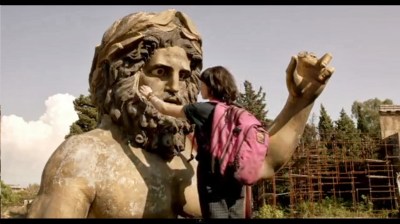
Despite the hopeful promise of the title Scherson’s affecting idiosyncratic coming-of-age tale is about coping with the past. Orphaned teenager Bianca (Manuela Martelli) reluctantly becomes involved in a plan to rob Maciste (Rutger Hauer), a former movie star now retired after losing his sight in a car accident. What begins in poetic realist territory morphs into Beauty and the Beast as the young woman enters Maciste’s world, a mansion sparsely furnished save for memorabilia from the sword and sandals movies he once starred in. Scherson has fun using clips from the old Kirk Morris Hercules flicks to represent the young Maciste, while Hauer’s own screen history of being adept at playing either hero and villain means Maciste is an enigmatic figure, at once beguiling and potentially dangerous. There’s an otherness present too in the light which never stops shining through Bianca’s window, or the colour of the car her parents died in changing colour after the accident emphasising the difference between before and this new grief tinged life. 
7) Natan (Paul Duan & David Cairns)
 
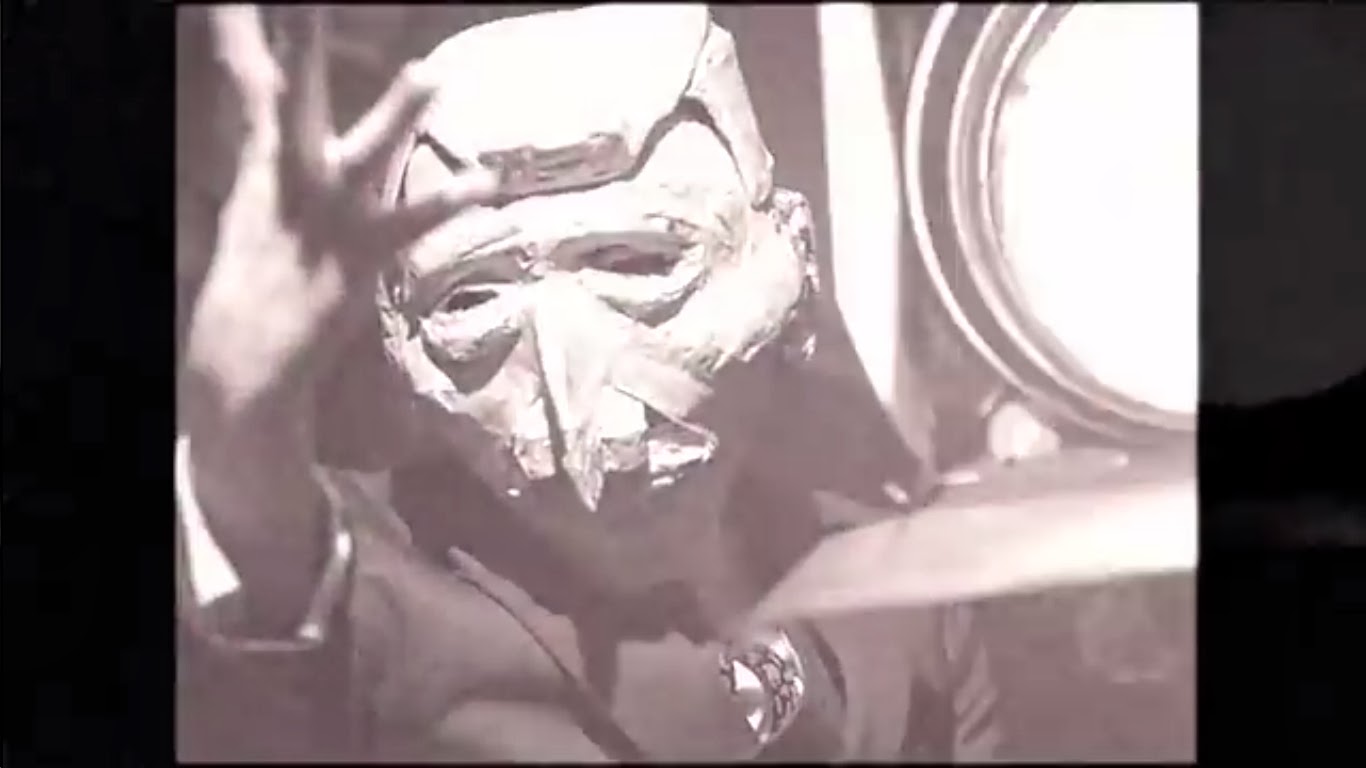
Haunting documentary recovering the reputation of Bernard Natan, a successful film producer France in the 20’s and 30’s written out of cinema history despite his considerable contribution to the industry including owning Pathé at one point. An innovator Natan built his own all-purpose studio which still exists today as France’s leading film school though at present there is no record of his involvement. In-between interviews and archive footage a Natan effigy prowls an abandoned studio like a restless spirit countering the accusations which were levelled against him when he was alive. I saw Natan without knowing anything about the subject matter and that’s the best way to see this strange and heartbreaking story so I’ll say nothing about his downfall except to see this film and remember his name. 
6) Mud (Jeff Nichols)
Jeff Nichols has quietly emerged as one of the most distinct voices in American cinema over the last decade. Shotgun Stories (2007) is a small masterpiece though I found his breakthrough movie Take Shelter (2011) hard going. This soulful coming-of-age tale about a young boy befriending a killer hiding out on an island however is his most moving film to date. Nichols sympathy for all sides involved is remarkable as is his feel for small town life. And how pleasing to see one of the great American character actors, Joe Don Baker, back onscreen. 
5) Caesar Must Die (Paolo & Vittorio Taviani)
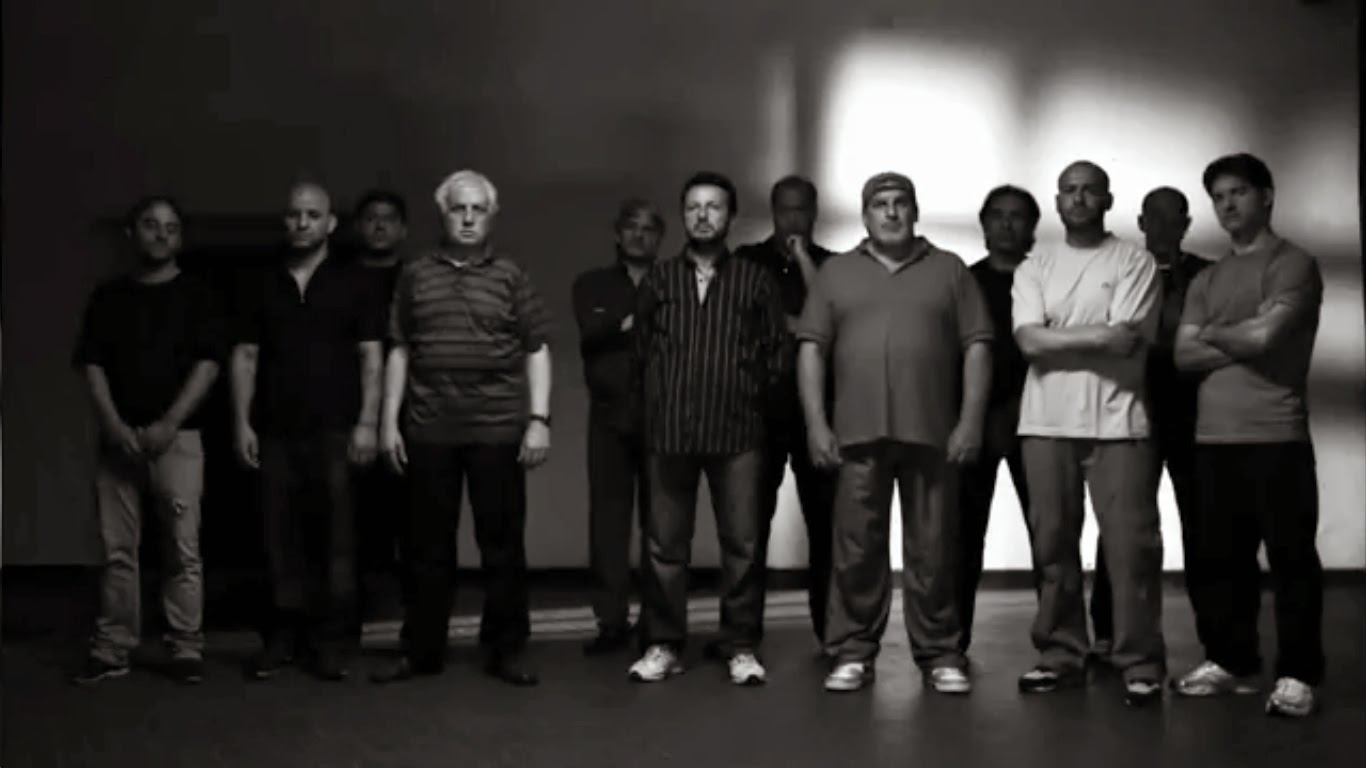
Certain scenes in Caesar Must Die are clearly staged for dramatic effect making this is more of a meta drama, a commentary on the nature of performance and themes in Shakespeare’s Julius Caesar than a straight documentary. Most of the inmates in Rome’s Rebibbia prison are inside for their involvement in organised crime so the power struggles and violent betrayal clearly resonate with these men. Just as Shakespeare’s characters reveal themselves in private moments away from the crowd the Tavianis allow these men to talk in their cells about their own experiences and feelings about the play. Caesar Must Die opens with the final curtain being raised on a triumphant production and the journey there proves to be a moving study of the effect art can bring to people’s lives and of what it means to be confined. 
4) Zero Dark Thirty (Kathryn Bigelow)
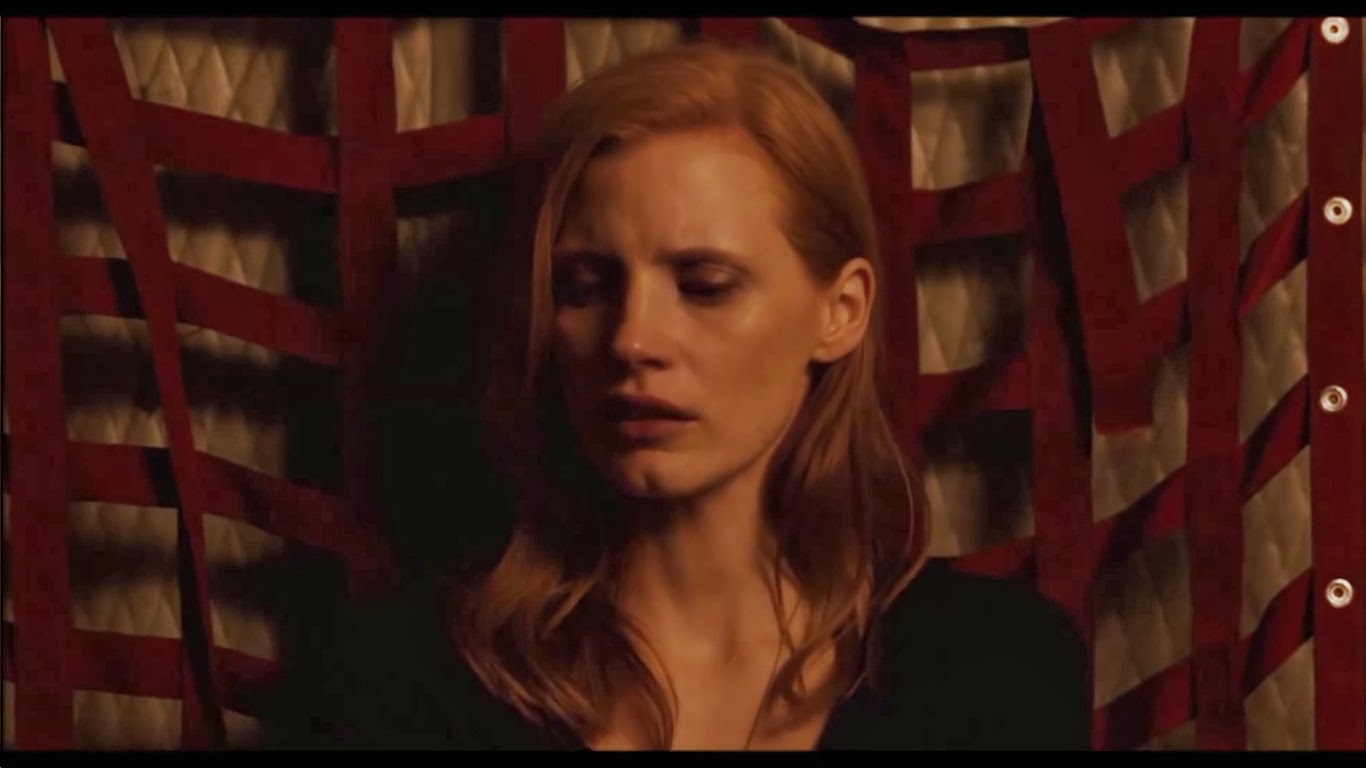
Jessica Chastain’s CIA agent becomes the latest to exemplify Bigelow’s interest in obsessive loners searching for the ultimate high in this remarkable follow-up to The Hurt Locker (2008). A sober, reflective piece which is only controversial if you believe showing something onscreen be it torture or the deaths of civilians during the harrowing raid on Osama Bin Laden’s compound condones it. In which case you’re an idiot. There is no triumphalism here only an acknowledgement of the terrible loss motivating the hunt for Bin Laden and the tempered knowledge by the time they finally caught up with him his death only mattered in symbolic terms. 
3) Après Mai (Olivier Assayas)
 
I really wasn’t expecting to like Après  Mai given the trailer made it look like yet another baby boomer hagiography of the 60’s. It’s so much more, a portrait of a filmmaker as a young man and the moment in life where youthful idealism must give way to pragmatism. Olivier Assayas autobiographical movie follows a group of teenagers trying to keep the spirit of 68′ alive at the onset of the next decade. Art and politics are intertwined. These kids are flawed, middle-class, and a little pretentious. They could be insufferable were it not for Assayas compassion towards them. It’s shot through with a hazy feel for lost summers and an increasingly melancholy tone as the reality of finding a place in the world begins to weigh upon them. 
 
2) Under the Skin (Jonathon Glazer)
 
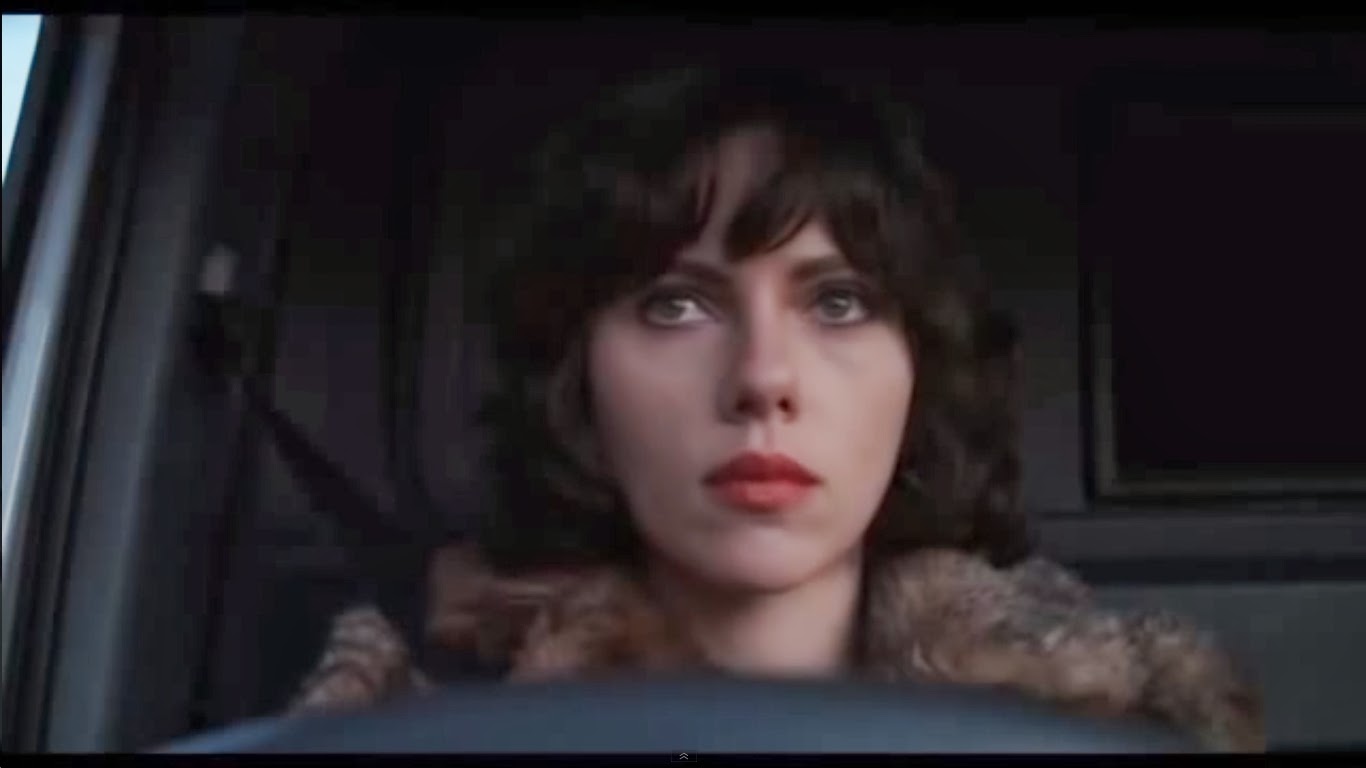
A pared down adaptation of Michael Faber’s novel ‘Under the Skin,’ Glazer’s film is more opaque, less interested in explanations and owes a fair amount to the work of peak period Nicolas Roeg. A Hollywood star seems as unlikely a visitor to certain parts of Scotland as an extra-terrestrial so there is something quite surreal about seeing Scarlett Johansson at the wheel of a white transit van kerb-crawling for neds. Especially as she’s sporting a bubble perm that would have got her a place in the 1978 World Cup team. The filmmakers designed a lightweight hidden camera so Johansson could move freely amongst people without them knowing they are being filmed. It lends Under the Skin a cinema-verite feel. People are going about their daily lives in the background, unlike in most films where extras are trying hard not to stare at the camera. An unsettling and haunting piece of cinema which oddly enough belongs to the tradition of Scottish-set films (I Know Here I’m Going, Local Hero) suggesting this place can have a profound effect on the lone traveller.
1) The Great Beauty (Paolo Sorrentino)
Sorrentino’s exhilarating odyssey through Rome follows an ageing writer as he begins to feel a growing sense of unease at his comfortable lifestyle. Jep (Toni Servillo) came to the city as a young man, wrote a great novel (or so his friends say) and threw himself into being a part of the Rome’s extravagant nightlife. The death of an old flame slowly begins to wear down his fastidious public persona. There is a tender relationship with a forty-something stripper, crying at funerals, and the urge once again to write a novel. La Dolce Vita (1962) is an obvious forerunner though Fellini damns his characters whereas Sorrentino loves these people despite their flaws and pretensions. All in their own way are searching for some kind of transcendence. The refrain Sorrentino (a master at finding the right music to accompany the lush images he puts onscreen) uses for Jep’s yearning is somewhat eclectically a song by the Scottish poet Robert Burns with the lyric “My Heart is in the Highlands/My Heart is Not Here,” the lament of a wanderer. Flashbacks of the young Jep’s idyllic youth seem to hold some meaning but are undercut in an enigmatic final sequence which suggests the lost lover would never have been enough. It’s all just a trick. 


Philomena (2013, Stephen Frears) – Screening Notes

Writing accompanying notes for a film I missed at LFF and have as yet still to see. So a simple synopsis and brief overview of Stephen Frears career is all I could manage. Much prefer writing notes for classic movies when the opportunity arises. 


 Starring: Judi Dench, Steve Coogan, Sophie Kennedy Clark
Screenplay by Steve Coogan, Jeff Pope Based on the book ‘The Lost Child of Philomena Lee.’
Directed by Stephen Frears

Based on a shocking true story Philomena attacks its subject matter with passion and a dark sense of humour. Fifty years ago Philomena (Dench) fell pregnant out of wedlock and was forced into a convent. The child was taken away from her. After hearing her story at a party burnt-out journalist Martin Sixsmith (Coogan) agrees to help Philomena find her son and the two begin an unconventional friendship and a journey to uncover the truth.
Stephen Frears – Selected Career Highlights
Now aged 72 years old Frears shows no signs of slowing down. Over a forty year period he has proven himself highly versatile and always at his best when working in tandem with a strong writer. Though he made his film debut in 1971 with the quirky thriller Gumshoe Frears spent the next decade or so honing his skills in television notably for the BBC’s ‘Play for Today’ series.
Frears returned to cinema with a trio of acclaimed British movies. In the understated The Hit (84) a beatific Terence Stamp unsettles two criminals escorting him to his death by calmly accepting his fate. The Hanif Kureshi scripted My Beautiful Laundrette (85) combines a gay love story with a satire about Pakistani immigrants embracing Thatcherism and made a star of Daniel Day-Lewis. Prick Up Your Ears (87) is an even-handed and touching account of the tragic relationship between 60’s playwright Joe Orton and his lover and eventual murderer Kenneth Halliwell.

Frears cracked Hollywoodwith Dangerous Liasons (88), a suitably chilly version of the Pierre Choderlos de Laclos novel, yet moving in its final moments. Martin Scorsese hired Frears to direct The Grifters (90), a bleak crime thriller about a small-time con-artist mixed up in a scheme with his estranged mother. The 90’s proved less successful though with expensive projects Accidental Hero (92), Mary Reilly (96) failing. Frears recovered, successfully relocating Nick Hornby’s much loved novel High Fidelity (2000) to the States.  Gritty thriller Dirty Pretty Things (2002), and the Oscar-winning biopic The Queen (2006) won him more acclaim. Frears is currently filming a biopic of disgraced cyclist Lance Armstrong.

Screening Notes – ‘Rush’ (2013, Ron Howard)

“It’s the enemy you know. Happiness. It puts doubt in your mind. Because all of a sudden you have something to lose.”
The remarkable race for the 1976 Formula 1 Championship is brought thrillingly to life in this colourful dramatisation of the battle between two drivers with contrasting personalities. Niki Lauda, impressively played by German actor Daniel Bruhl, is the dour pragmatist who adopts a tactical approach to racing and designs his own cars. Australian beefcake Chris Hemsworth is Peter Hunt, the dashing English playboy with a reckless streak. Rush recreates an era when Formula 1 was potentially lethal. For one of these men a rainy day towards the end of the 76′ season will have a profound effect on their life.

Ron Howard – Career Highlights
Though one of the most successful and versatile directors in Hollywood Ron Howard will always be best known for playing Richie Cunningham on the long-running sitcom Happy Days (1974-84). Born into a showbiz family, Howard appeared in countless TV shows as a youngster as did his brother Clint who some may remember as the blonde kid who befriends a Grizzly bear in Gentle Ben. Howard began directing under the tutelage of B-movie king Roger Corman who produced his first movie Grand Theft Auto (77). The comedy Night Shift (82) was a modest success but Howard’s next two films, Splash (84) with Tom Hanks falling in love with a mermaid and Cocoon (85) about a group of OAP’s given a second lease of life after an encounter with alien life-forms, were massive box-office hits. Sword and sorcery epic Willow(88) remains a favourite with 80’s kids. Parenthood (89) is a funny and wistful comedy about family life which makes great use of a young Keanu Reeves.

Backdraft (91) an exhilarating drama about fire-fighters in Chicago shows Howard developing an interest in stories about people working in high stress environments. The highly acclaimed Apollo 13 (95) is Howard’s first film based on real life events. Gripping thriller Ransom (96) casts swivel-eyed lunatic Mel Gibson as a businessman turning the tables on the kidnappers holding his son hostage. Howard won an Oscar for A Beautiful Mind (2001), starring Crowe as a mathematician struggling to cope with schizophrenia. Crowe again starred in the underrated Cinderella Man (05) as Depression era heavyweight boxer Jim Braddock. Huge box-office returns for The Da Vinci Code (06) and its sequel Angels and Demons (09) but neither film pleased the critics. Frost/Nixon (08) about the events leading up to President Nixon’s confession of perjury live on television marked Howard’s first collaboration with Rush screenwriter Peter Morgan. Howard also narrated the cult TV comedy Arrested Development and appears in the final season as a comic version of himself. 

Nosferatu the Vampyre (1979, Werner Herzog)

Back in cinemas just in time for Halloween Werner Herzog’s remake of F.W. Murnau’s Nosferatu: A Symphony of Horrors (1922) is an idiosyncratic take on the vampire movie. As with his recent reworking of Abel Ferrara’s Bad Lieutenant (1992) it resembles the original but has a lunatic poetry of its own. Instead of replicating the expressionist techniques used by Murnau, Herzog filmed on location in Germanyand Romaniaand makes wonderful use of natural light.  The opening credits play over shots taken of mummified corpses twisted in agony as Popol Vuh’s haunting somnambulistic music sends a shiver down your spine. 
Nosferatu: A Symphony of Horrors is the first screen version of Bram Stoker’s novel ‘Dracula,’ Murnau adapted the story without first acquiring the rights. Changing the Count’s name to Orlock couldn’t hide the plagiarism and Stoker’s widow sued, although mercifully the court rejected her plea to have the film destroyed. Herzog is free to call his vampire Dracula and keeps the main story from Stoker’s novel intact. Jonathon Harker (Bruno Ganz) travels to Transylvaniato negotiate a property deal with the Count.  Dracula traps Harker within his castle and leaves to seek out his prisoner’s wife. There are minor changes from the novel; the Harkers live in the coastal German town of Wismar. Mina, the leading lady in Stoker’s novel is demoted to a supporting role, while Lucy (Isabelle Adjani), takes on her characteristics of purity and innocence and also becomes Jonathon’s wife. Dr Van Helsing is no world authority on vampyres, but an ageing ineffectual small town Doctor with no real knowledge of what he is fighting against. 
Herzog regular Klaus Kinski has roughly the same look as Symphony’s Dracula Max Schreck. Kinski retains the black coat, pointy ears, bald head and fang-like teeth, but his face appears more human than Schreck’s misshapen monster. Kinski’s vamp is remarkable, as pitiful as he is unsettling. Alone in the world there is nobody else like him. Nor are there vampire babes hiding in his castle waiting on his every command, as if they were vampiric versions of Hugh Hefner and The Girls of the Playboy Mansion. Unlike Christopher Lee’s tall, suave aristocrat, who takes women at will, Kinski’s vamp literally begs Lucy to let him drink her blood and like a lot of bald men on the pull he is turned down flat. The eroticism present in the post Anne Rice vampire movie is entirely absent. Dracula feeds like a parasite, not a lover. All he brings is death, not so much by his own hand, but by the pestilence that follows him, the rats streaming into the town and infecting it with the plague. 


Bruno Ganz and Isabelle Adjani are both touching as the lovers destroyed by Dracula. Often these roles are a thankless task for actors as the Harkers are ciphers for moral innocence, but both Ganz and Adjani have the ability to flesh them out and make them seem real. Herzog conveys the intimacy between these young lovers in subtle ways, most notably a long-shot of them embracing by the sea. Most directors would use a close-up and have them express their love through words, but Herzog keeps his distance as if getting in close would be an intrusion. Adjani in particular is a spirited heroine, with her pale skin and jet black hair rendering her as haunting in appearance as Kinski’s Dracula.
Herzog provides some spectacular images, such as the town square filling up with the townspeople carrying coffins, or of a last supper as a group of people infected with the plague hold a farewell dinner party for themselves. In one astonishing wordless sequence Harker (Bruno Ganz) leaves a village on foot, walking past the side of a cavernous river, climbing past a waterfall towards the peak of a mountain. As Harker rests and takes in his surroundings Herzog cuts between shots of him and the mist-covered mountains until Dracula’s Castle reveals itself as a ruin on the horizon. 

The German title is Nosferatu: Phantom Der Nacht which suits the film. Kinski’s ghostly figure is at once menacing and pitiable. Another of Herzog’s lonely obsessive outsiders at odds with the world around them and straining against its limitations. Herzog’s film is more unsettling than horrifying, it’s unease emanating from the hypnotic visuals and the feeling of doom present throughout. Often overlooked even by Herzog fans Nosferatu the Vampyre is one of his finest films and a worthy companion piece to Murnau’s masterpiece. 

LFF 2013 – Story of My Death/Pioneer

Two great seducers, Casanova and Dracula meet in Spanish director Albert Serra’s latest but this is no playful horror movie. In fact I’m not entirely sure what Story of My Death is meant to be. Serra apparently shot 400 hours of footage for the film which beggars belief because hardly anything happens during the film’s two and a half hour running time as it is. An aged, repellent, and decadent Casanova eats a lot, gives half-baked philosophical advice on the nature of women (“women are all the same”), sexually exploits maids in a manner that would get him lifted nowadays, and laughs a lot for no apparent reason. It’s entirely possible the other 397 and a half hours are more of the same.

Serra claimed not to be interested in the horror genre but he’s made an interesting counterpoint to Stoker’s novel with Dracula here as a liberator of poor servile women letting them turn against the patriarchy and become powerful instead of victims.  Endurance test The Story of My Death might be Serra is clearly a gifted filmmaker albeit one who likes to punish his audience. The director gave a charming introduction to the film in which he said it was okay if people walked out which may have been reverse psychology as almost everybody stayed to the end. I don’t ever want to see The Story of My Death  again save for a wordless sequence in which would be lovers flirt at the dinner table after a meal. Free of all the dreadful pretensions Casanova spouts about love and its meaning I’d rather have seen that movie instead. 


I couldn’t get a ticket for Gravity so Erik Skjoldbjærg’s conspiracy thriller Pioneer proved a decent alternative. Set during the North Sea oil boom of the 80’s as the Norwegians are forced through inexperience and lack of resources to collaborate with an American company on finding ways to extract the oil from the depths. The expeditions are highly dangerous and involve experimenting with hitherto unused techniques. When Petter (Hennie) passes out during a test dive causing the death of another diver he resolves to find out what went wrong putting himself and those close to him in danger. Skjoldbjærg crashed and burned in Hollywood with a dire adaptation of Elizabeth Wurtzel’s  Prozac Nation (2001) while Christopher Nolan’s remake of his 97′ debut movie Insomnia put the British director on the Hollywood A-list but did nothing much for him. It’s easy to read Pioneer as a reaction to this with the plucky Norwegian battling the forces of American cultural imperialism but Skjoldbjærg presents both countries as having their own agendas with so much at stake. Pioneer is a tense, claustrophobic affair with a compelling lead performance from Aksel Hennie and good support from Wes Bentley, Stephen Lang, and Jonathon LaPlagia. 

LFF 2013 – The Congress (Ari Folman)

Waltz with Bashir (2008) director Ari Folman melds together Stanislaw’s novel ‘The Futurological Congress’ and the career of actress Robin Wright for this odd but moving mixture of live action and animation. Wright plays a fictional variation of herself, a narrative device made popular after Being John Malkovich (1999, Spike Jonze) and one which allows filmmakers to play around with a star’s persona. In The Congress Wright becomes a washed-up Hollywood dropout living in an airport hangar with her two children Aaron (Kodi Smit-Mcphee) who is losing his hearing and idealistic teenager Sarah (Sami Gayle). Wright has spent the intervening years since her early success in The Princess Bride (1987, Rob Reiner) driving her agent Al (Harvey Keitel) nuts by making bad career choices.
A lucrative offer from ‘Miramount’ studio boss Jeff (Danny Huston) to submit to an experimental new technique designed to replace ageing actors with CGI avatars so they remain forever young forces Wright to make a final decision on her acting career. Fade way or remain onscreen as an A-list simulacrum. Huston’s casting may be a nod towards his role in Bernard Rose’s fuck you to Hollywood Ivans XTC (2000) which combined the tragic life of agent Jay Moloney with Tolstoy’s ‘The Death of Ivan Ilyich.’ Here however the satire is laboured and feels inauthentic. Though he makes fair points about how the industry sidelines women over forty and audiences are complicit in their preference for younger stars Folman has never made a Hollywood movie and it shows. These kinds of attacks work better when those involved have done time there like Rose and have scores to settle.
Folman is on stronger ground adapting Lem’s story about a future where people imbibe chemicals allowing them to escape from reality into a fantasy world of their own construction. Both filmmaker and novelist share thematic interests. Waltz with Bashir is essentially a journey through Folman’s memories to uncover a moment lost to him. Likewise Lem’s work particularly in ‘Solaris’ deals with the hold the past can have over a person especially if loss is involved. Twenty years after signing away her career and letting her CGI replacement take over Wright is summoned to a meeting in an entirely animated world called Abrahama.
Though this place is supposed to represent a new medium replacing motion pictures Abrahama has the retro feel of a Twenties cocktail party and the look of the animation resembles the work of old cartoons. People take comfort in the past, turning themselves briefly into Hollywood idols, or in the case of a lovelorn computer programmer Dylan improving their own physicality by turning himself into a tall dark and handsome matinee idol lookalike. Dylan is affectingly voiced by Jon Hamm who possesses one of the loveliest and saddest voices around. As Wright searches for her missing children in this strange new world The Congress becomes another mesmerising waltz through a dreamscape, once again set to a haunting Max Richter score.
The Congress is bound to divide audiences and admittedly it can infuriate as well as mesmerise often in the same scene. Yet any film featuring Robin Wright singing Leonard Cohen tracks, impersonating Sterling Hayden, and confessing she may have married unsuitable men has my vote. The Congress also features a remarkable monologue delivered by Harvey Keitel which is at once a confession of betrayal and of love which is worth the price of a ticket alone. 
 
The Congress
Written by Ari Folman, 
based on ‘The Futurological Congress’ by Stanislaw Lem
Directed by Ari Folman
Running time 122 minutes


LFF 2013 – Mystery Road (Ivan Sen)

For years now Aboriginal actor Aaron Pedersen has been a charismatic presence on Australian TV shows like Water Rats, the recent Jack Irish adaptations, and a personal favourite of mine The Secret Life of Us. In Ivan Sen’s thriller Mystery Road.  Pedersen finally gets a leading role as a police detective returning home from the city to the dead-end outback town he left a decade earlier. Why Jay Snow (Pedersen) came back is anybody’s guess. Snow’s fellow officers patronise him and his own folk hate him for turning cop. There’s an ex-wife Mary (Tasma Walton) but she’s drinking her life away and angry at Snow for ignoring their daughter.
As with Jindabyne (2006, Ray Lawrence) the murder of a young Aboriginal woman causes conflict in a small town. While in Lawrence’s relocation of a Raymond Carver short story the killing causes much soul searching amongst the townsfolk here nobody seems to care. Found near the highway with her throat slashed the teenager was a drug addict who prostituted herself to passing truck drivers.
Snow is given no resources to investigate the murder even though there’s a long list of suspects including a kangaroo hunting sharpshooter (Ryan Kwanten), a drug pusher (Damian Walshe-Howling) preying on the Aboriginal community, and maybe even Snow’s enigmatic colleague Jonno (Hugo Weaving) who has a habit of turning up at inopportune moments. Weaving is exceptional as a man whose threatening nature is only slightly softened by his avuncular manner and whose wardrobe seems to consist entirely of faded denim sleeveless shirts.
Racial tensions simmering under the surface of everyday life and the marginalisation of indigenous Australians are placed within the framework of the Western genre. Like the US show Justified it is interested in how poverty in small deprived communities often forces people towards crime or finding an escape though drink and drugs. It’s no grim affair either with Sen’s screenplay providing a dry sense of humour and Pedersen’s understated performance holds the attention. When the inevitable showdown arrives it’s one of the finest shoot-outs in recent memory. An intense fifteen-minute exchange which is chaotic, messy, and unusually for an onscreen gun battle everybody involved seems to fear for their lives.
Sen’s slow burn approach burns a little too slowly and there is too much heavy handed symbolism on show. Occasionally the reliance on lengthy conversations with suspects makes the film feel a little too much like a television police procedural. Despite these minor flaws Mystery Road is engrossing and should provide both writer/director Sen and Aaron Pedersen with international breakthroughs. 
 
 
Mystery Road
Written and directed by Ivan Sen
Australia
2013
112 minutes


EIFF 2013 – The Bling Ring (2013, Sofia Coppola)

“What did Lindsay Say?

Like a bitchy little sister to Sorkin/Fincher’s The Social Network (2010) Sofia Coppola’s movie shares similar thematic concerns of friendship in the social media age and modern celebrity. The Bling Ring is based on the Vanity Fair article ‘The Suspects Wore Louboutins’ by Nancy Jo Sales about a group of High School kids who robbed a bunch of celebrities of goods worth over $3 million. The group would check Facebook and online gossip sites for information about a particular celebrity to see if they were out of town, google the address, then find a way in without breaking and entering. They regularly turned over Paris Hilton’s fantastically kitsch mansion because the heiress kept a key under the welcome mat. Given the comic mileage Coppola gets from this amazingly furnished abode Hilton is either a great sport or still leaves her key under the mat and the director snuck the cast and crew in while the heiress was on one of her many holidays.
Shy and neurotic Marc (Israel Broussard) is pleasantly surprised to be taken under the wing of confident Rebecca (Katie Chang) on his first day at his new school. Rebecca shares his interest in celebrity gossip sites and expensive clothes. She pays for her outfits by stealing cash and valuables from parked cars. They graduate to breaking into a school-friend’s house then targeting the homes of celebrities. Other kids get involved including Nicki (Emma Watson) whose upbringing on a diet of adderall and her mother’s new-age religion means she talks in the kind of meaningless self-actualisation nonsense celebrities spout in interviews, and Chloe (Claire Julien) who wears her DUI like a badge of honour. At first the raids are low-key activities, but they soon gravitate to house parties which they are silly enough to boast about to impress their peers.
Latterly the invasion of a reality TV star’s glass-panelled home is observed coolly from a distance like a scene from Michael Mann’s crime thriller Heat (1995) before Coppola cuts to a security team watching over them. CCTV footage of this break-in ends up on the news turning them into media stars. Coppola’s aversion to moralising means the story is seen from the point of view of the kids. It’s why for most of the film their behaviour seems fun. She’s not condoning their activities but expecting the audience to work out they are a bunch of spoilt brats. Yet she is too kind a director not to feel something for them. A recurring theme in her movies is people who seem to have everything but still find themselves drifting aimlessly through life. They might be comfortable but there is some spark missing. Behind these kids obsession with material goods and being seen in the right places there is a basic human need to belong.

Coppola fetishisation of brand labels and the bodies of the young and the beautiful are often taken as examples of shallowness. The Bling Ring will only exacerbate those criticisms but her ephemeral film-making style and her empathy for those whose stories she tells make her one of the most intriguing and atypical voices in contemporary American cinema. 

The Great Gatsby (2013, Baz Luhrmann) – Screening Notes

Courtesy of Warner Bros

F. Scott Fitzgerald died of a heart attack at the age of 44 after years of heavy drinking took their toll. His friend Edmund Wilson edited together a draft version of Fitzgerald’s final work ‘The Last Tycoon’ for publication. In the foreword Wilson wrote about the people in Fitzgerald’s stories living for ‘big parties at which they go off like fireworks and which are likely to leave them in pieces.’ Traditionalists balked when the flamboyant director of ‘Strictly Ballroom’ (1992) Baz Luhrmann announced his plans to make a version of Fitzgerald’s 1925 masterpiece ‘The Great Gatsby.’ Fitzgerald is a subtle writer, while Luhrmann’s movies are gaudy coloured confections which move at a breathless pace. They do not at first sight seem a good match. Yet Wilson’s comment about wonderful ruinous parties suits Luhrmann too. ‘William Shakespeare’s Romeo + Juliet’ (1996) and ‘Moulin Rouge’ (2001) set up their doomed love affairs during lengthy and elaborately designed set-pieces that wouldn’t look out of place in an old-fashioned Hollywood musical. Fitzgerald and Luhrmann may have differing approaches to their respective crafts but both men clearly know how to party.


For all Luhrmann’s showiness though this is still at heart Fitzgerald’s story. 1922, young writer Nick Carraway (Tobey Maguire) attends a lavish party thrown by mysterious millionaire Jay Gatsby (Leonardo DiCaprio). Luhrmann’s visually spectacular approach to filmmaking is evident in how he arranges the first meeting between Carraway and Gatsby. In the novel the two men happen to stand next to each other at a party and begin talking. Luhrmann’s encounter is a seismic moment, there are fireworks in the sky. Music soars. DiCaprio’s movie star smile lights up the screen. Like Truman Capote’s Holly Golightly Gatsby is a fake but a genuine fake. The parties are a ruse intended to attract the attention of the love of his life Daisy Buchanan (Carey Mulligan) who lives across the bay and is now married. As with ‘Moulin Rouge’ Luhrmann uses contemporary music which in a period piece should feel anachronistic but instead comments on either a particular scene or a character’s emotional state. Lana Del Ray’s joyously melancholic song ‘Young and Beautiful’ reappears throughout as a refrain as Gatsby and Daisy attempt to rekindle their love affair behind the back of her ruthless businessman husband Tom (Joel Edgerton).


Station regulars will remember F. Scott Fitzgerald and his wife Zelda appearing in ‘Midnight in Paris’ as bright young things partying with the Lost Generation of writers and artists. Later they drank their fill, too many gin rickey’s and late nights did for them both but Fitzgerald seems to have known this would happen. In his novels the comedown from the parties and the damage done afterwards was always irreparable. Luhrmann maintains this undercurrent of loss. Gatsby is a difficult part and requires a movie star with enough presence to catch the attention at first glance and DiCaprio delivers. Not just in terms of beauty but in his easy charm and vulnerability. It is a great performance, anchoring this wild ride of a movie with the yearning of a man who wants the unattainable.